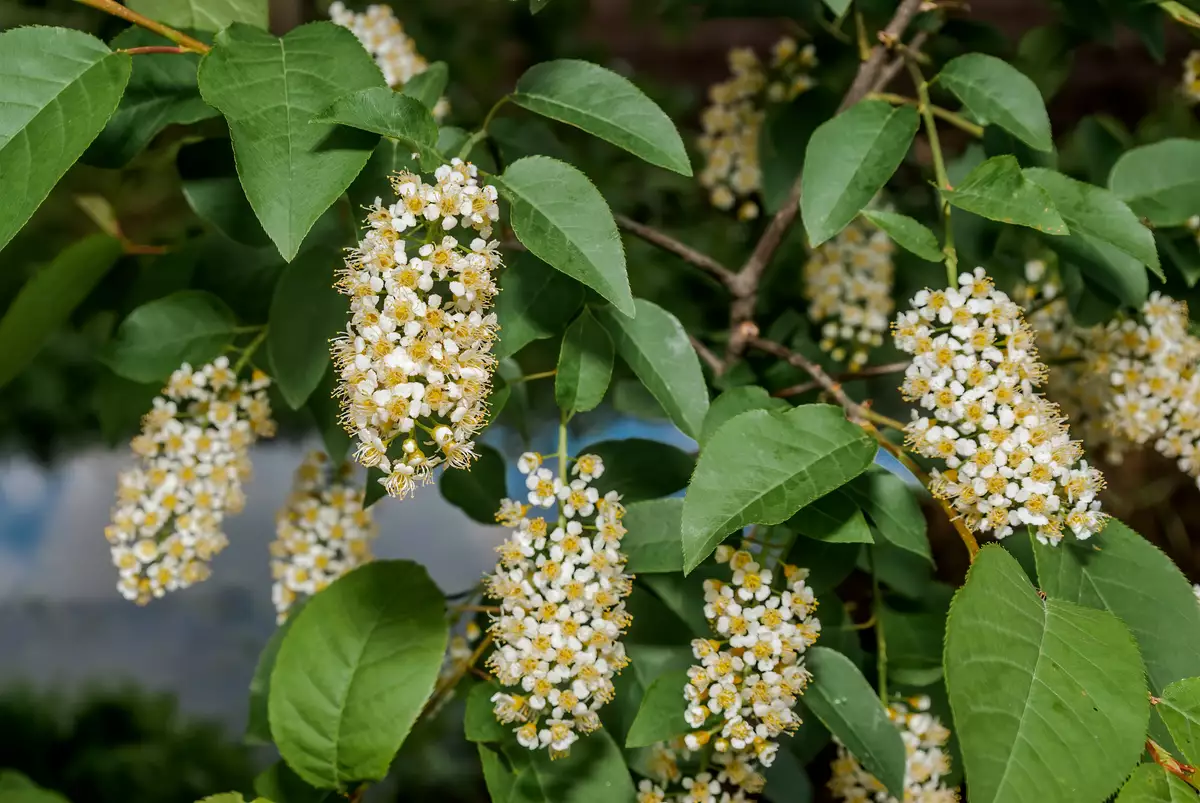
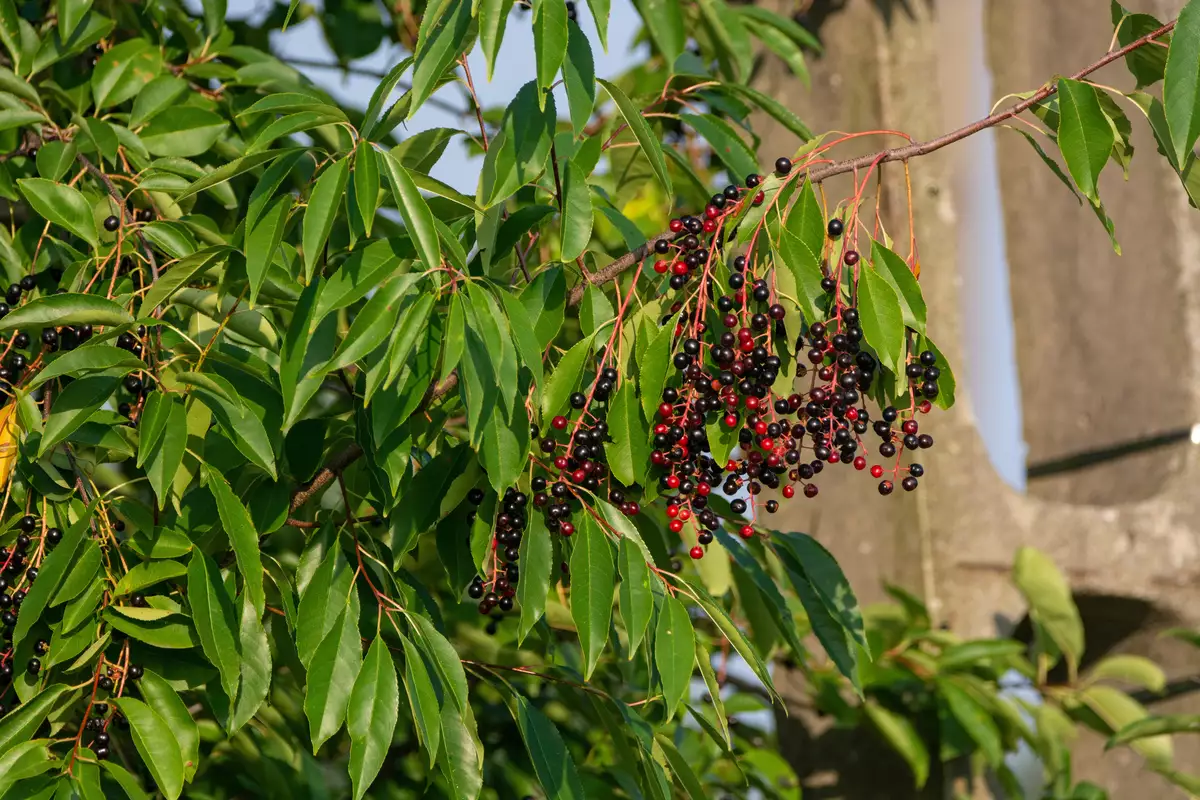
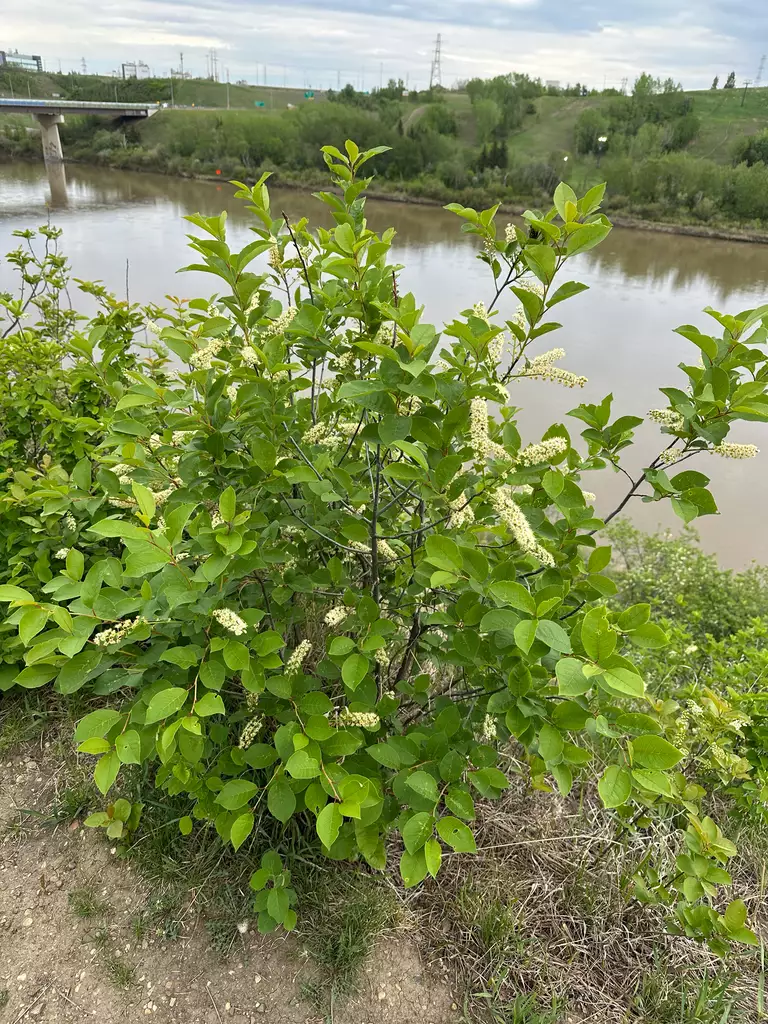
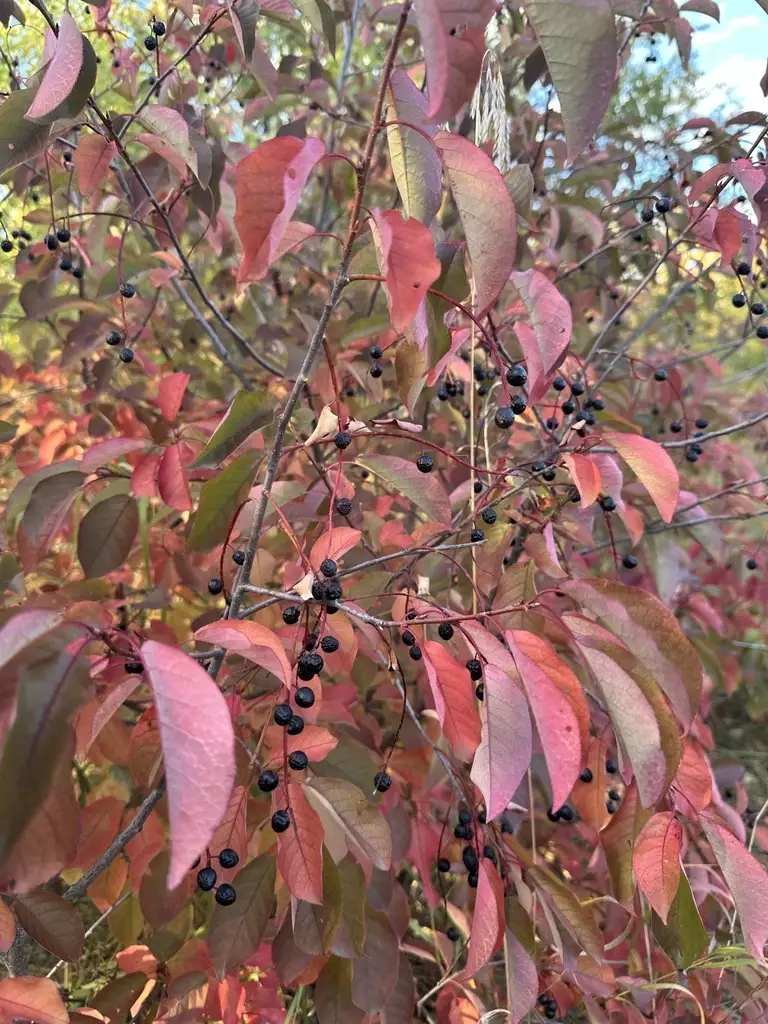
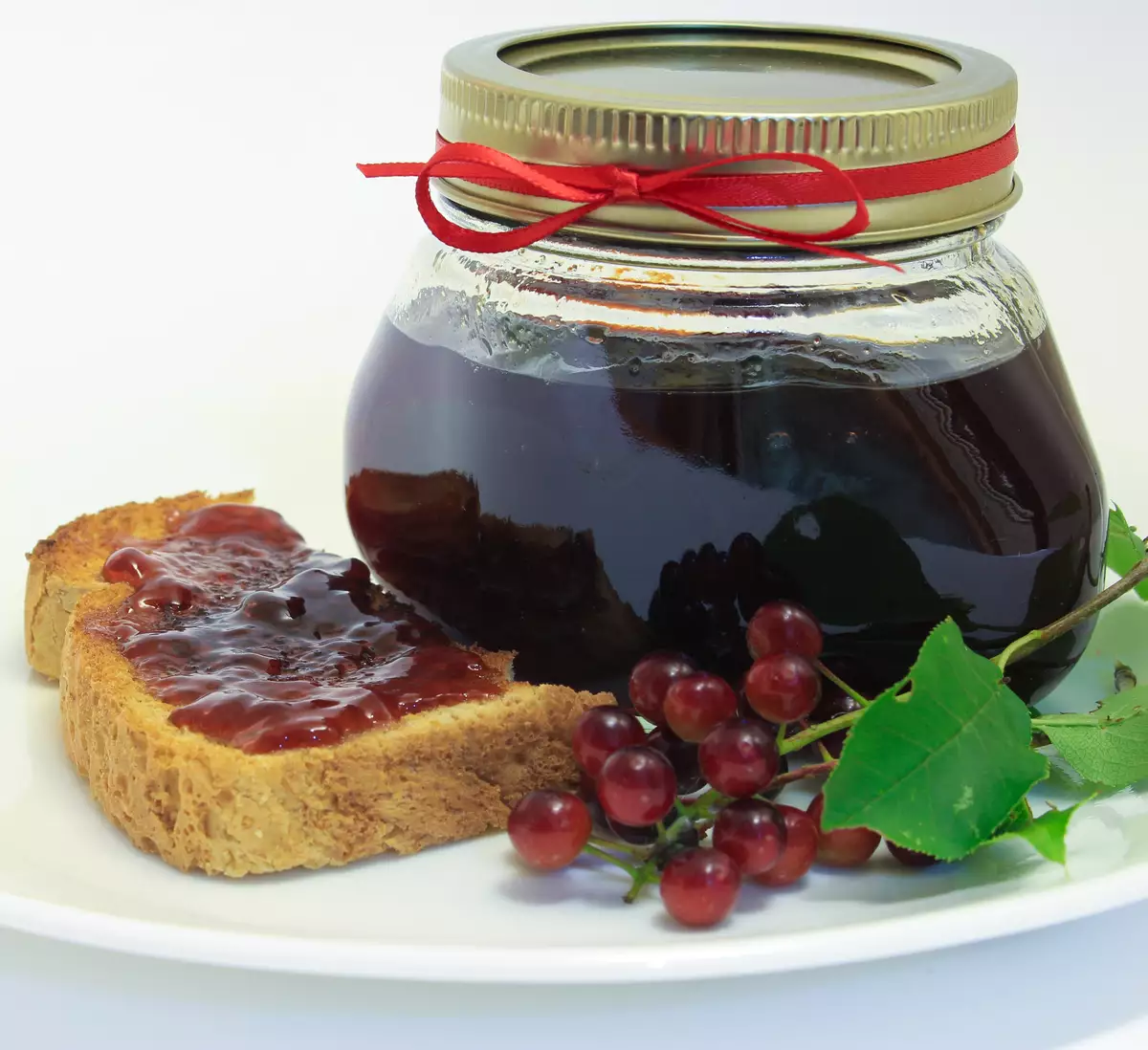
Prunus virginiana, commonly known as Chokecherry, is an adaptable and resilient North American native shrub or small tree that stands out in any landscape. Reaching up to 30 feet tall, it features an irregular, rounded-oval crown and notably dense clusters of fragrant, showy white flowers from April to June. These blossoms transition into attractive dark red berries in the summer, ripening to a deep purple, drawing in birds and adding a vibrant touch to gardens. Found across a variety of soils—from clay to sand—and tolerant of dry to medium moisture conditions, chokecherry thrives in full sun to part shade, making it a versatile choice for diverse gardens.
Beyond its ornamental appeal, Chokecherry supports wildlife by providing food to birds and acting as a host plant for an impressive array of Lepidoptera, including several species of moths and butterflies. Its foliage offers stunning golden yellow to orange hues in autumn, adding seasonal interest. Despite its natural occurrence in wooded slopes and ravines, Chokecherry can form thickets if left unchecked. It stands out for its garden versatility, fitting beautifully into hedge rows, naturalized areas, or as a standout flowering specimen. With careful management and a couple of companions, Chokecherry offers plentiful fruit which, though astringent raw, transforms wonderfully into jams and jellies. Not only is it easy to maintain but also drought-tolerant, making it a rugged yet beautiful addition to the landscape.