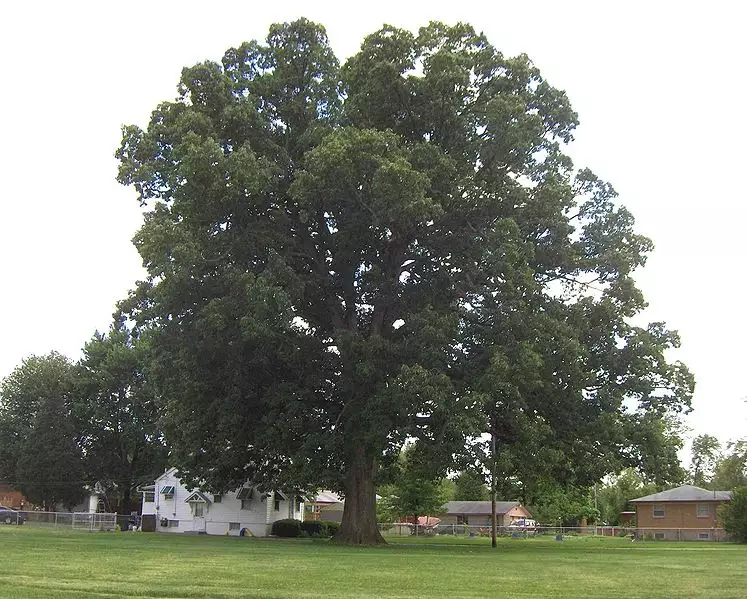
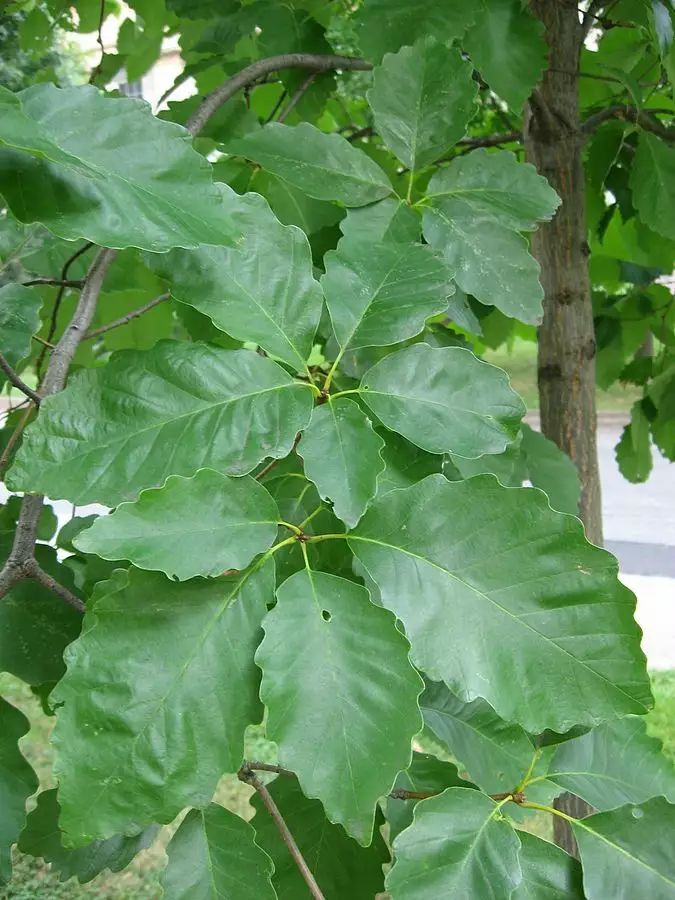
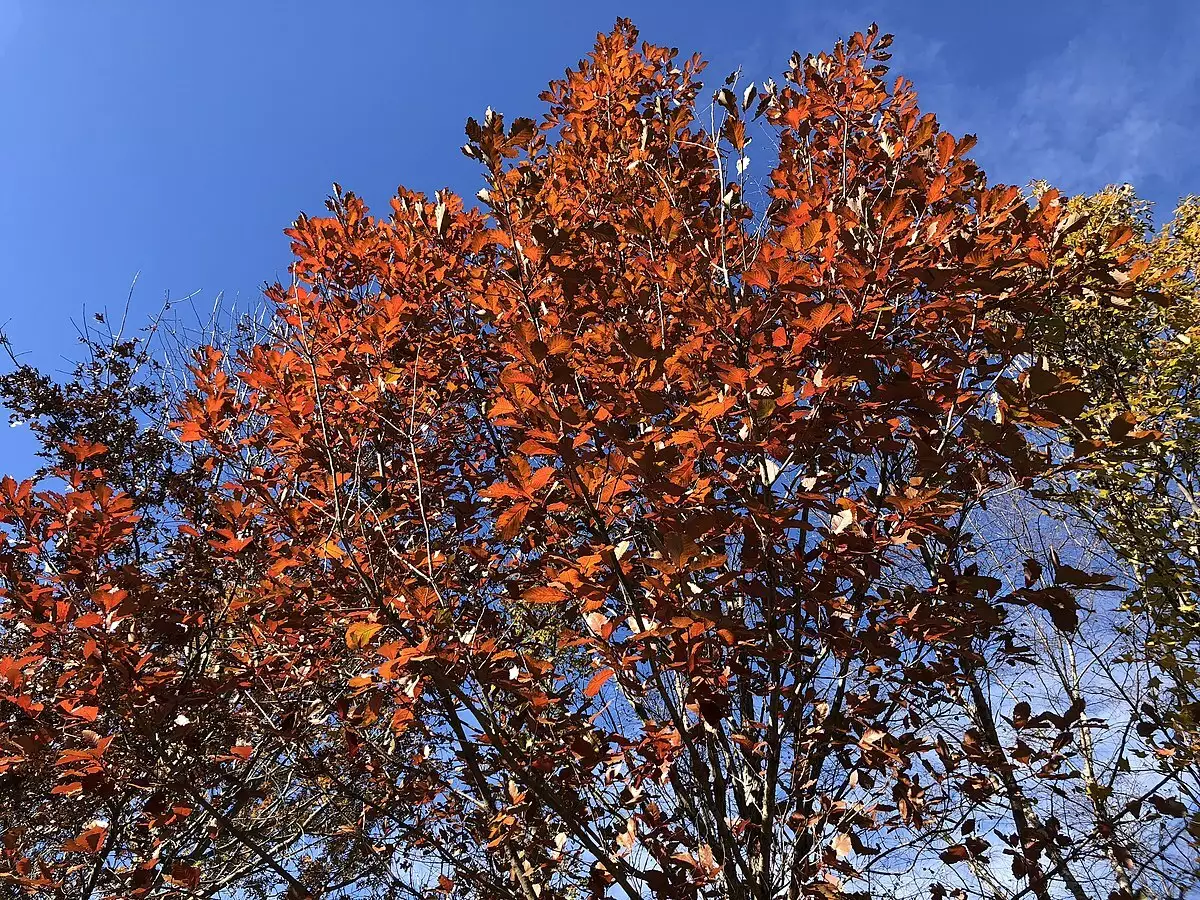
Discover the majestic beauty and ecological value of Quercus michauxii, commonly known as Swamp Chestnut Oak, Cow Oak or Basket Oak. This impressive tree, native to the Southeastern United States, thrives in USDA Zones 5-9, reaching heights of 40-60 feet or even up to 100 feet. Its expansive spread of 30-50 feet, paired with a rounded dense crown, offers abundant shade, making it a sought-after choice for larger landscapes and urban settings. Adorning the tree are large, chestnut-like leaves with distinctive rounded teeth, turning a striking dark red in the fall.
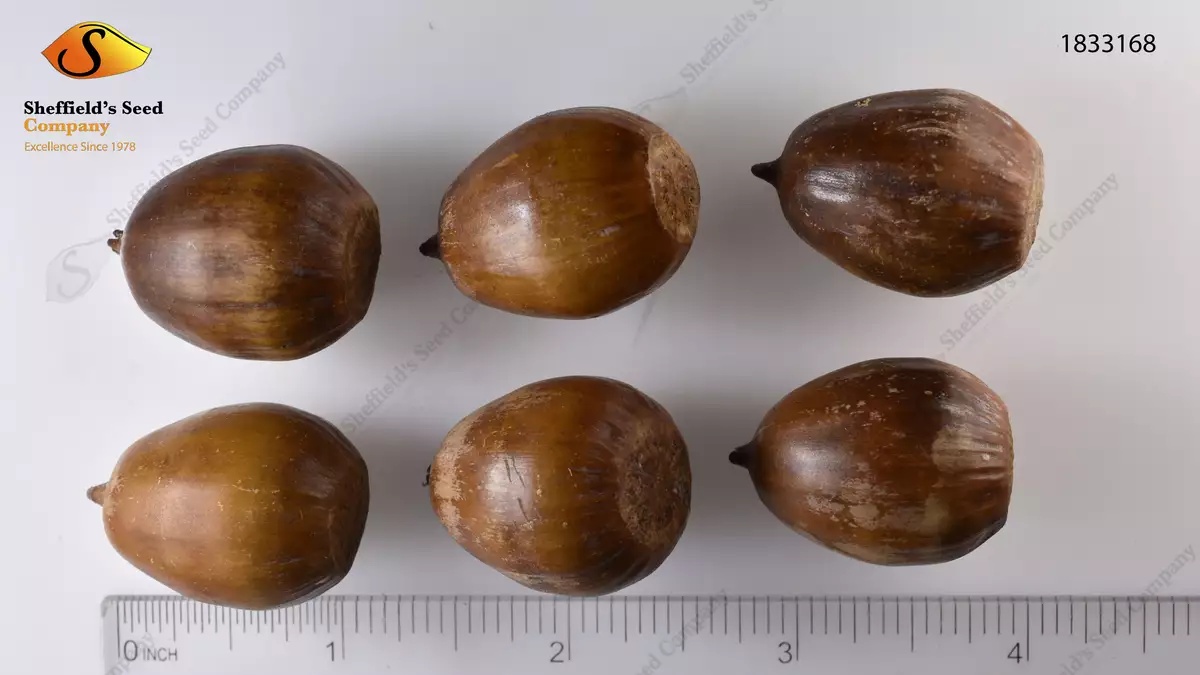
Adaptable and resilient, Swamp Chestnut Oak flourishes in moist, well-drained acidic loams, tolerating wet soils and occasional flooding, yet preferring full sun for optimal growth. Its insignificant yellow and red flowers bloom from April to May, giving way to large, sweet-tasting acorns in the fall. These acorns, a favorite among wildlife and livestock, have historically earned the tree its "cow oak" moniker.
Originally prized in the U.S. cotton belt for its strong, flexible wood—ideal for flooring, furniture, and basketry—Swamp Chestnut Oak continues to be valued today for its high-quality timber. As part of the white oak group, this tree withstands various urban conditions, contributing to biodiversity by supporting mammals like deer, turkey, and squirrels. Predominantly found in floodplains and rich sandy soils from New Jersey to Texas, its durable, light-gray bark adds an aesthetic appeal. Whether enriching ecological landscapes or standing as a testament to native forestry applications, Swamp Chestnut Oak is treasured for both its enduring utility and robust grace.










.jpg)
.jpg)

