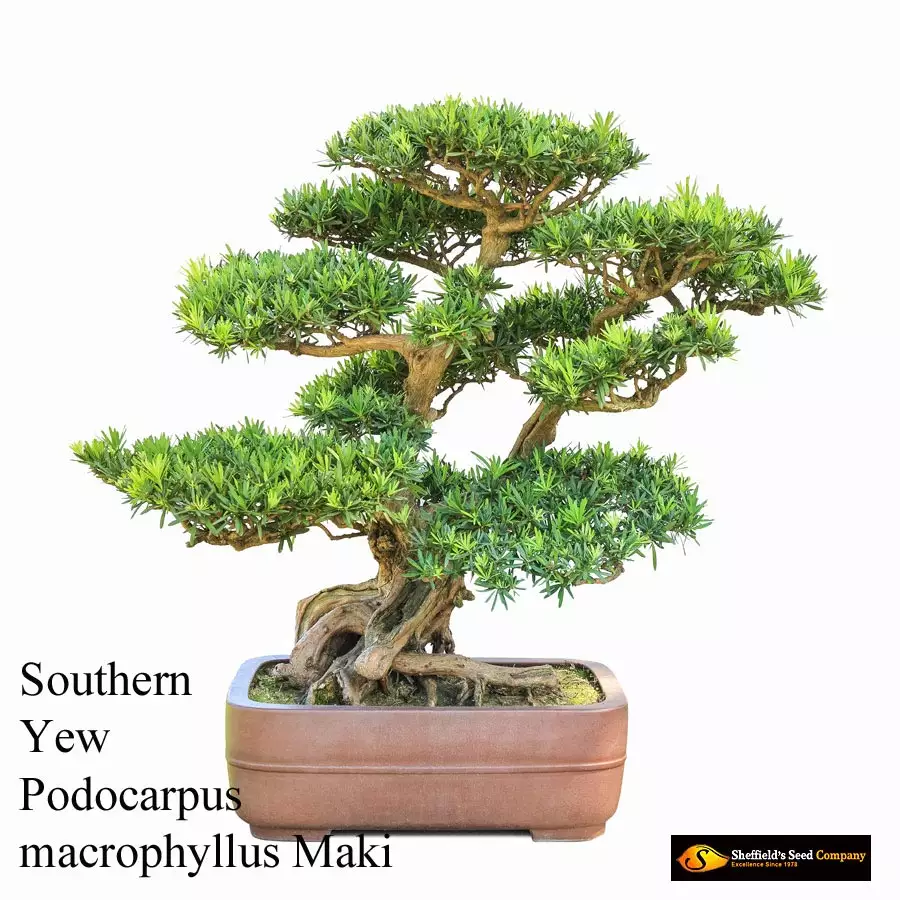
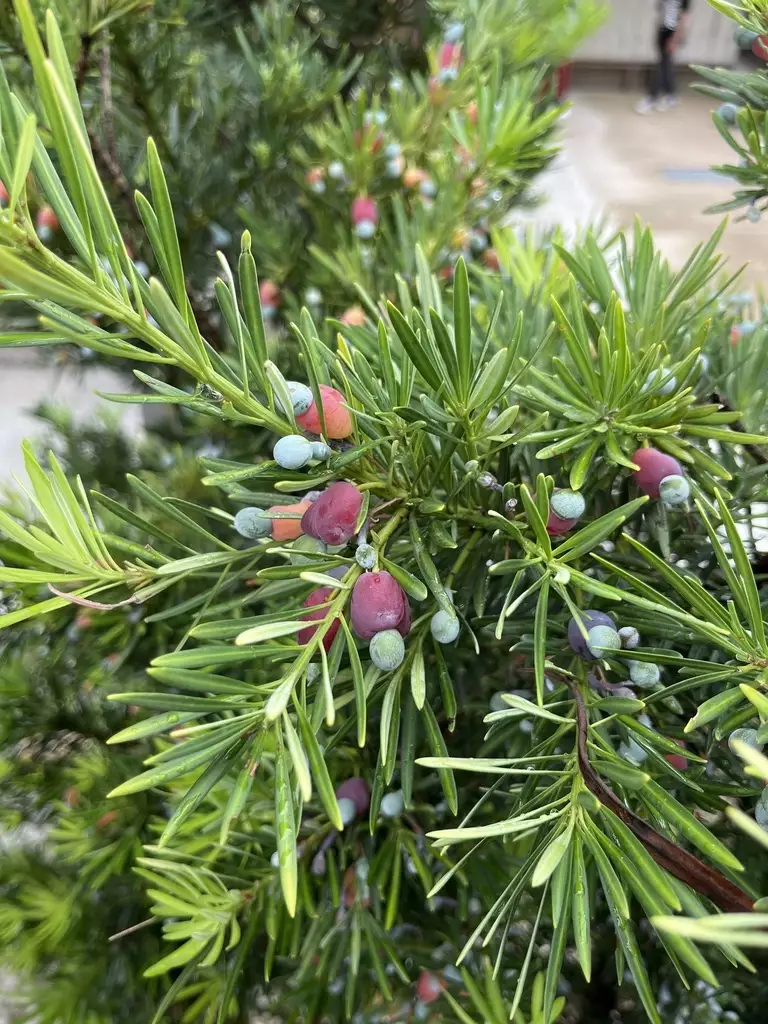
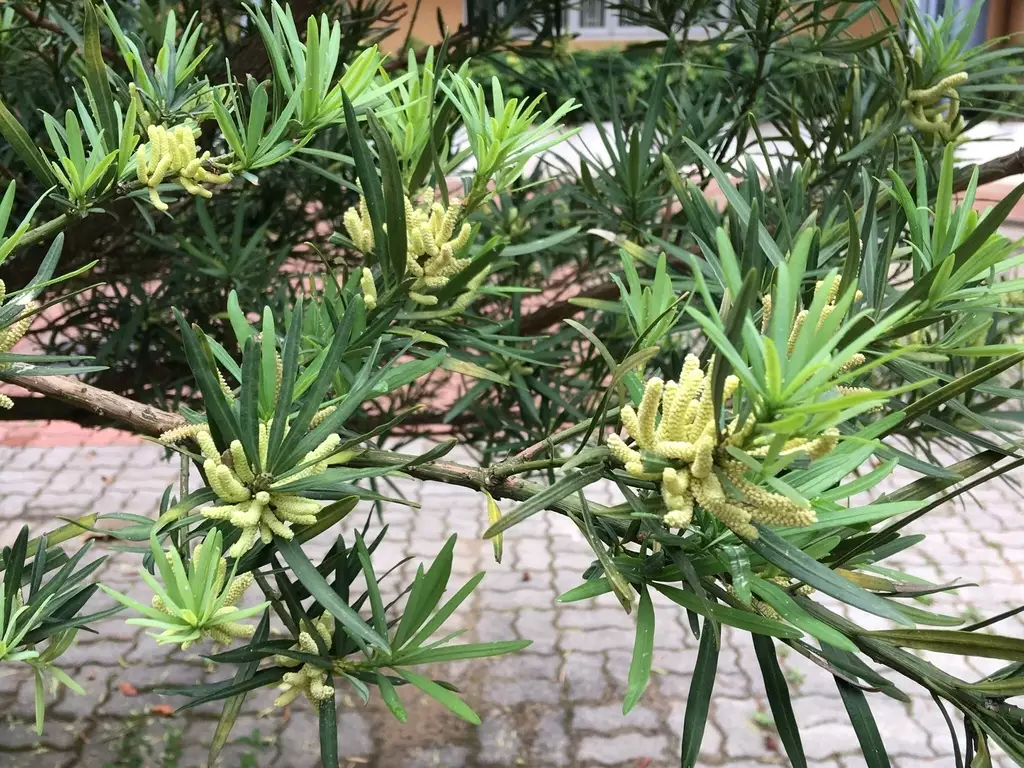
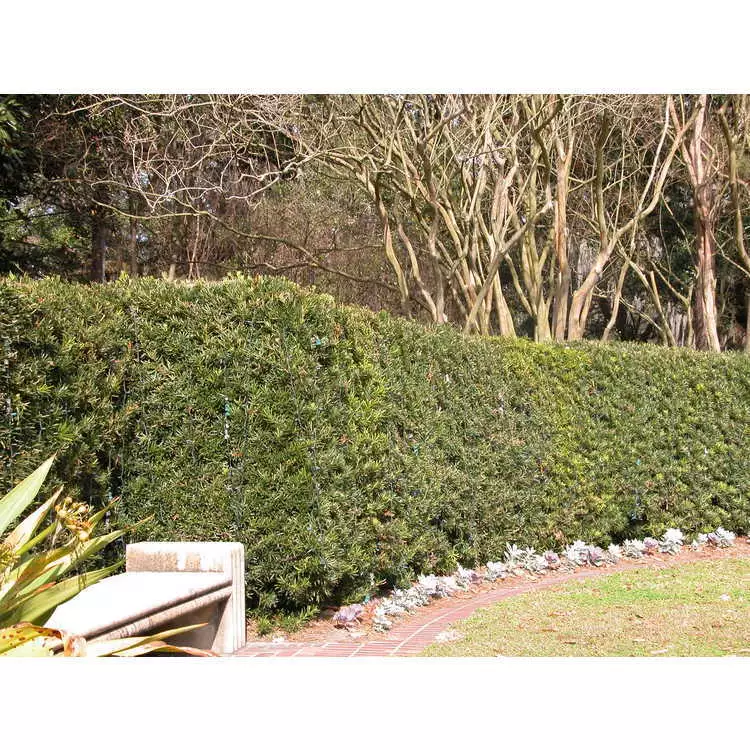
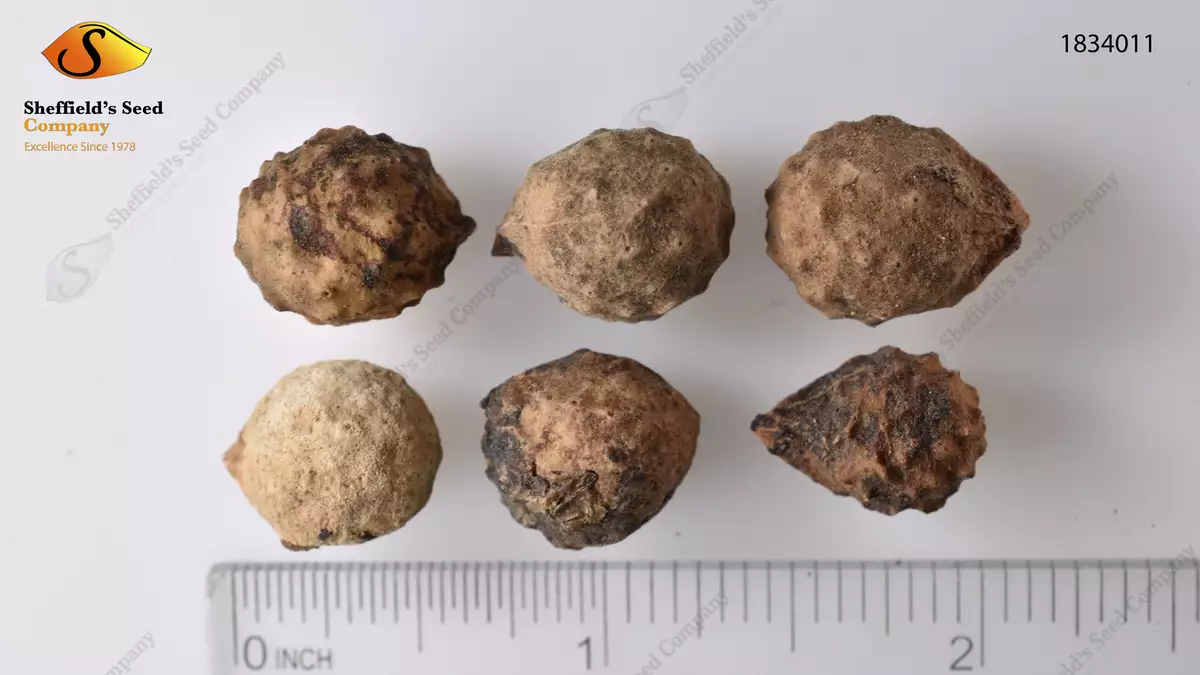
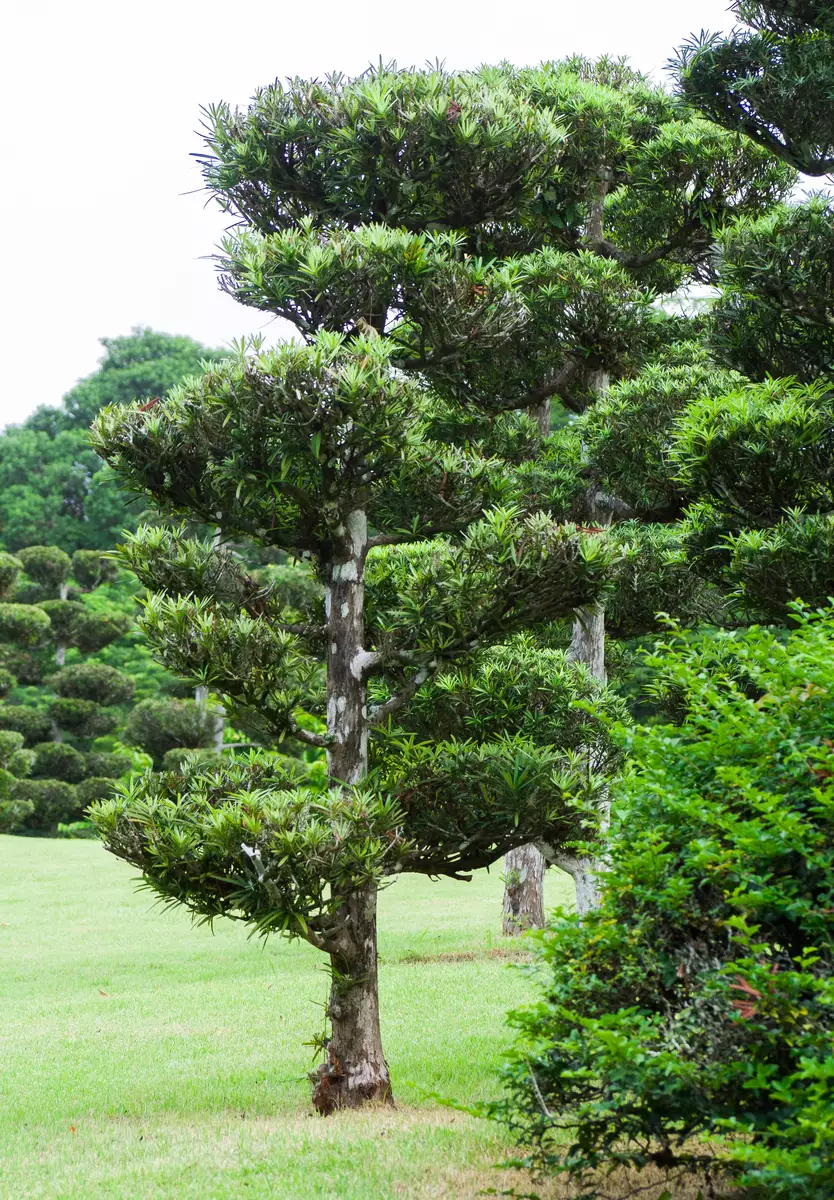
Looking for an elegant and low-maintenance tree for your garden? Look no further than Podocarpus macrophyllus, also known as Southern Yew, Yew Plum Pine, and Kusamaki. This coniferous evergreen tree is native to southern Japan and China and can grow up to 60 ft tall. Its strap-shaped leaves are 6-12 cm long, and its cones have 2-4 scales, usually only one fertile, which bears a single seed. Fleshy and berry-like, these cones turn reddish-purple and are eaten by birds, which then disperse the seeds in their droppings. Podocarpus macrophyllus is also a popular bonsai tree and a state tree of Chiba Prefecture, Japan. It is resistant to termites and water and is used for quality wooden houses in Okinawa Prefecture. Whether you're looking for a decorative shrub or a bonsai, Podocarpus macrophyllus is an excellent choice.