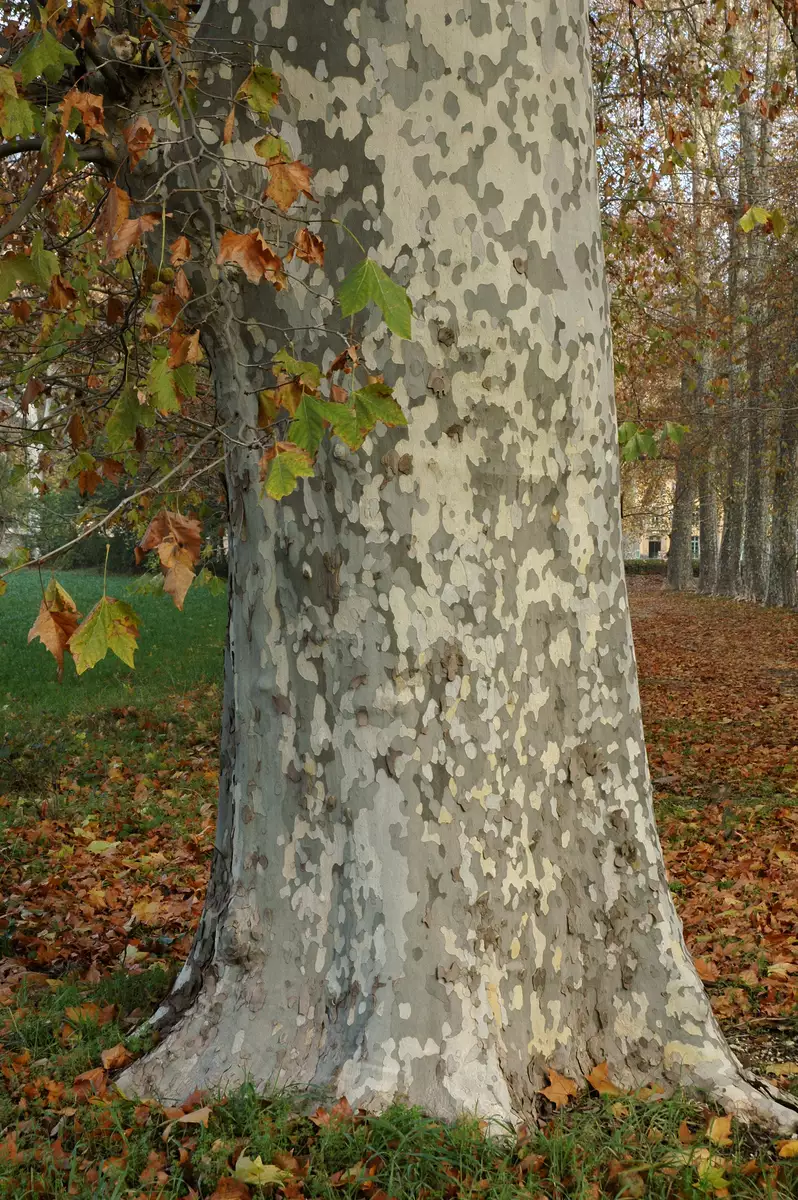
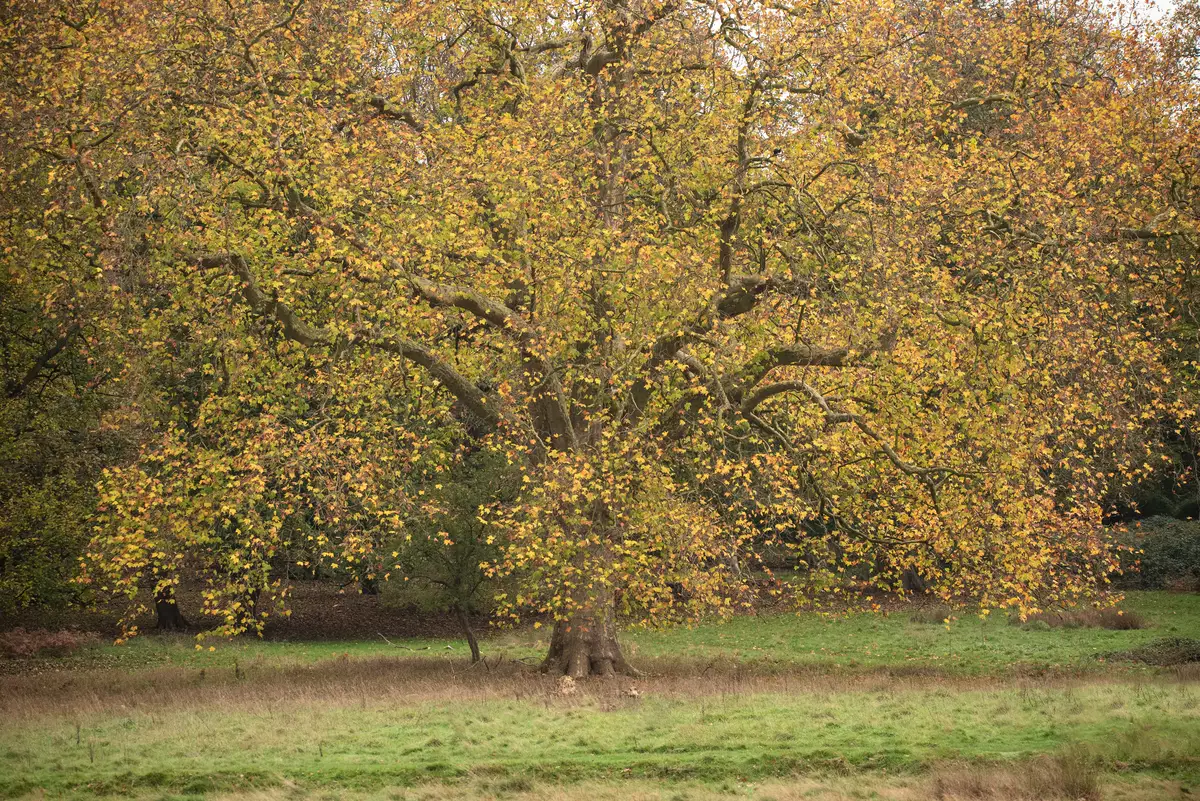
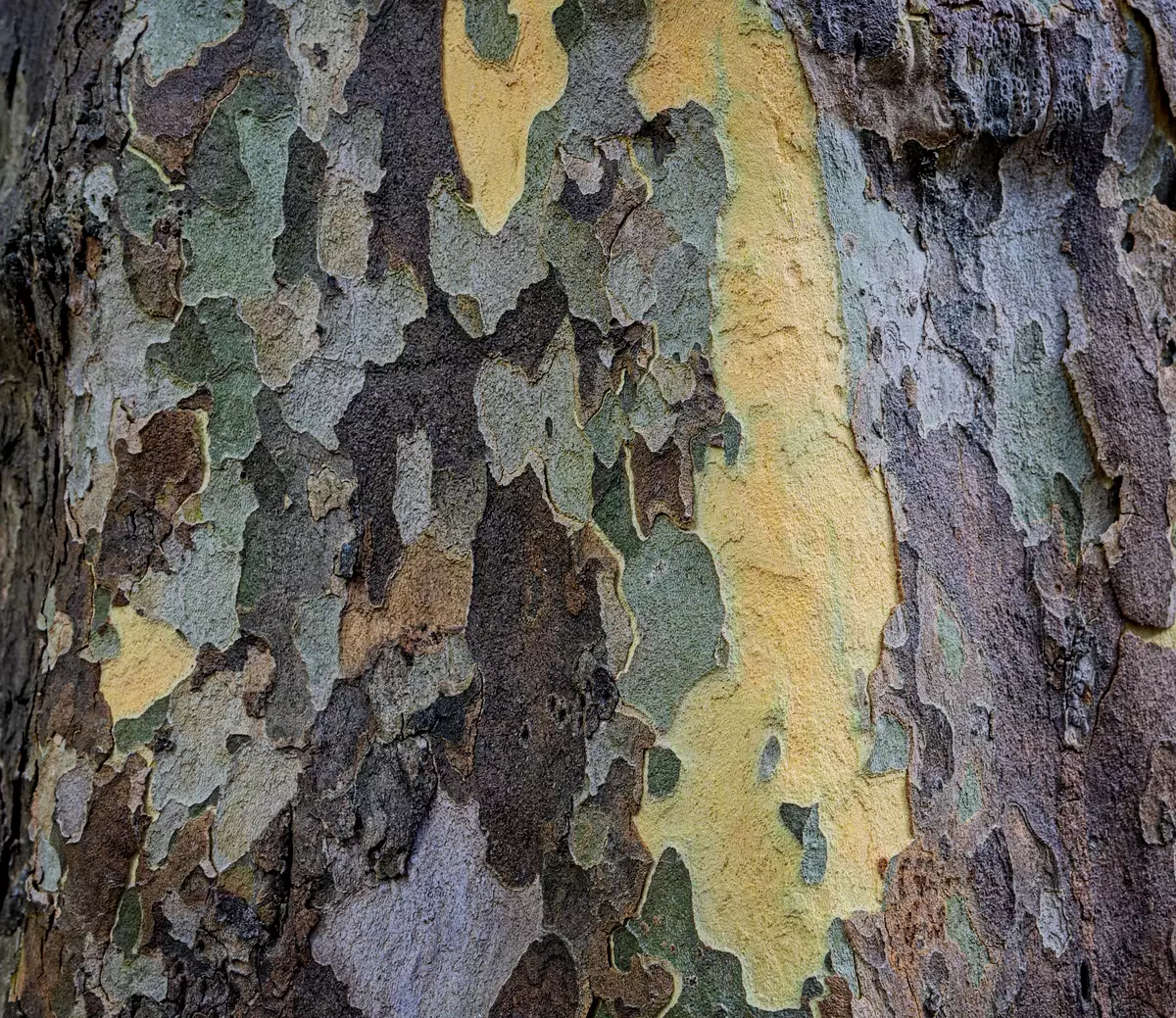
London Plane Tree (Platanus acerifolia) is a distinguished hybrid developed in the 1640s from American Sycamore and Oriental Plane Tree. Known for its resilience to urban pollution, this tree has become a staple in city landscapes around the world, thriving in zones 5-9. Reaching heights of 75-100 feet with a similar spread, London Plane Tree features a young pyramidal shape that matures into a broad canopy, providing excellent shade. Its iconic mottled bark exfoliates to reveal a creamy olive surface, offering year-round visual interest.
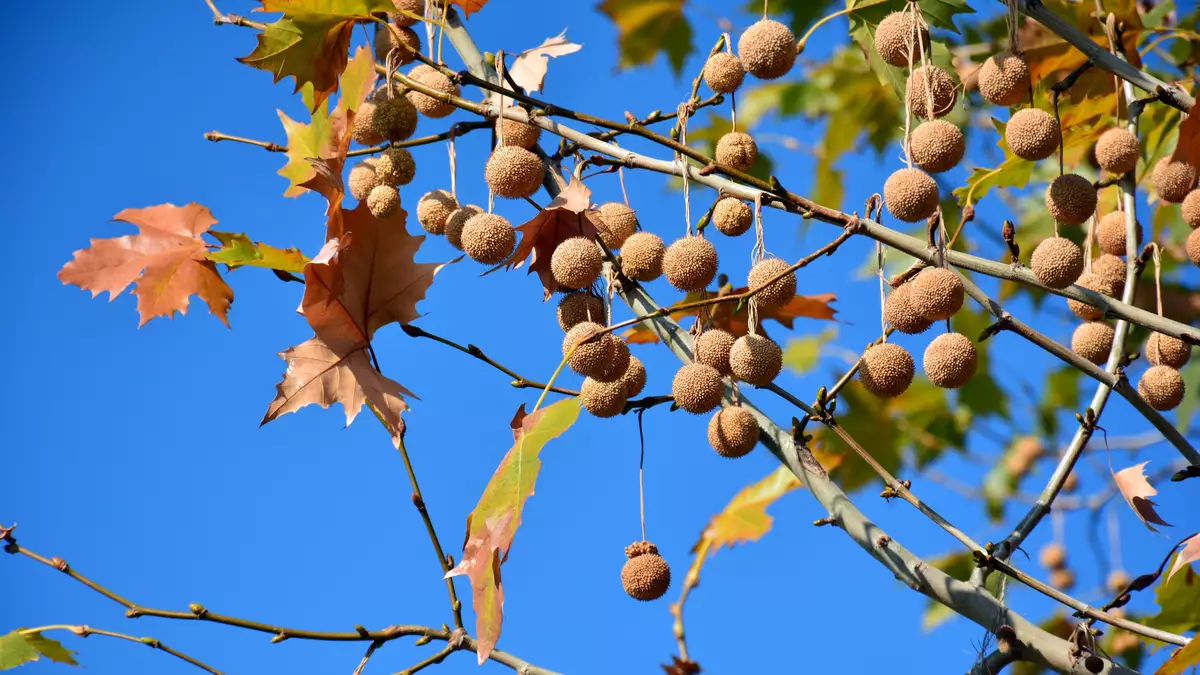
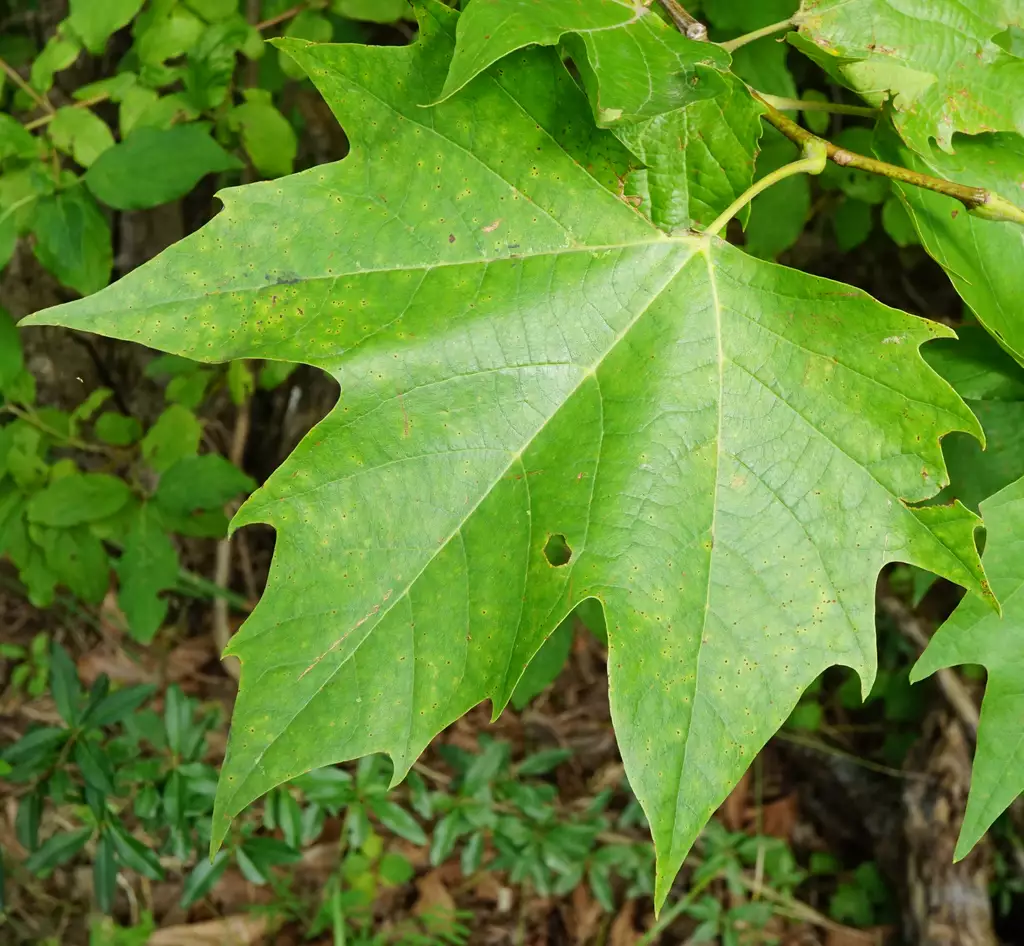
The tree's medium to dark green leaves, resembling those of maples, transition to a subdued yellow-brown in the fall. Inconspicuous yellowish male and reddish female flowers bloom in clusters during April, leading to the formation of distinctive paired fruit balls that persist into winter. These attributes, combined with its adaptability to diverse soil types and conditions, make it an exceptional choice for urban planting. While it requires regular maintenance due to leaf and fruit litter, London Plane Tree's tolerance for adversity and striking aesthetic ensure its continued popularity in urban parks and large gardens.