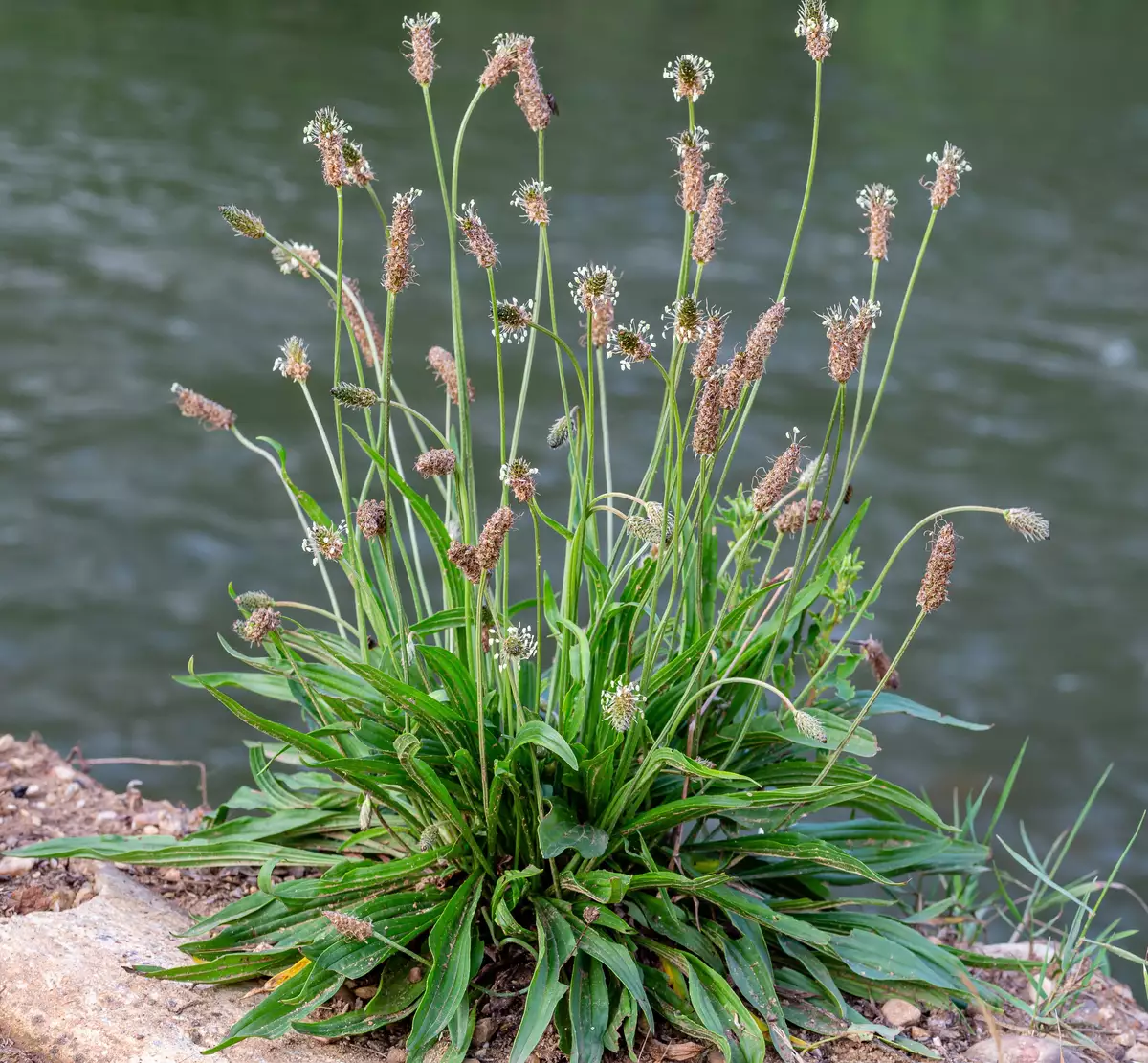
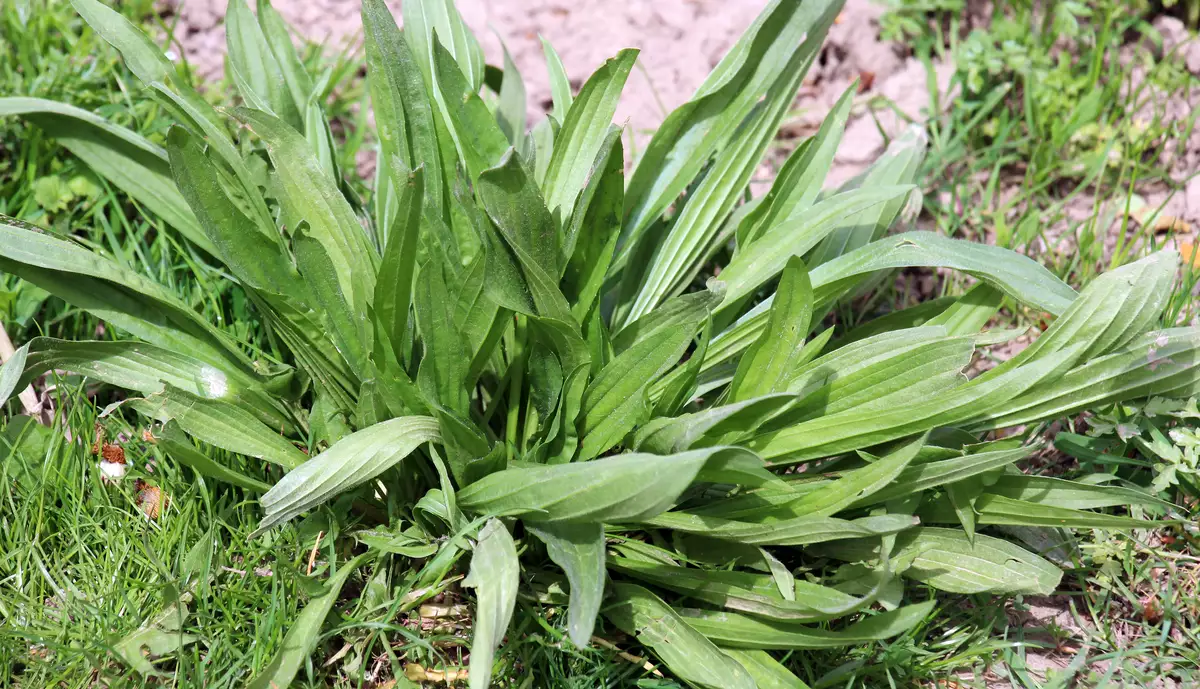
Plantago lanceolata, commonly known as Narrowleaf Plantain or Ribwort Plantain, is a versatile member of the Plantaginaceae family. Recognizable by its slender, lance-shaped leaves emerging from a basal rosette, this hardy perennial is a staple in lawns, pastures, and cultivated lands worldwide. Unlike its broadleaf cousin, Plantago major, the narrowleaf variant features seeds clustered near the tip of the stem, making identification straightforward. Its flower stalks, devoid of leaves, rise to bear dense, cylindrical spikes adorned with inconspicuous blossoms, which yield capsules containing two oval seeds.
Despite its categorization as a weed, Narrowleaf Plantain offers surprising culinary uses. Its leaves can be enjoyed raw or cooked, while its mushroom-like flower buds add depth to stocks. Additionally, traditional medicine values its leaves for their therapeutic effects on respiratory ailments and skin conditions. Populations in Europe, Asia, and beyond have embraced it both as a medicinal ally and a culinary ingredient. Though considered invasive in parts of the U.S. and Australia, it remains a noteworthy botanical companion for its ecological and nutritional benefits.