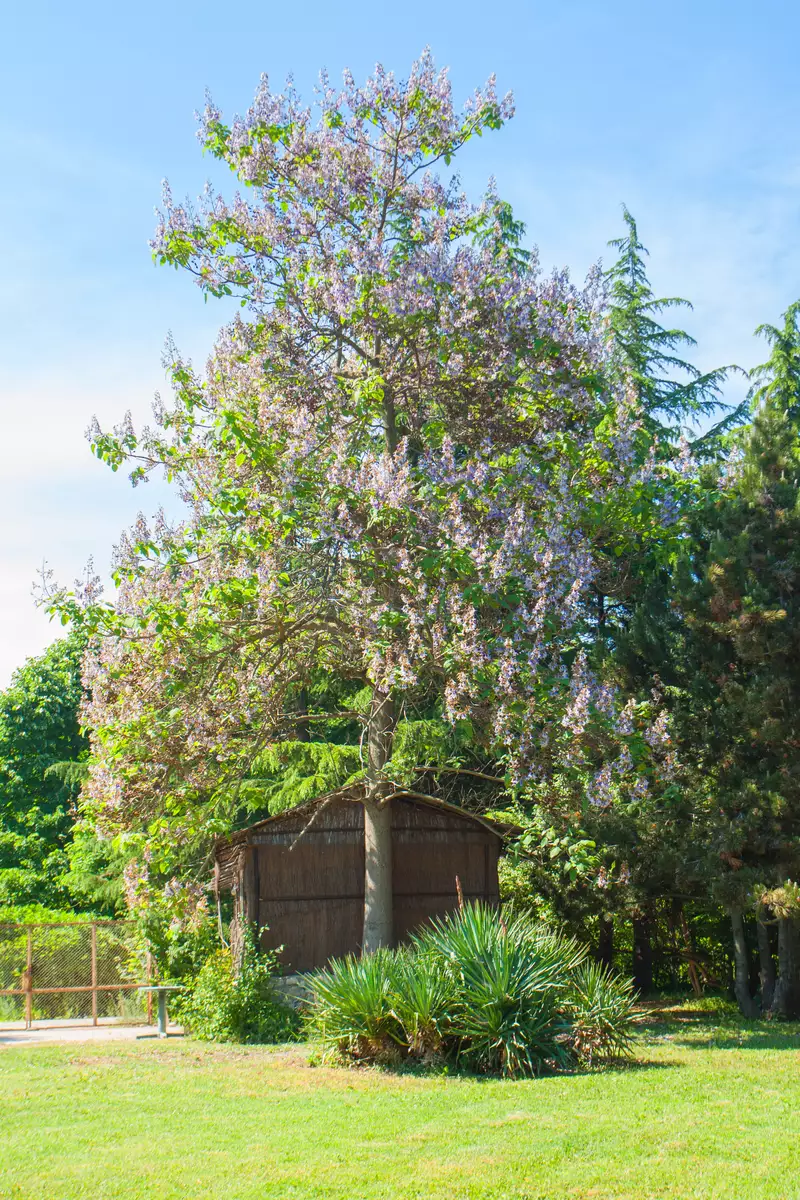
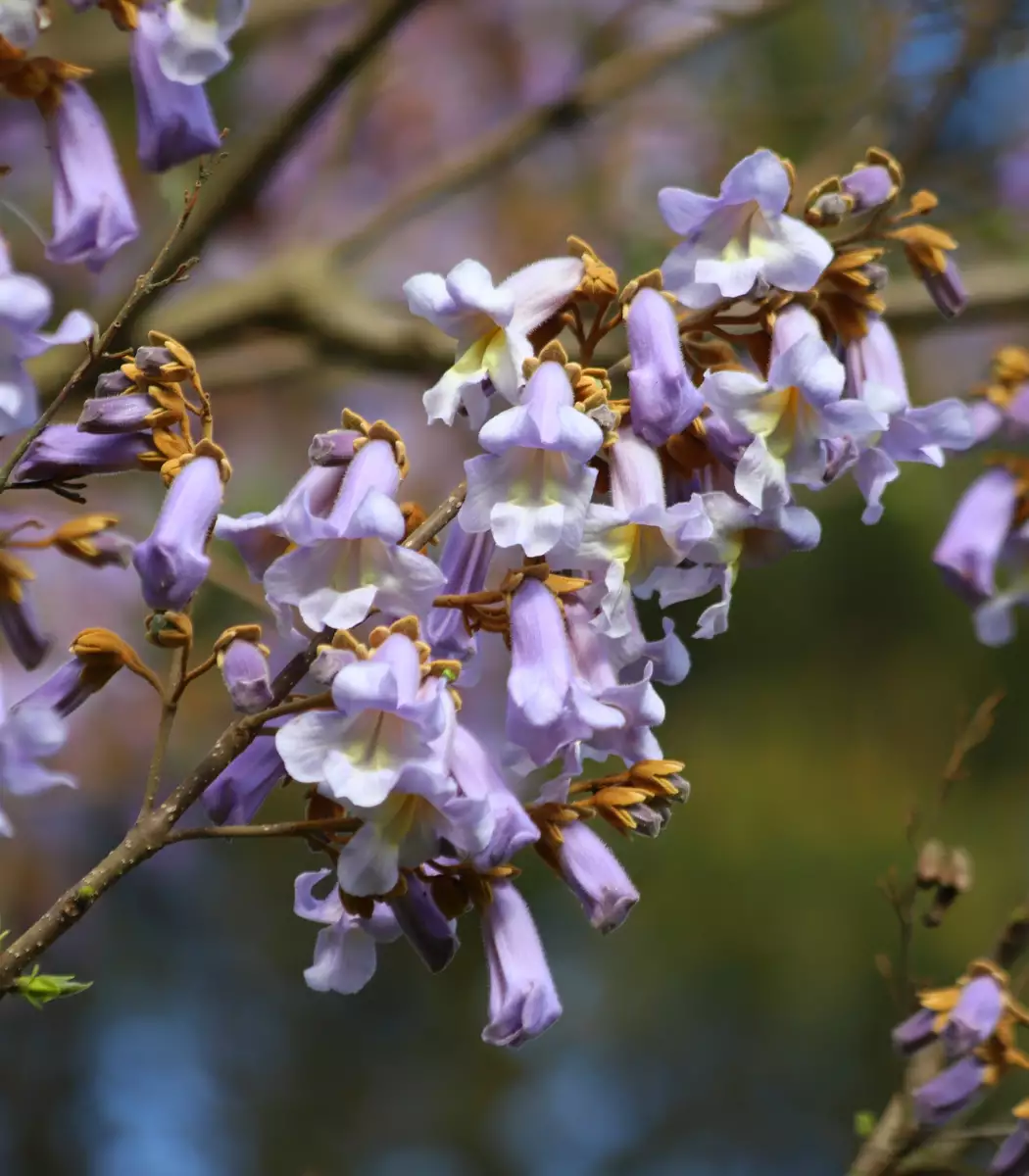
Discover the enchanting beauty of Paulownia tomentosa, commonly known as Empress Tree, Princess Tree, or Royal Paulownia. Native to central and western China, this fast-growing, deciduous tree adds an elegant touch to any landscape with its striking features. Standing 30 to 60 feet tall with a similar spread, this remarkable tree is known for its profuse bloom of fragrant, trumpet-shaped, pinkish-lavender flowers that appear in clusters each spring, creating an eye-catching floral display that is irresistibly reminiscent of vanilla.
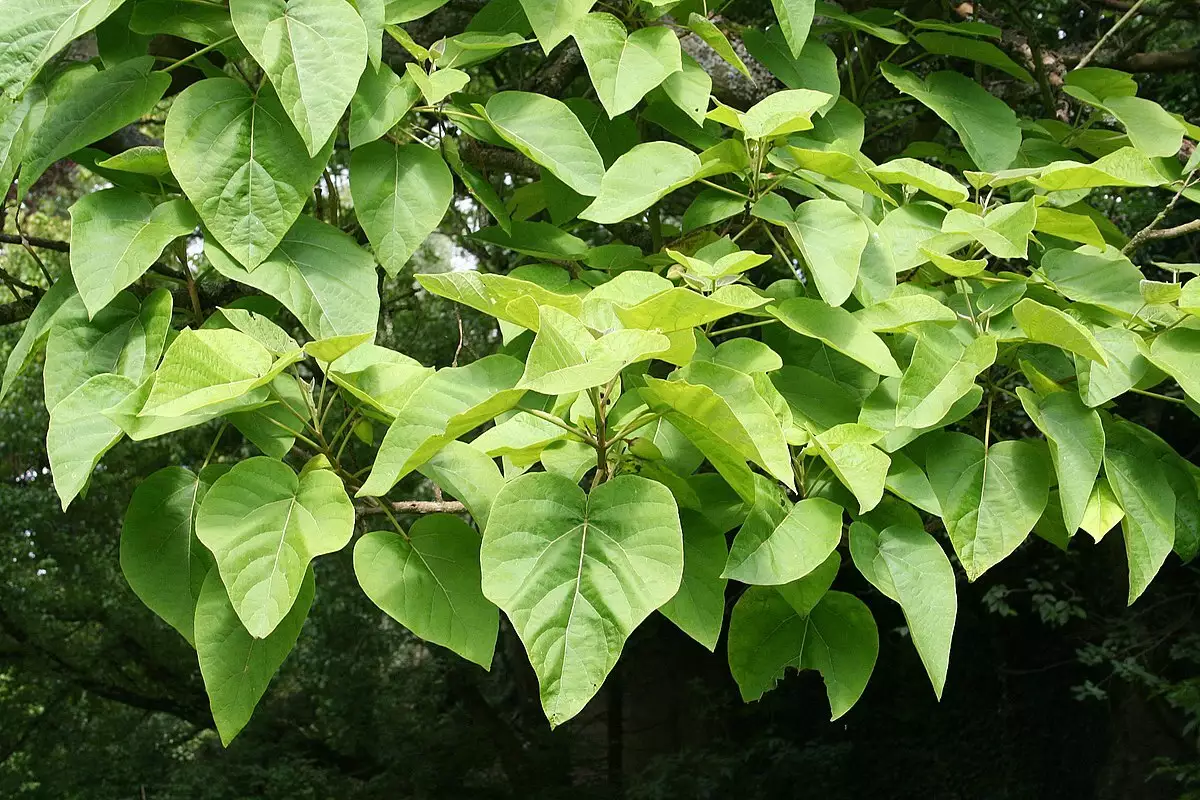
The tree thrives in zones 5 to 8 and, although it prefers full sun and moist, sandy loams, it tolerates a variety of soils and drought conditions, which makes it ideal for urban environments. Its massive, heart-shaped leaves, reaching sizes of up to 24 inches, provide dense shade, making it a popular choice for a stunning shade tree.
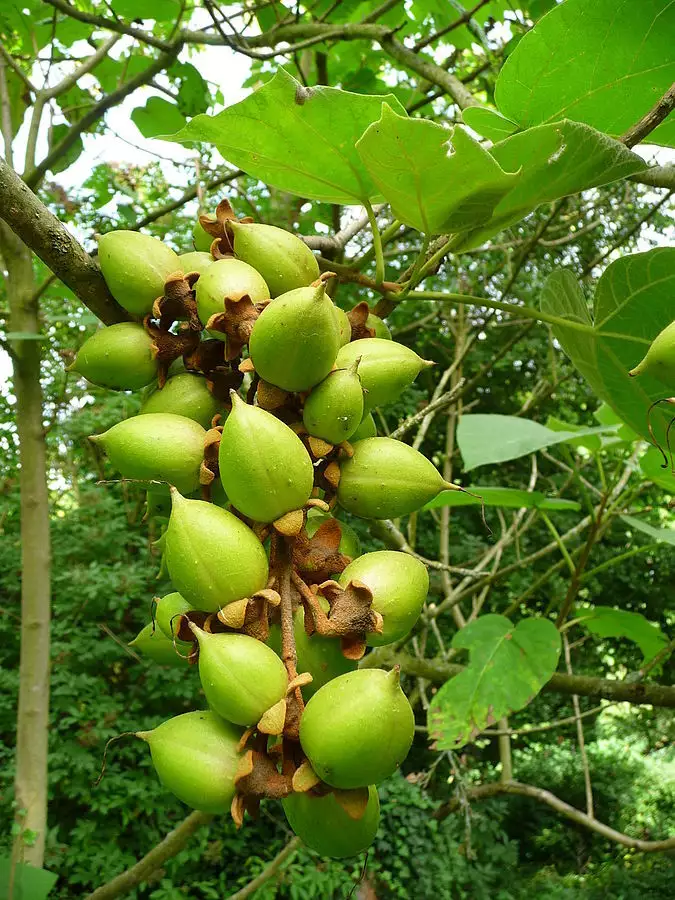
While appreciated for its aesthetic appeal and utility in reclaiming strip mining areas, it's important to note that Paulownia tomentosa has invasive tendencies, particularly in certain U.S. states. Therefore, it’s crucial to consider its potential for rapid colonization via abundant winged seeds that disperse easily in wind and water. While no serious insect or disease problems are associated with the tree, its resilience in adverse conditions allows it to colonize urban sites and disturbed areas effortlessly.
Named in honor of Princess Anna Paulowna of Russia, this noteworthy tree has a unique cultural heritage alongside its beautiful and functional appeal. Whether used as a specimen flowering tree for lawns and gardens or cultivated in containers for its impressive foliage, the Empress Tree is sure to captivate with its royal presence. However, mindful management is advised to prevent its unchecked spread in natural settings.