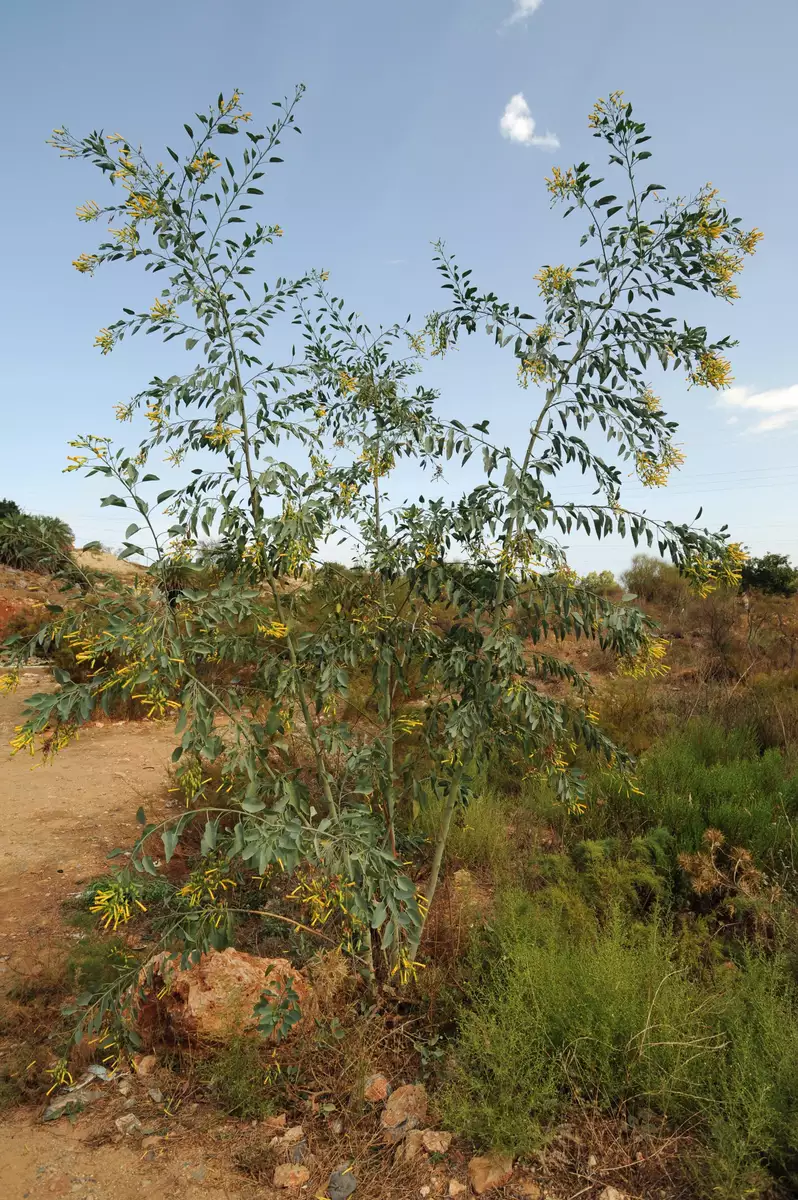
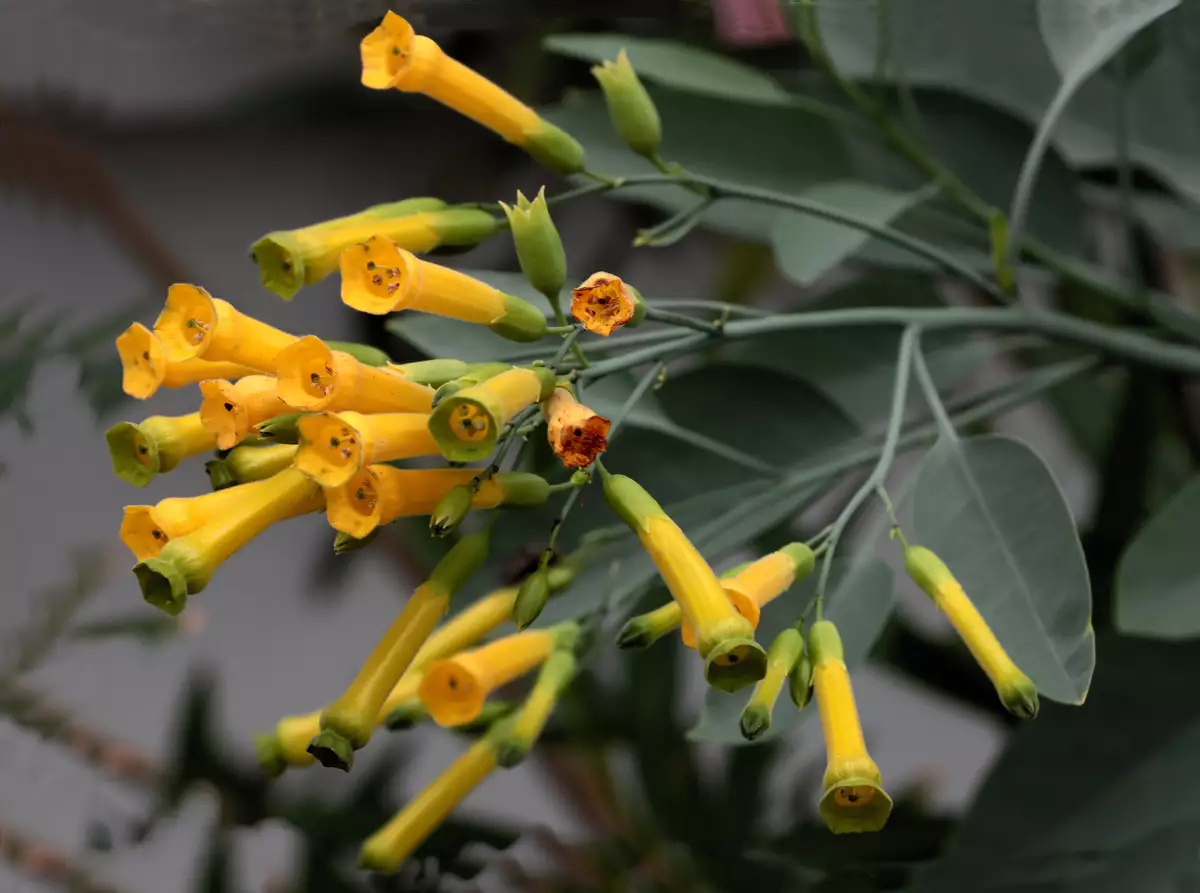
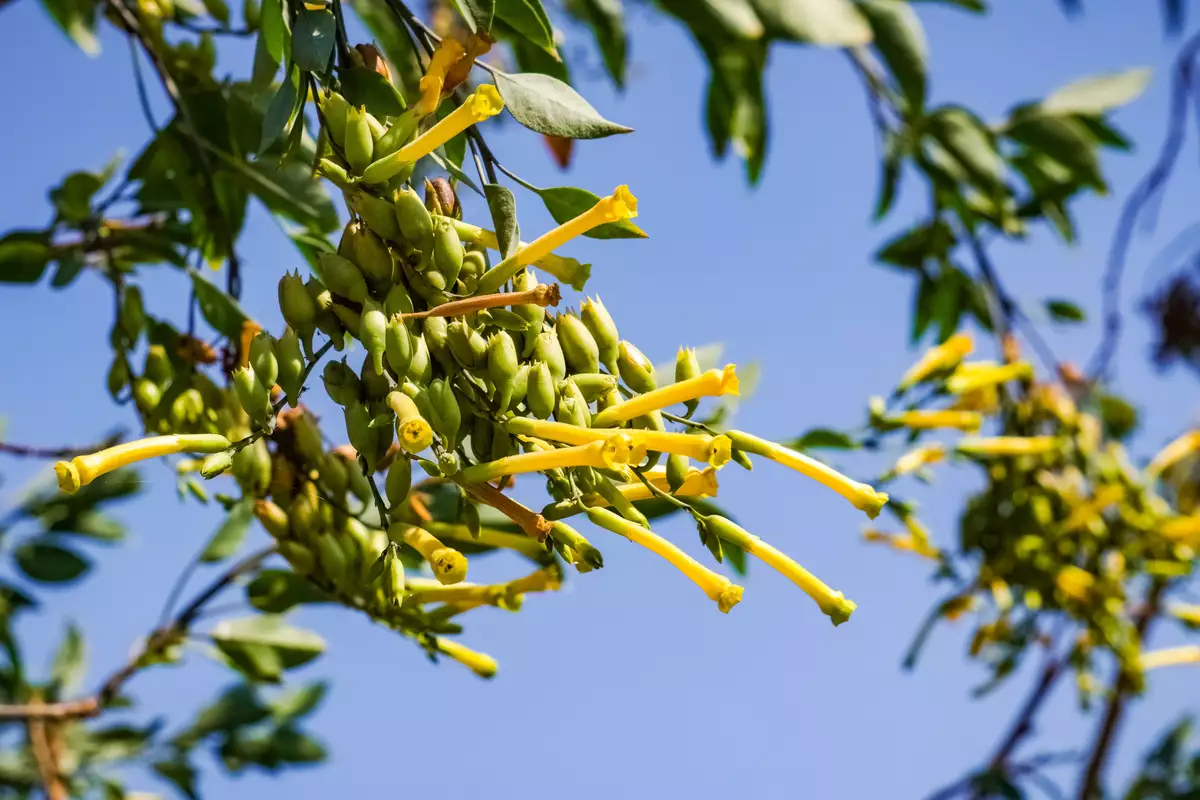
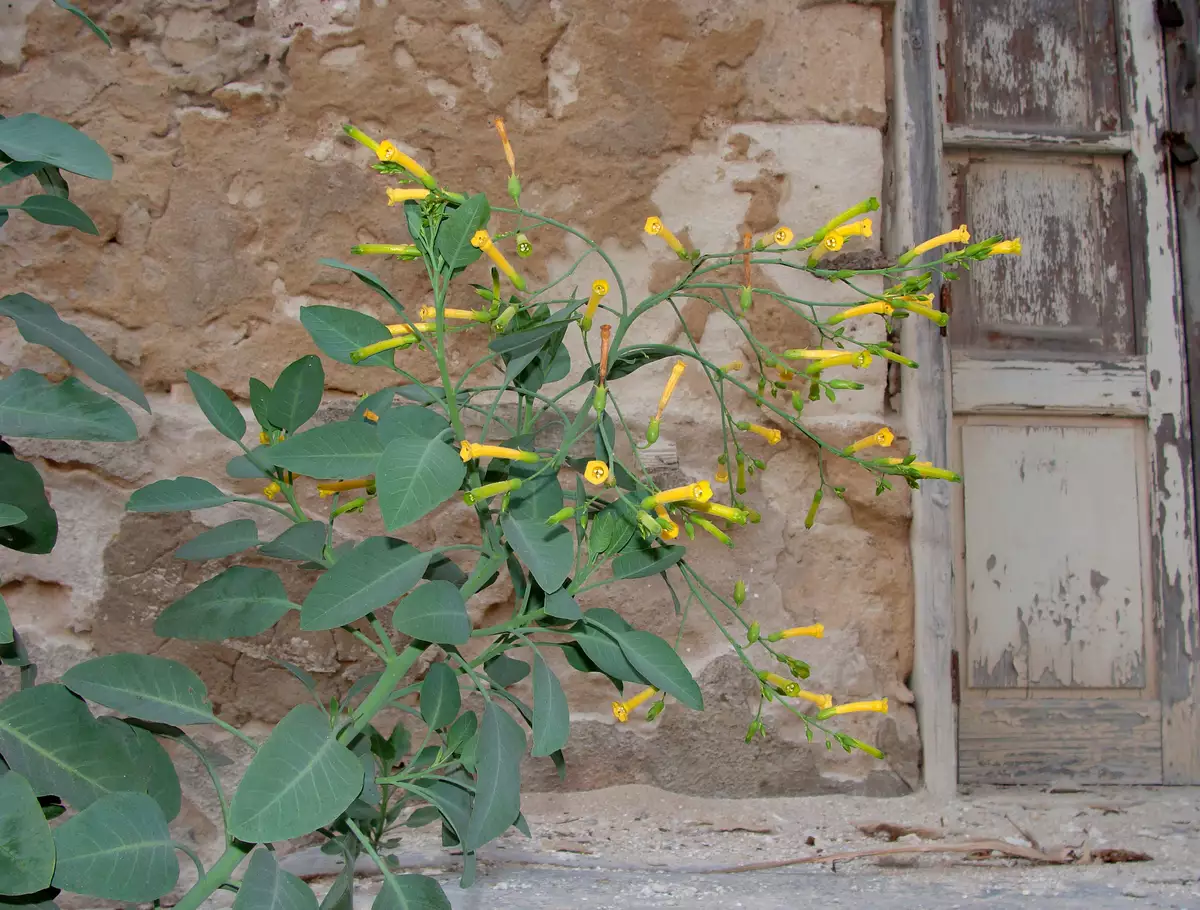
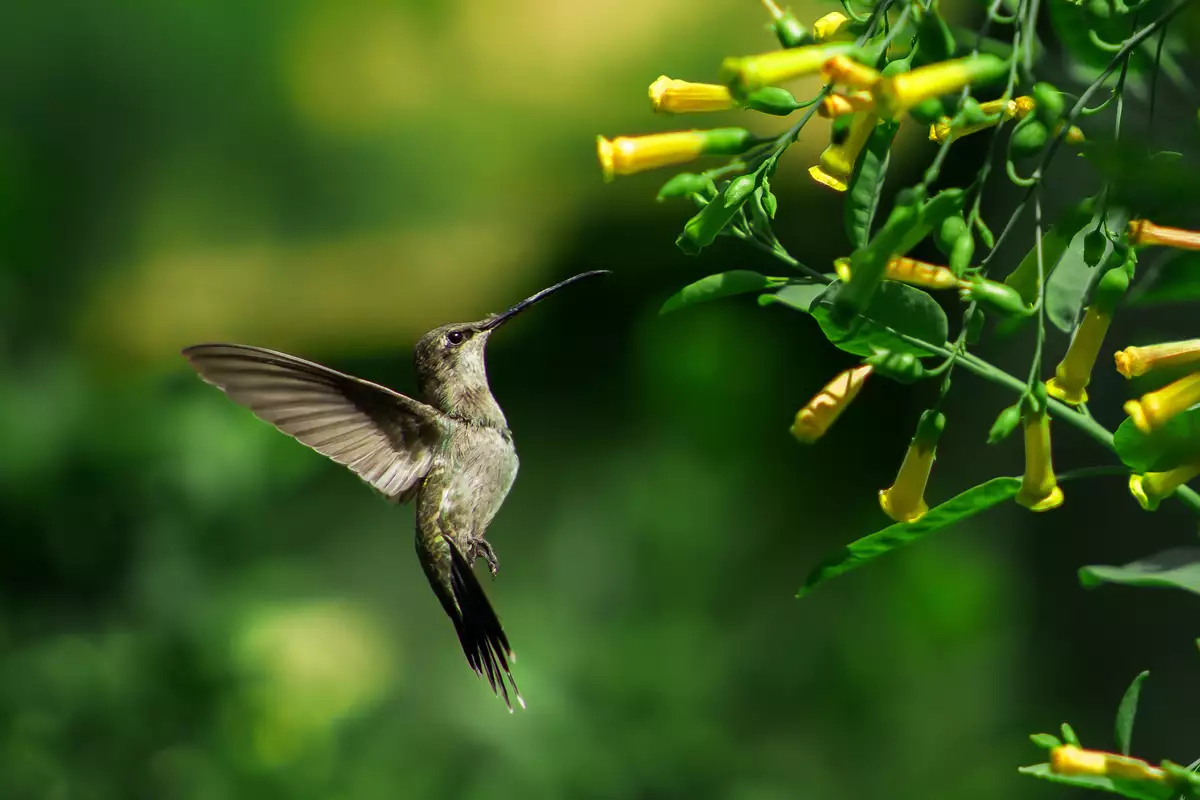
Nicotiana glauca, commonly known as Tree Tobacco, is a visually striking shrub akin to a small tree, often reaching up to 10 feet tall. Native to Argentina and Bolivia, this perennial has naturalized in dry, desert regions worldwide. This plant is characterized by its vividly glaucous, rubbery leaves and bright, tubular yellow flowers that blossom extensively from March to November, adding an ornamental touch to landscapes. Tree Tobacco thrives in sunny locations with well-draining soils and can often be found along roadsides, stream banks, and disturbed areas below 4,500 feet in elevation. Despite its aesthetic appeal, it contains the toxic alkaloid anabasine, similar to nicotine, and has been traditionally used in Mexican and American Indian cultures for treating wounds and skin infections. Preferring a sunlit environment, it is cultivated for its decorative value but requires careful handling due to its toxicity. This robust plant is ideal for xeriscaping, offering vivid floral displays against its bluish-gray foliage, although it may escape cultivation and become an aggressive grower if not appropriately managed.