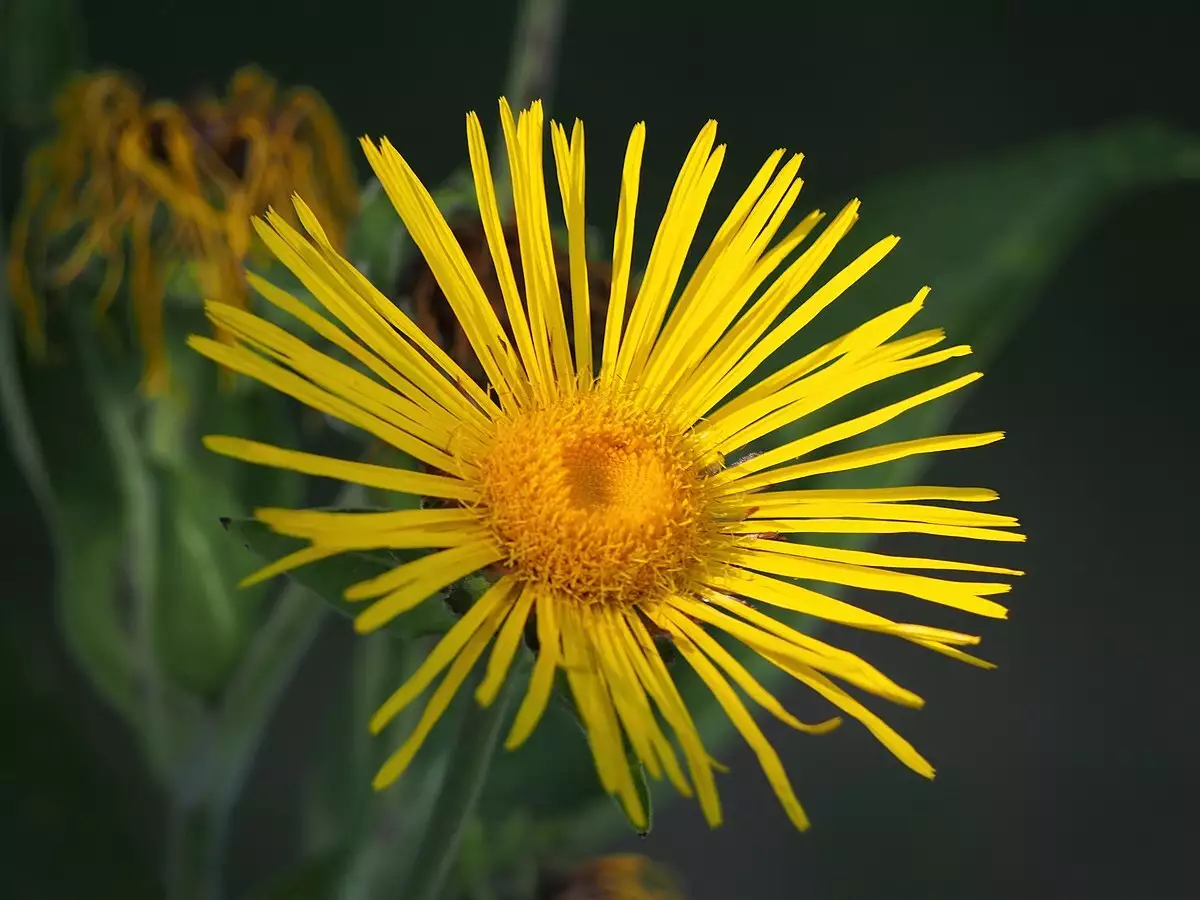
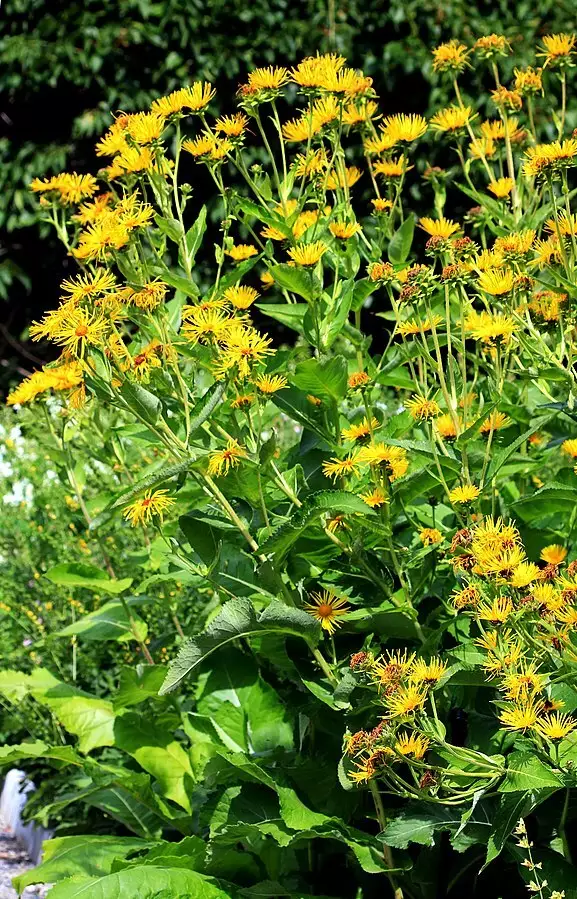
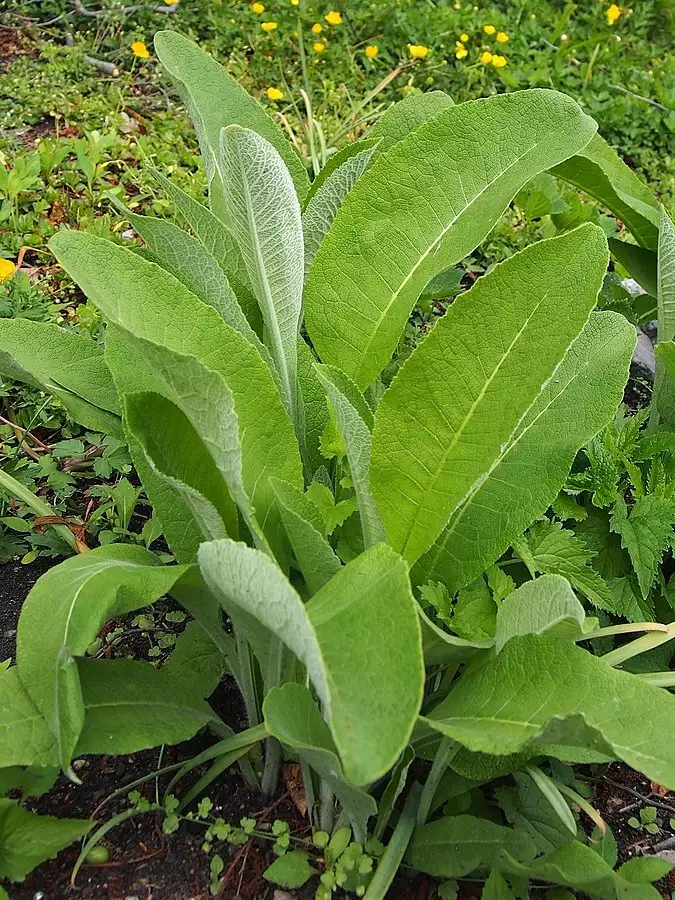
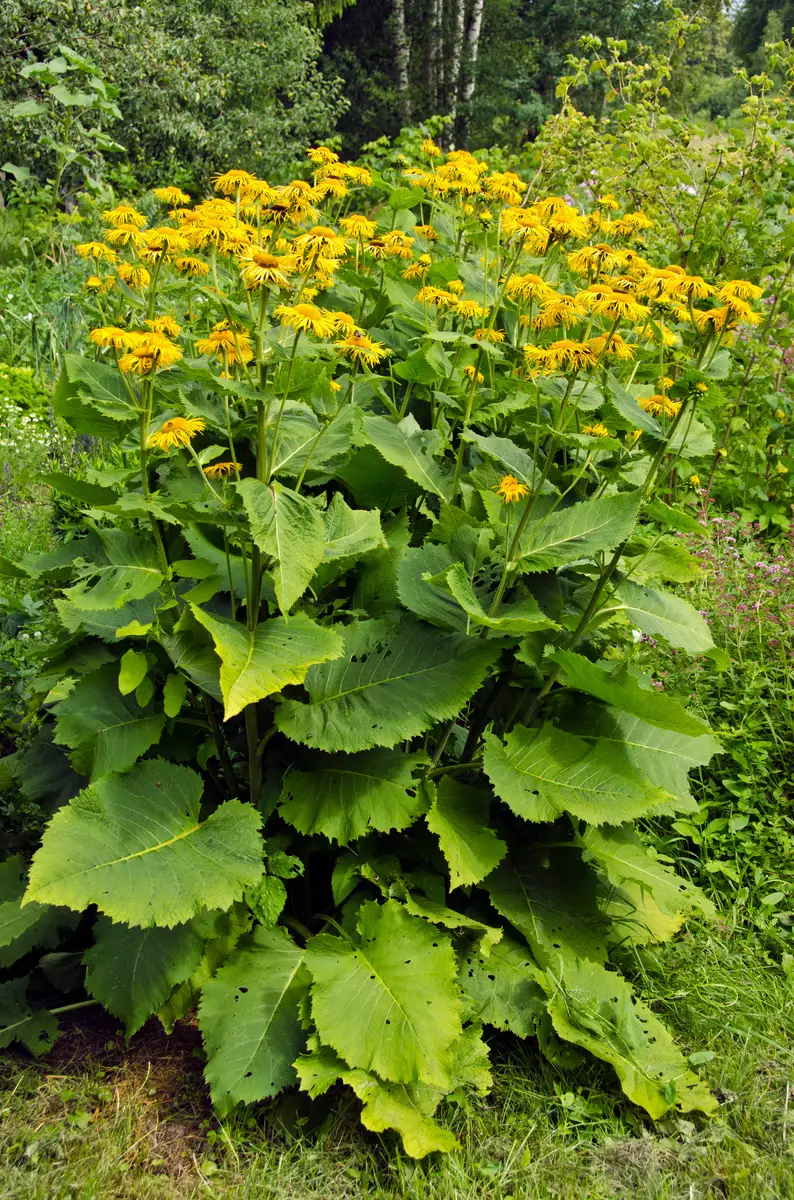
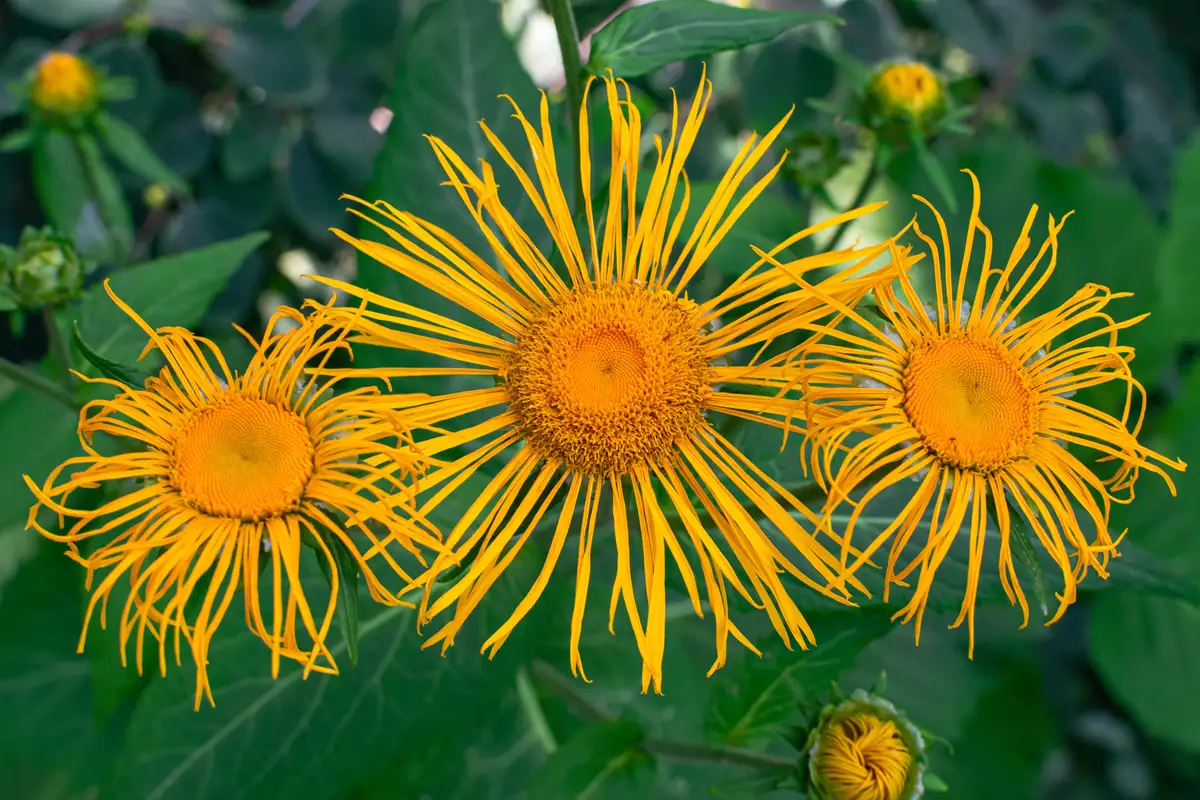
Inula helenium, popularly known as Elecampane, is a remarkable herbaceous perennial hailing from Eurasia, thriving in hardiness zones 3 to 7. Boasting an impressive height of 3 to 6 feet and a spread of 2 to 3 feet, this towering plant captures attention with its striking sunflower-like blooms. Between July and September, Elecampane adorns gardens with its showy yellow flowers, characterized by scraggly rays encircling a central disk of darker yellow tubular florets. Well-suited to cottage, wildflower, or herb gardens, Elecampane flourishes in moist, well-drained soils and thrives in full sun to part shade environments. Its hardy nature and tolerance of diverse soil types make it a low-maintenance addition to any garden.
Elecampane's storied past traces back to Europe and Asia, and its enduring legacy includes usage as a traditional medicinal remedy for respiratory ailments. The plant's roots even flavor absinthe in parts of Europe today. However, gardeners be cautious; while this plant offers beauty and historical intrigue, it can become invasive in areas of the US, spreading swiftly through its resilient root system. Wear gloves when handling to avoid contact dermatitis. Whether planted for its golden blooms or its rich history, elecampane is sure to impart a touch of wild beauty to your landscape.