Introduced to: Afghanistan, Alabama, Algeria, Angola, Argentina Northeast, Argentina Northwest, Aruba, Assam, Bahamas, Baleares, Bangladesh, Benin, Bolivia, Botswana, Brazil South, Brazil Southeast, Bulgaria, Burkina, California, Canary Is., Cape Provinces, Cape Verde, Central European Rus, Chad, Chile North, China North-Central, China South-Central, China Southeast, Colombia, Costa Rica, Cuba, Cyprus, Czechoslovakia, Djibouti, Dominican Republic, East Aegean Is., Egypt, Eritrea, Ethiopia, France, Galápagos, Gambia, Great Britain, Greece, Guatemala, Guinea, Guinea-Bissau, Gulf States, Haiti, Honduras, Illinois, India, Iran, Italy, Ivory Coast, Jamaica, Kenya, Korea, Kriti, Kuwait, KwaZulu-Natal, Lebanon-Syria, Leeward Is., Libya, Madagascar, Madeira, Malawi, Mali, Maryland, Mauritania, Mauritius, Minnesota, Morocco, Mozambique, Namibia, Netherlands Antilles, New Caledonia, New Mexico, New South Wales, New York, Nicaragua, Niger, Nigeria, Northern Provinces, Northern Territory, Oman, Pakistan, Palestine, Paraguay, Peru, Portugal, Puerto Rico, Queensland, Réunion, Romania, Sardegna, Saudi Arabia, Senegal, Sicilia, Somalia, South Australia, Southwest Caribbean, Spain, Sudan, Tanzania, Tunisia, Turkey, Turkey-in-Europe, Ukraine, Uruguay, Uzbekistan, Venezuela, Victoria, Vietnam, West Himalaya, Western Australia, Windward Is., Wisconsin, Xinjiang, Yemen, Yugoslavia, Zaïre, Zimbabwe
Native
Introduced
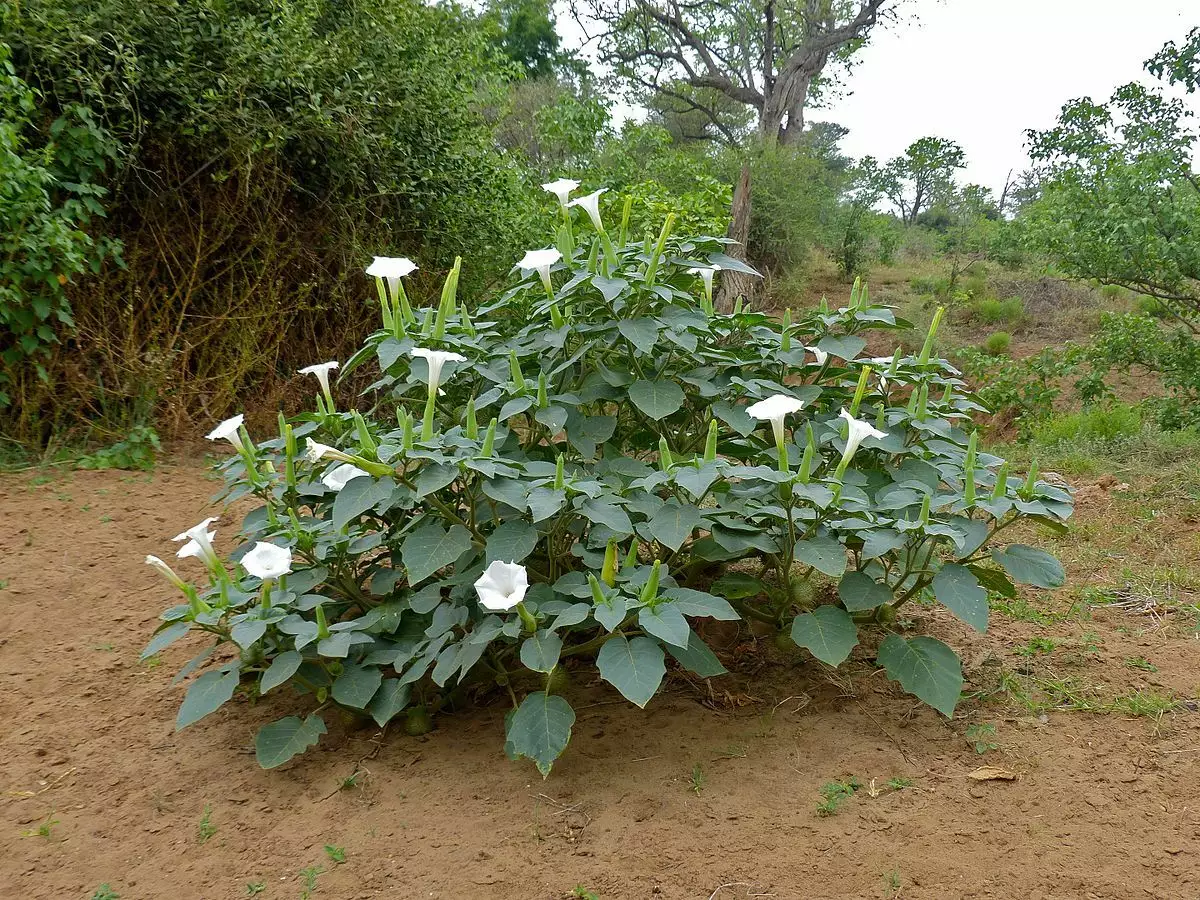
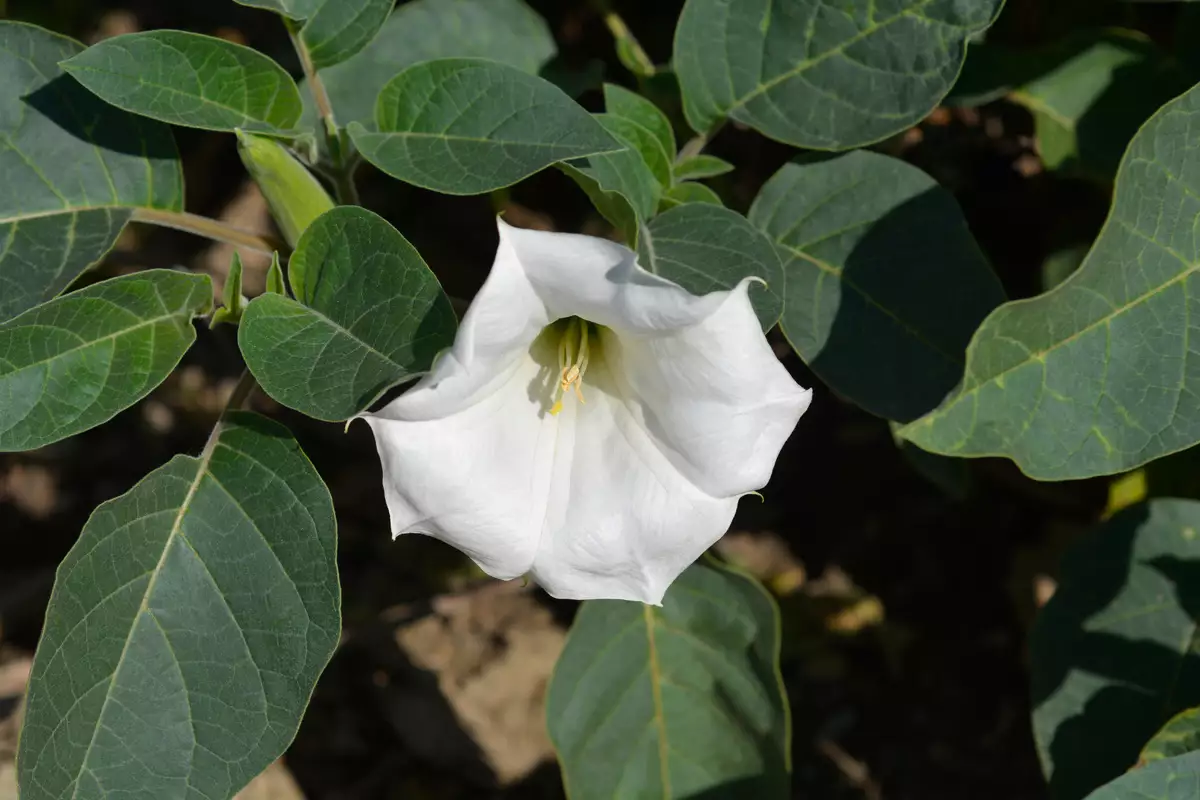
Discover the alluring charm of Datura inoxia, commonly known as Angel's Trumpet, Downy Thorn Apple, Indian Apple, Moonflower, or Pricklyburr. This captivating plant, a member of the nightshade family (Solanaceae), originates from the Southwestern United States and Central America. It thrives in sandy, gravelly terrains, but is remarkably adaptable, gracing gardens worldwide as an ornamental favorite. Known for its enchanting, fragrant blooms, it produces tubular flowers in cream, pink, and lavender shades. These striking blossoms unfurl in the evening, lasting till noon the next day, exuding an enchanting aroma throughout midsummer to frost.
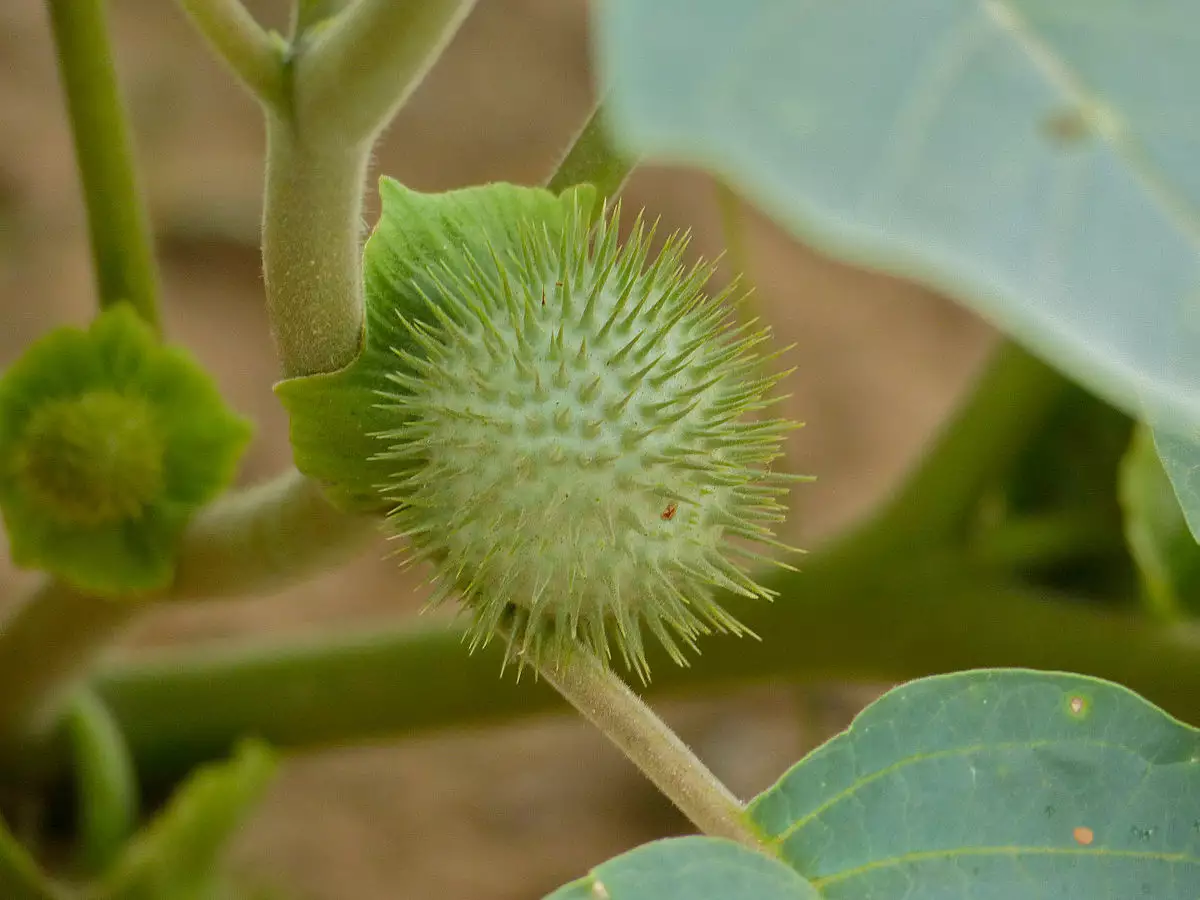
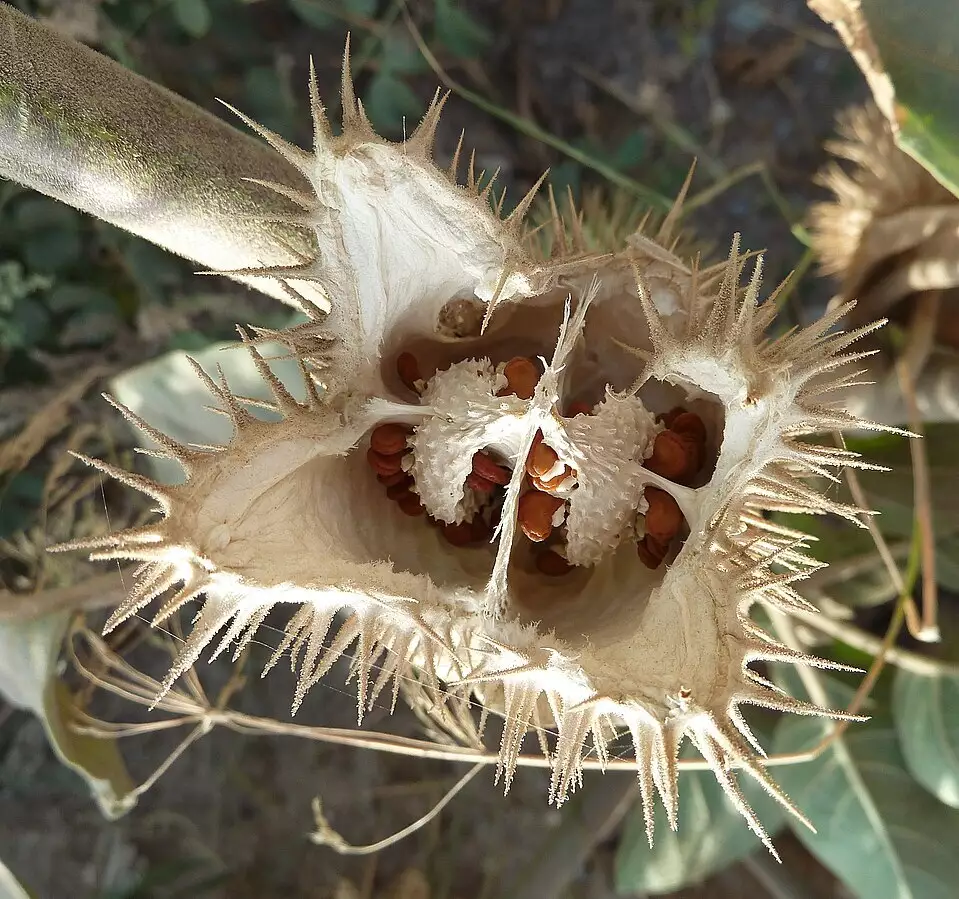
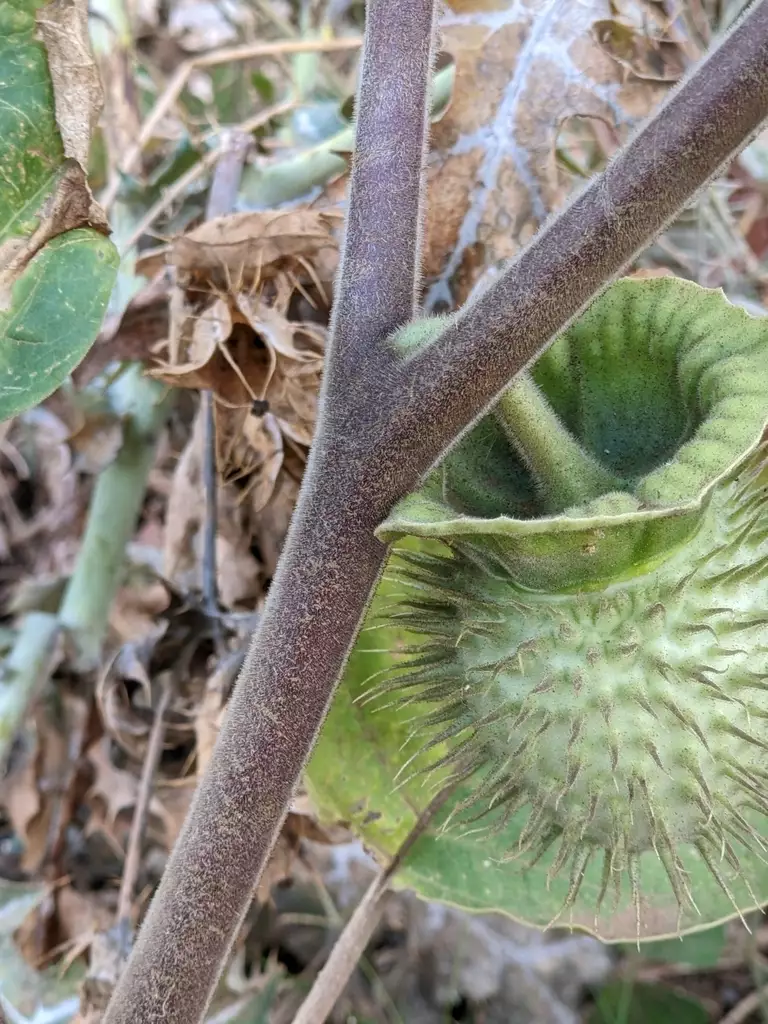
Despite its ornamental appeal, every part of Datura inoxia is extremely toxic if ingested. This tender perennial, often grown as an annual, features lush, dark green leaves and downy spherical fruits with spiny exteriors. Ideal for borders or as container specimens, it flourishes in full sun and rich, well-drained soils of USDA Zones 9-10. Although considered invasive in some regions, its beauty and drought tolerance make it a prized garden feature. With appropriate care, this striking plant can bring an exotic touch to your garden, enhancing its visual and olfactory landscape.








_(11710359934).jpg)
_fruit_(11710285385).jpg)
