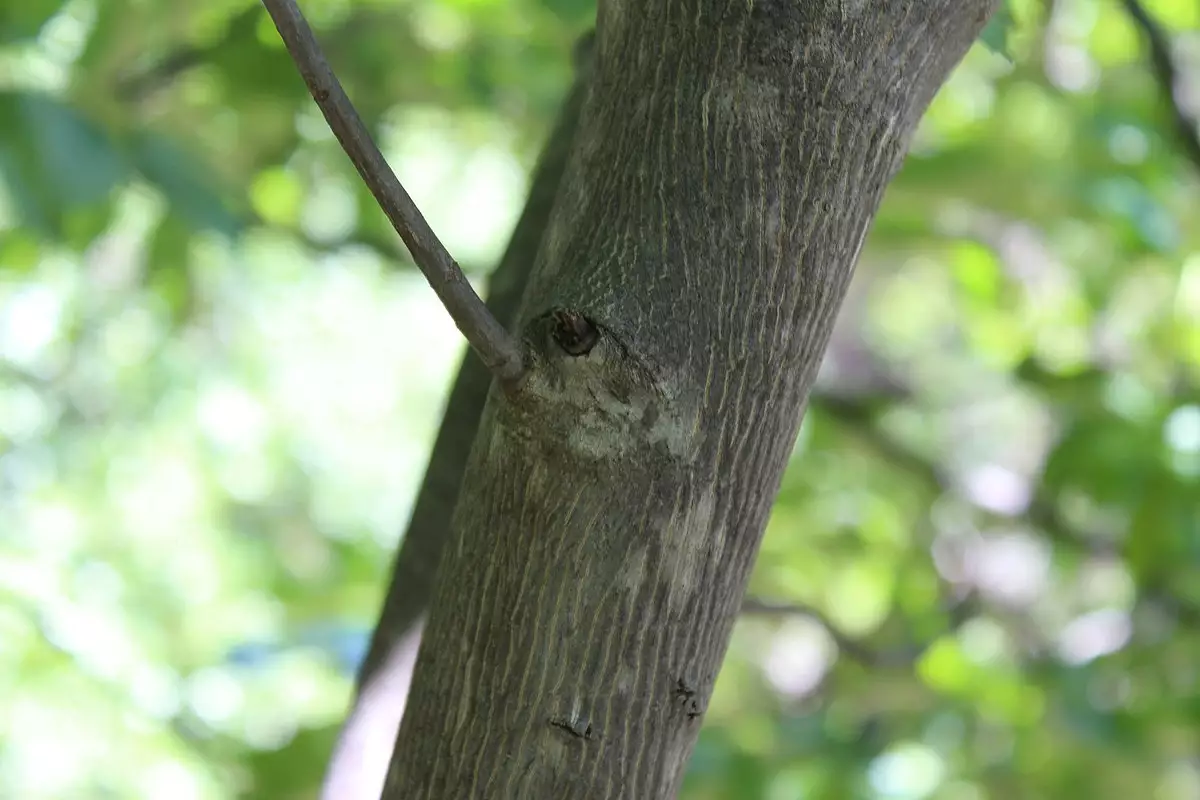
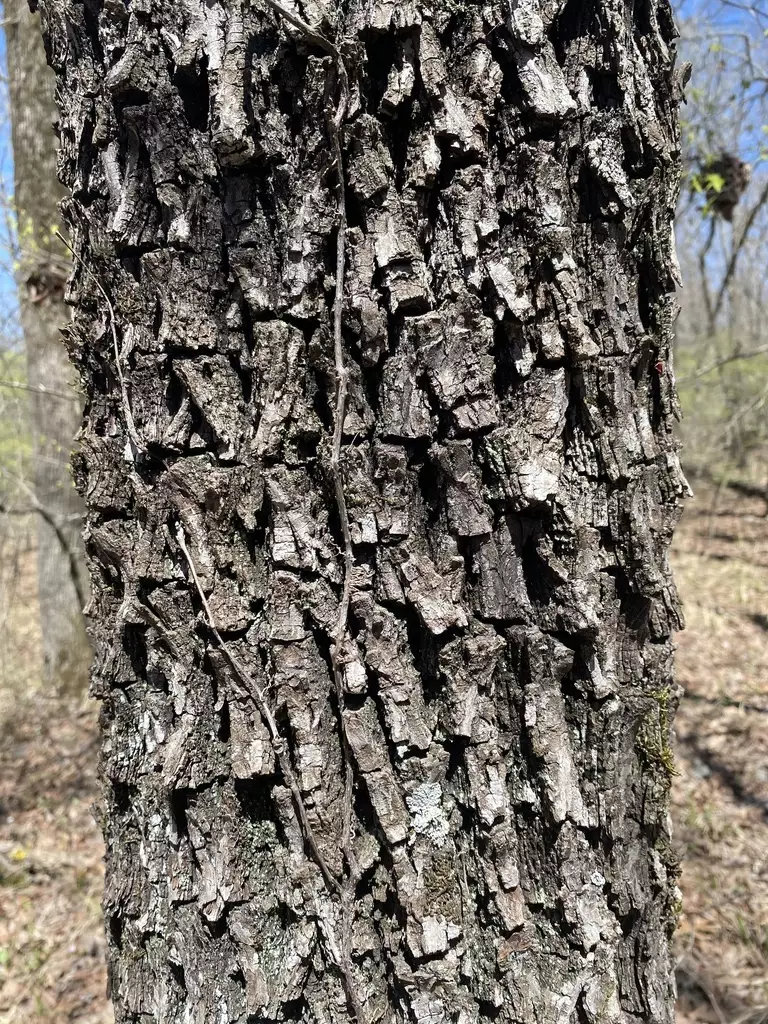
Carya texana, commonly known as Black Hickory, Buckley's Hickory, Red Hickory, or Texas Hickory, is a remarkable tree species belonging to the Juglandaceae family. Known for its adaptability, Black Hickory commonly grows in nutrient-poor, well-drained sandy soils, rocky uplands, and hillsides, thriving in dry, rugged landscapes from southern Indiana to Texas and Louisiana. This small to medium-sized deciduous tree is characterized by its unique bark, which is dark gray to black with tight, irregular blocky ridges and deep furrows. The tree typically reaches heights of 60 to 75 feet, although it can grow as tall as 100 feet under optimal conditions.
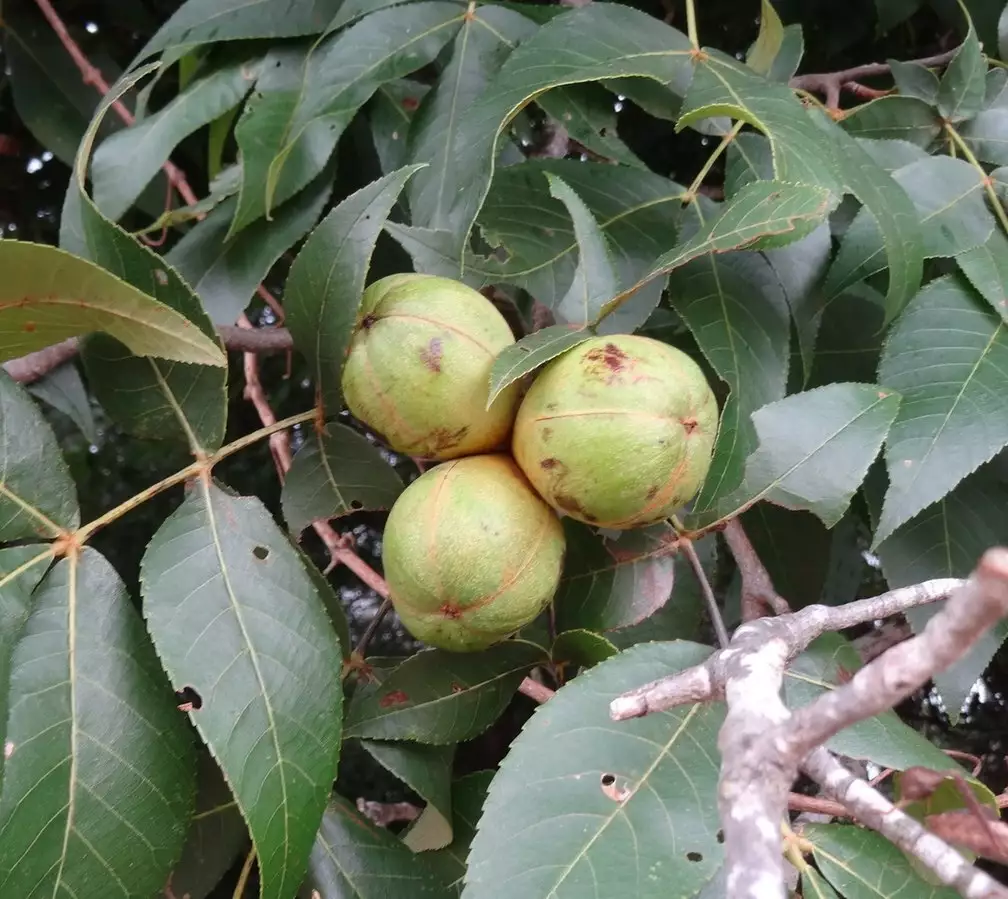
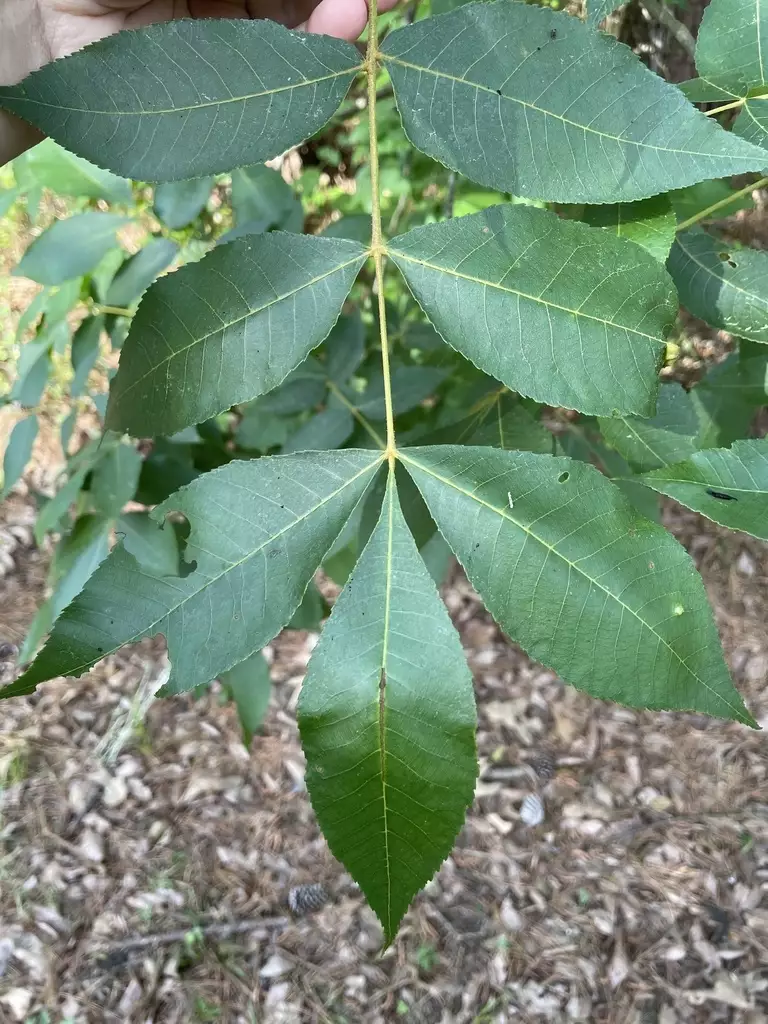
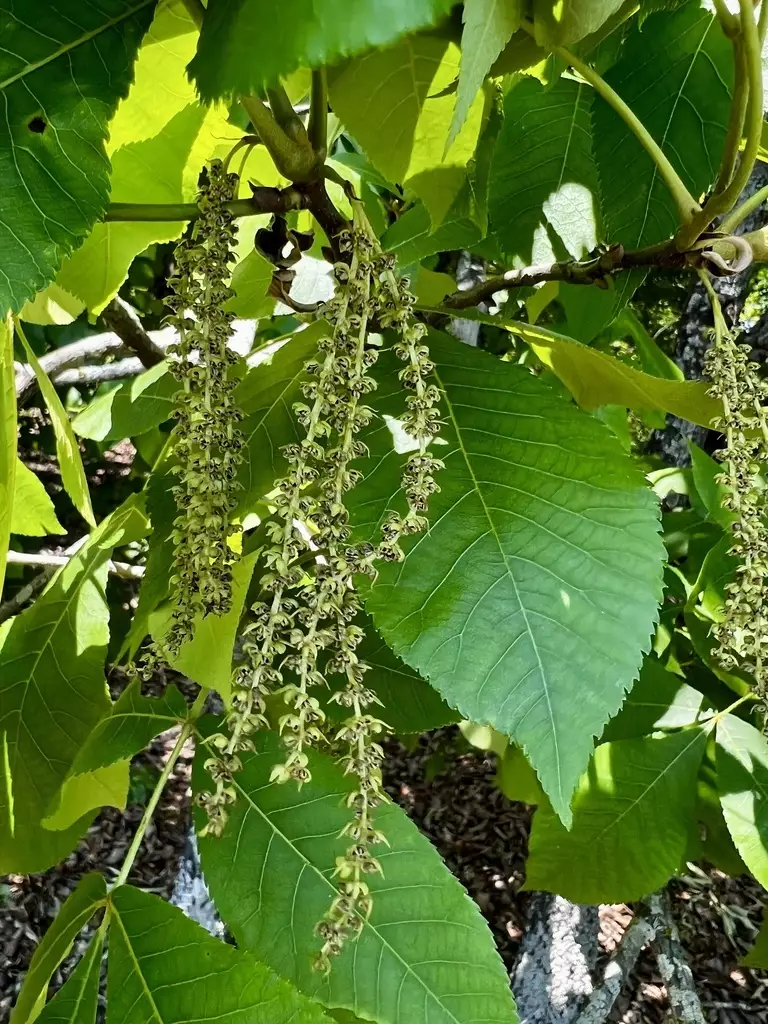
The tree's distinctive leaves are alternate, feather-compound, and 8-12 inches long, typically with 5 to 7 lance- to pear-shaped leaflets with toothed edges. Each leaflet, dark green above and pale yellow-green beneath, features rusty hairs when young. Black Hickory blooms from April to May, producing male and female flowers separately on the same tree. In fall, it bears globe- or pear-shaped nuts with a sweet, edible kernel encased in a thin husk, frequently consumed by wildlife such as squirrels and mice.
While the wood of Black Hickory is strong and valued for its resilience, making it ideal for tool handles, fence posts, and fuelwood, it is in its remarkable adaptability and ecological value where the tree truly shines, serving as an indicator of poor, acidic soils and providing essential food for local fauna, including various moth species whose caterpillars rely on its foliage.








.jpg)
