0
Close
1 / 6
2 / 6

AdobeStock

3 / 6

AdobeStock

4 / 6

AdobeStock

5 / 6

AdobeStock

6 / 6

AdobeStock

Growing Info

Scarification
Scarification: Soak in hot tap water, let stand in water for 24 hours, repeat process on seed that did not imbibe
Stratification
Stratification: none required
Germination
Germination: sow 1/8" deep, mulch the seed bed, keep moist

Native to: British Columbia, California, Mexico Northeast, Mexico Northwest, Mexico Southwest, Nevada, Oregon, Washington
Native
Introduced

Toxicodendron diversilobum

Pacific Poison Oak, Western Poison Oak

In Stock: 0.247 lb (Total:0.247lb)
  • Toxicodendron diversilobum

    All items have bulk rates priced in
select i.*, as2.state_abbr from inventory_item_manage i left outer join sheffields_2017.address_states as2 on (as2.state_name = i.CollectionLocale or as2.state_abbr = i.CollectionLocale) where i.inventory_id = '700381' group by i.id

Buying options

0.25 lb
OR

Details

Germination:
91%
Germination test:
Cut (Full Seed)
Purity:
99%
Seeds per lb:
9,059
Quantity:
0.25 lb
Collected in:
Oregon
Peoria
Crop year:
2024
Min. hardiness zone:
5
Item ID:
1837684

No Export to These Countries

Canada

Growing Info

Scarification
Scarification: Soak in hot tap water, let stand in water for 24 hours, repeat process on seed that did not imbibe
Stratification
Stratification: none required
Germination
Germination: sow 1/8" deep, mulch the seed bed, keep moist

Native to: British Columbia, California, Mexico Northeast, Mexico Northwest, Mexico Southwest, Nevada, Oregon, Washington
Native
Introduced
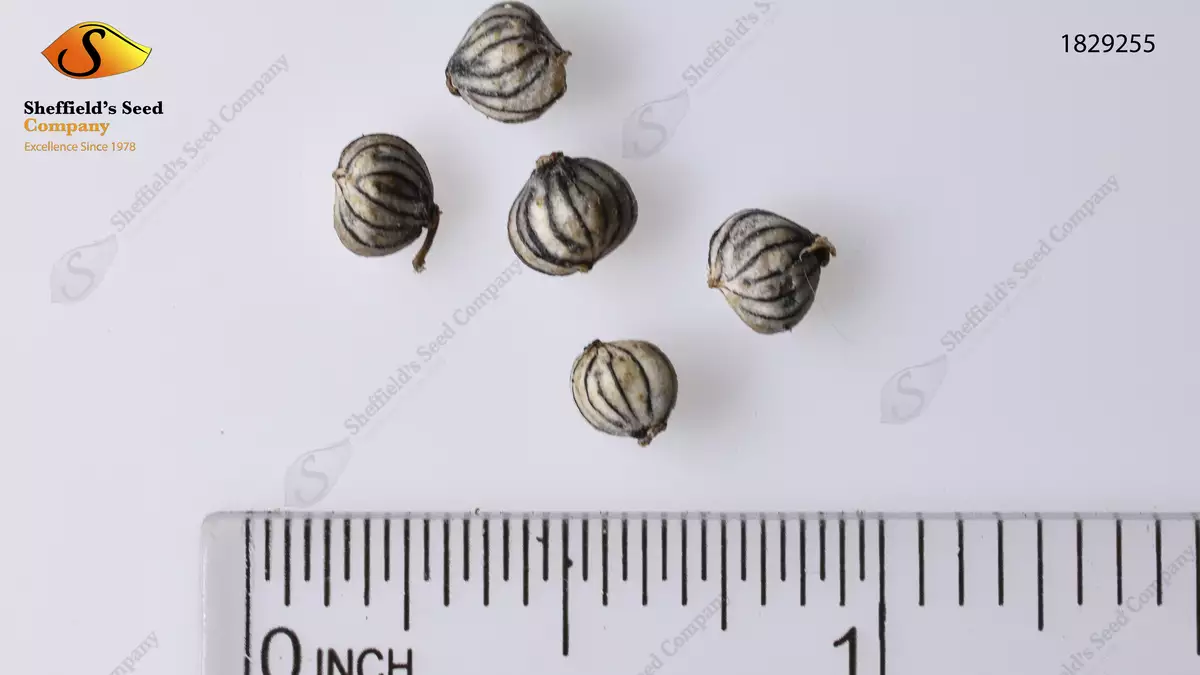
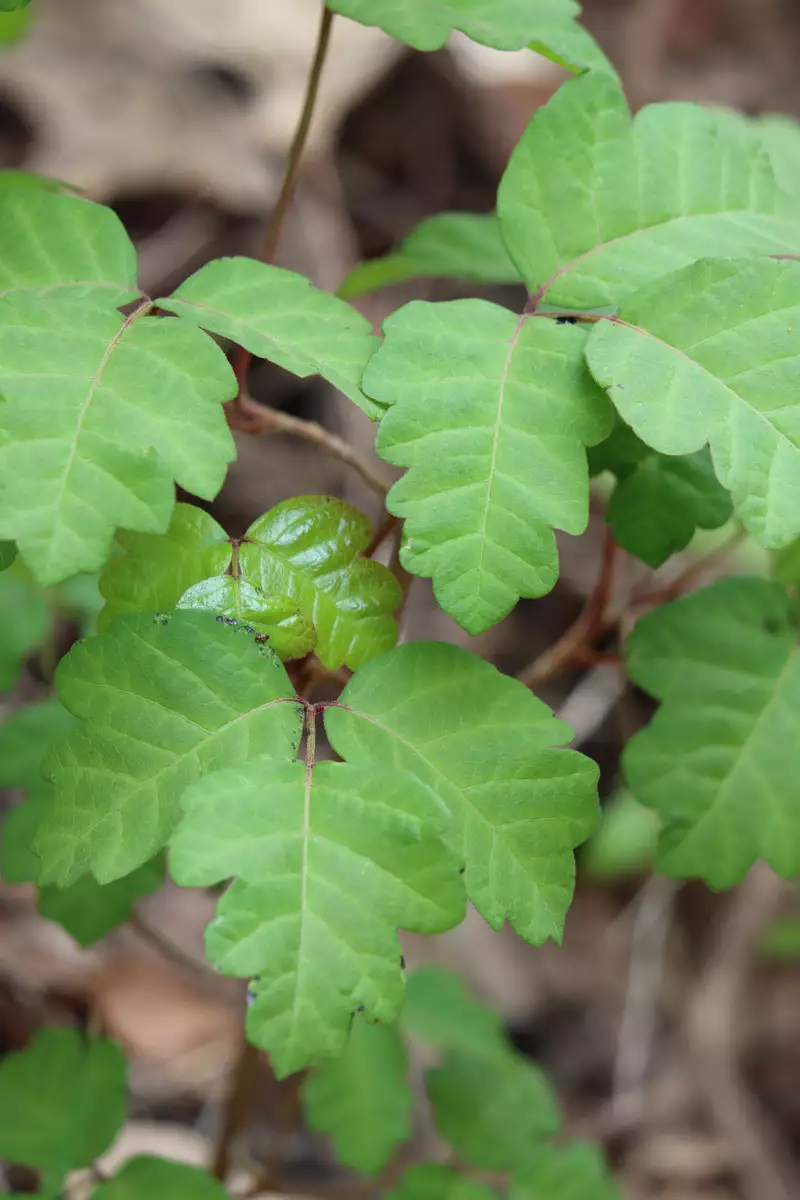
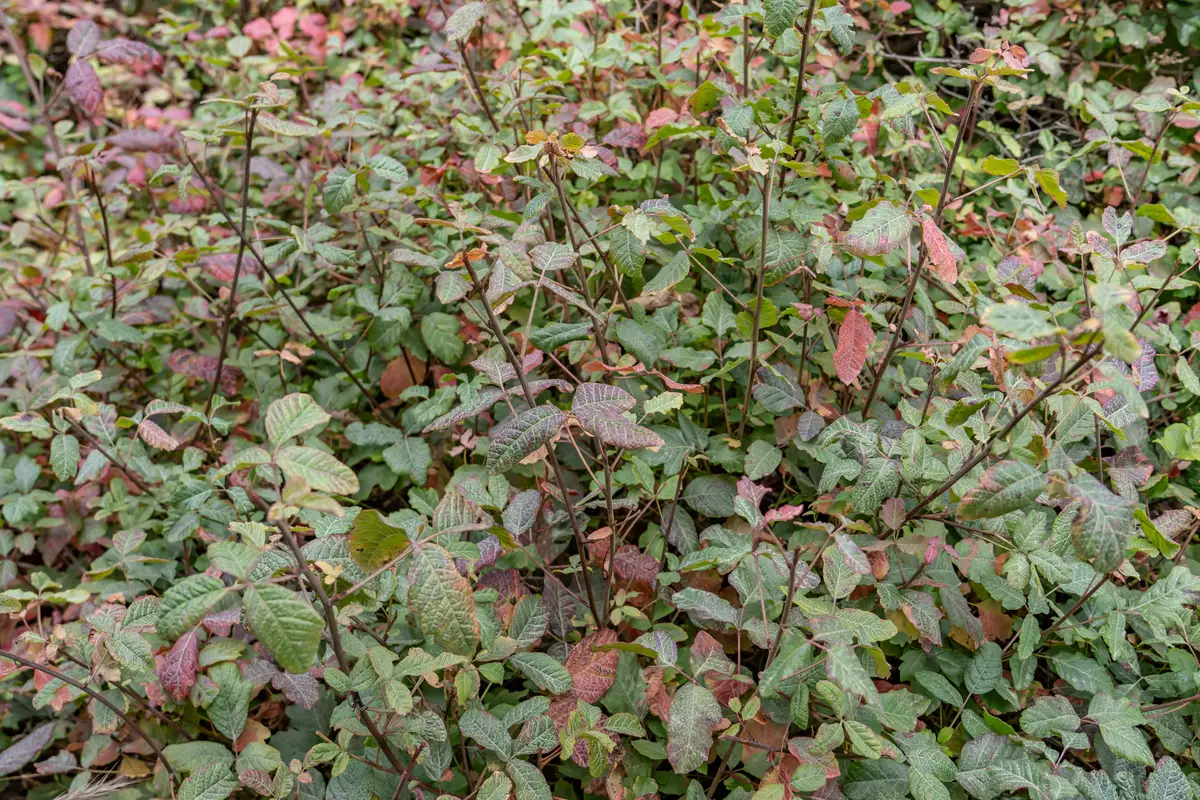
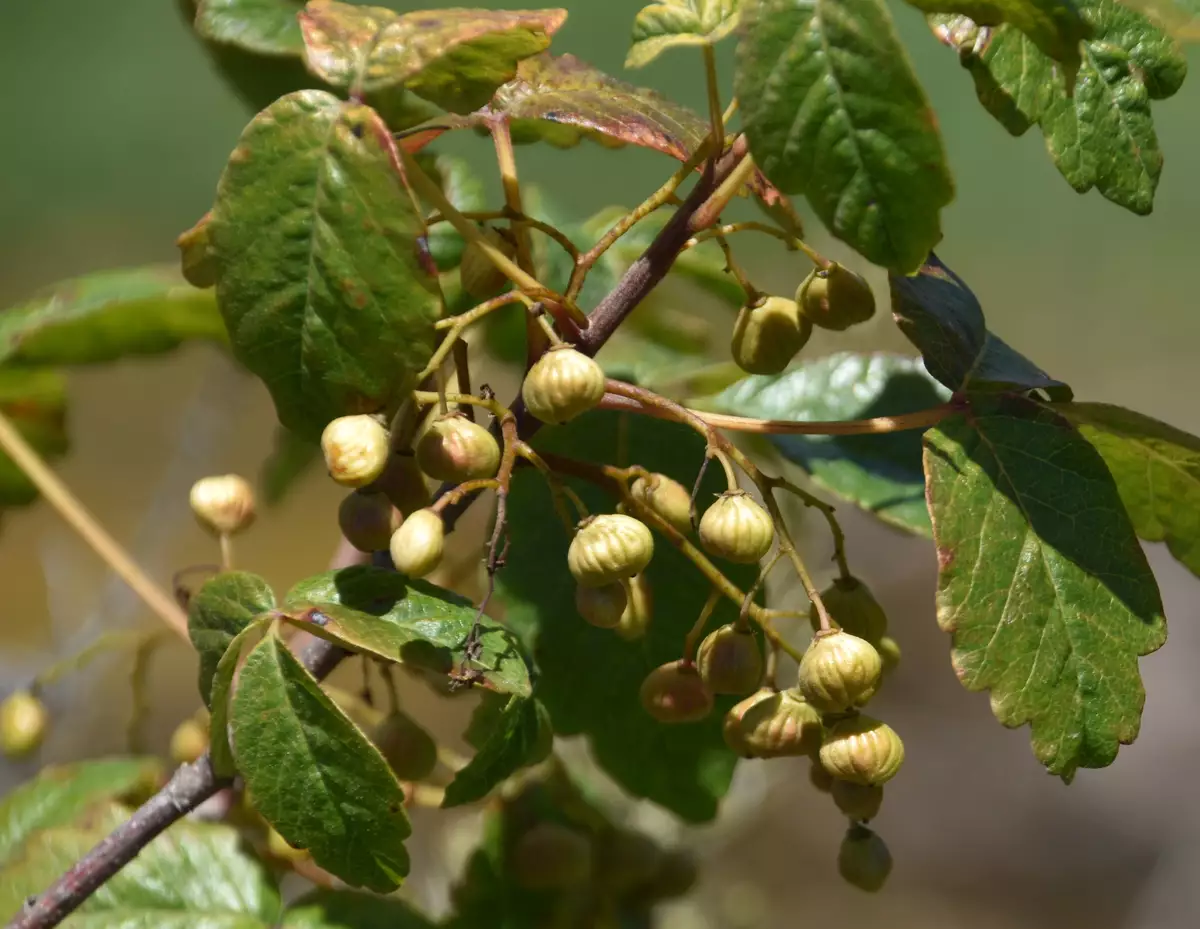
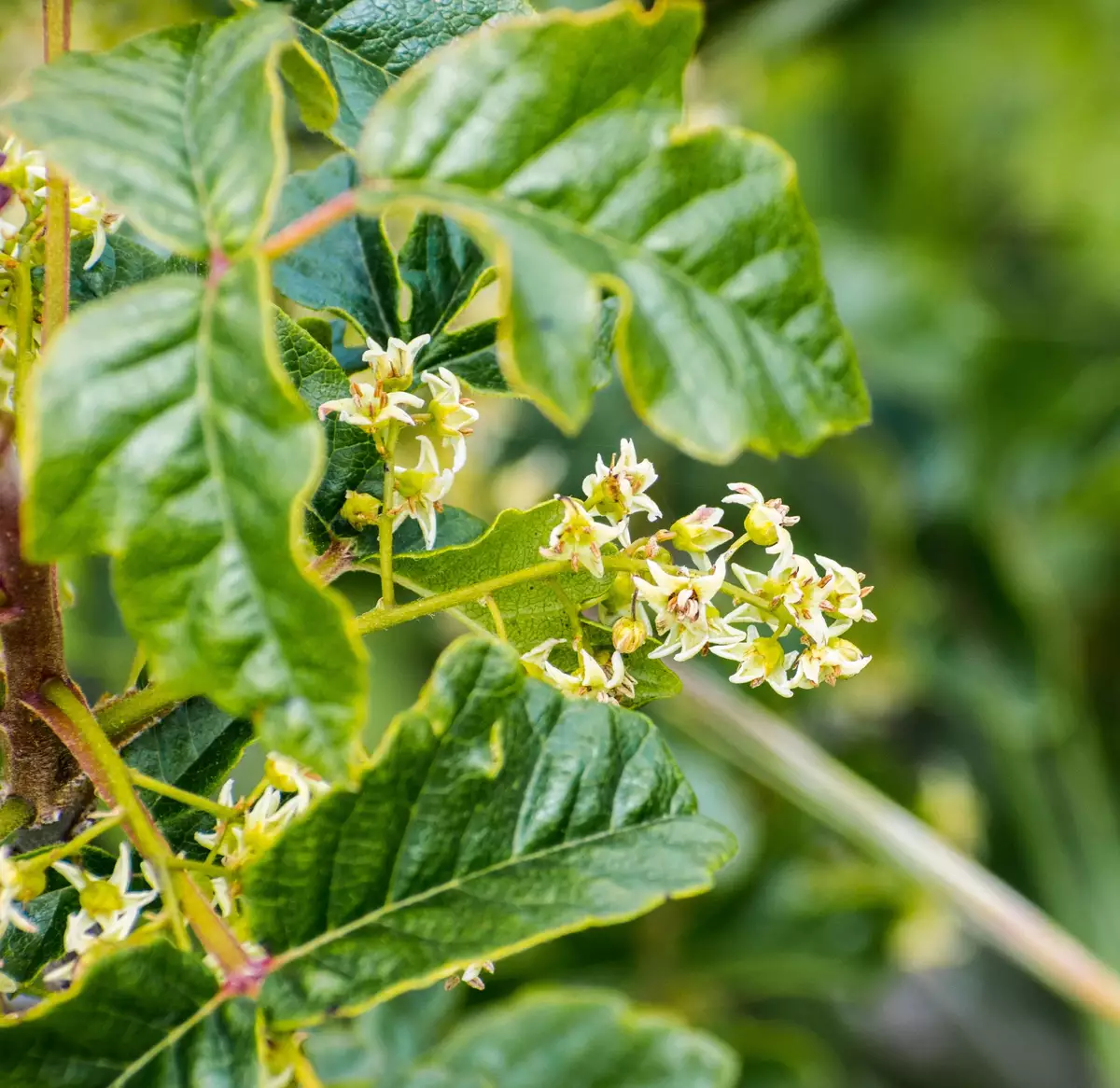
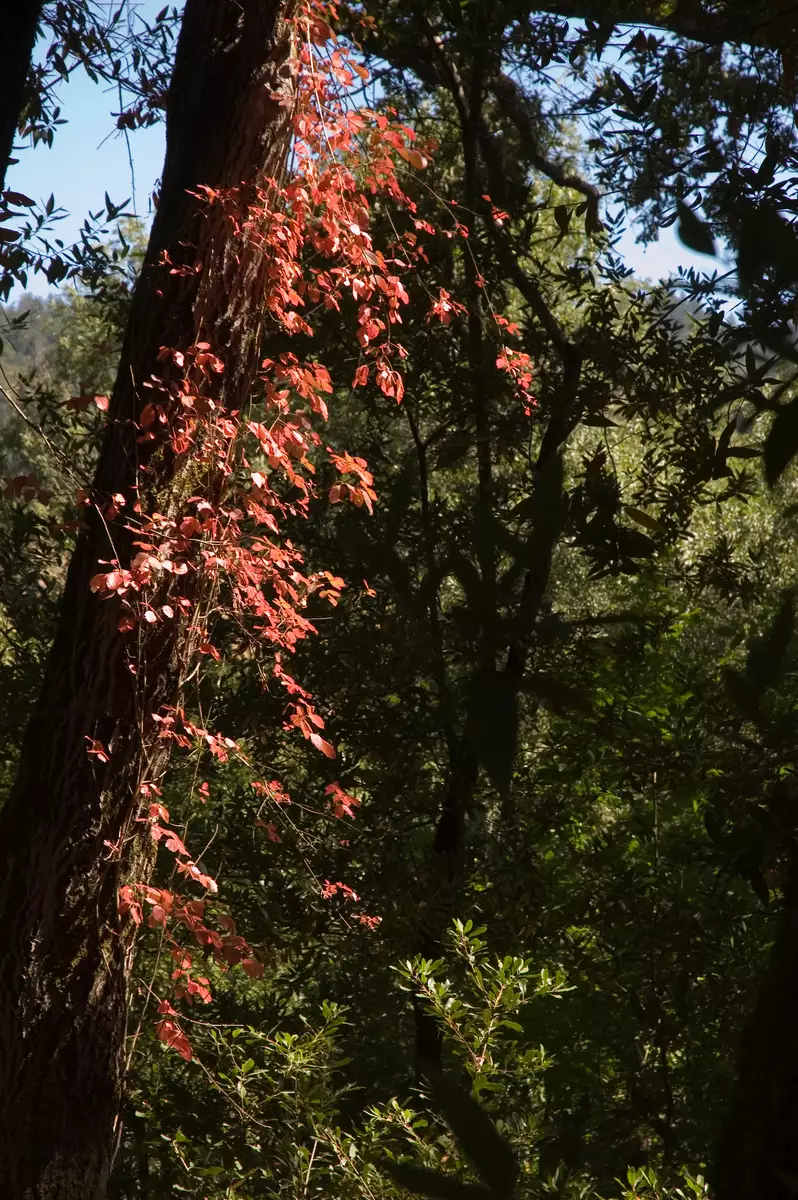
Discover the fascinating yet formidable Pacific Poison Oak, scientifically known as Toxicodendron diversilobum. A versatile deciduous shrub or vine, this plant is native to the western regions of North America, thriving in diverse habitats from riparian zones to arid chaparral. Poison Oak's adaptability allows it to flourish in various light conditions, from dappled shade to full sun. With an imposing growth potential, it can reach heights of 3-10 feet or become a climbing vine stretching up to 50 feet.

The plant's allure is undeniable, with trifoliate leaves transforming from spring burgundy to glossy summer green, and eventually to fiery autumn hues of red and gold. Delicate white to yellow-green flowers bloom from April to June, followed by clusters of white spherical fruits. Despite its visual charm, Poison Oak is notorious for its urushiol oil, causing allergic dermatitis in contact with skin. This non-ornamental, hazardous plant serves unique environmental roles, like feeding wildlife and supporting habitat restoration. Handle with caution and respect, and beware of its toxic nature while appreciating the ecological contributions this plant offers.

You might also like

Arctostaphylos uva-ursi

Arctostaphylos uva-ursi

Bearberry, Kinnikinick

Passiflora incarnata

Passiflora incarnata

Maypop, Purple Passionflower, True Passionflower, Wild Apricot, Wild Passion Flower, Wild Passion Vine

Urtica dioica

Urtica dioica

Common Nettle, Stinging Nettle

Toxicodendron radicans

Toxicodendron radicans

Eastern Poison Ivy

(315) 497-1058
269 NY-34 Locke NY 13092
seed@sheffields.com

HOME - logo

Find us on: