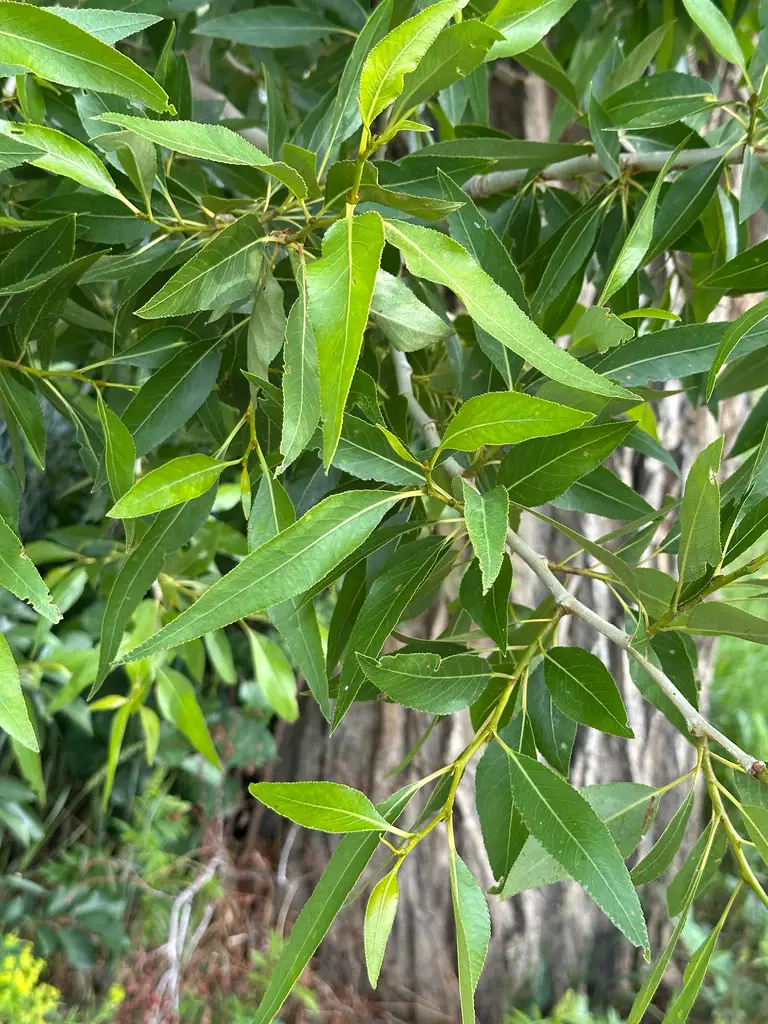
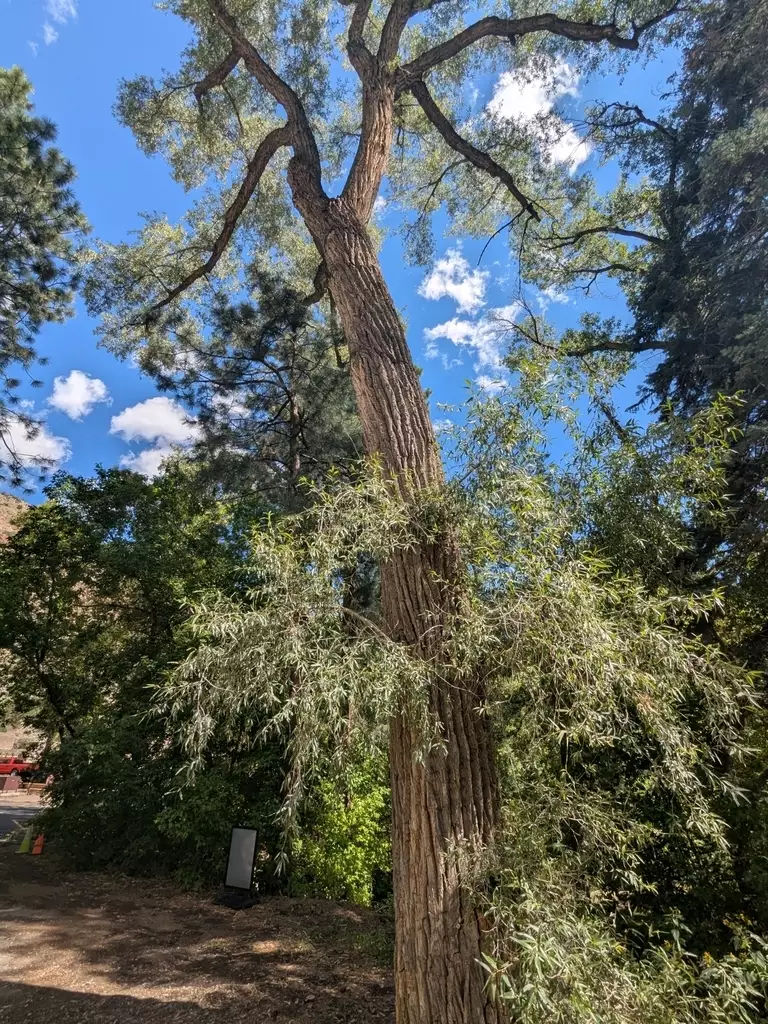
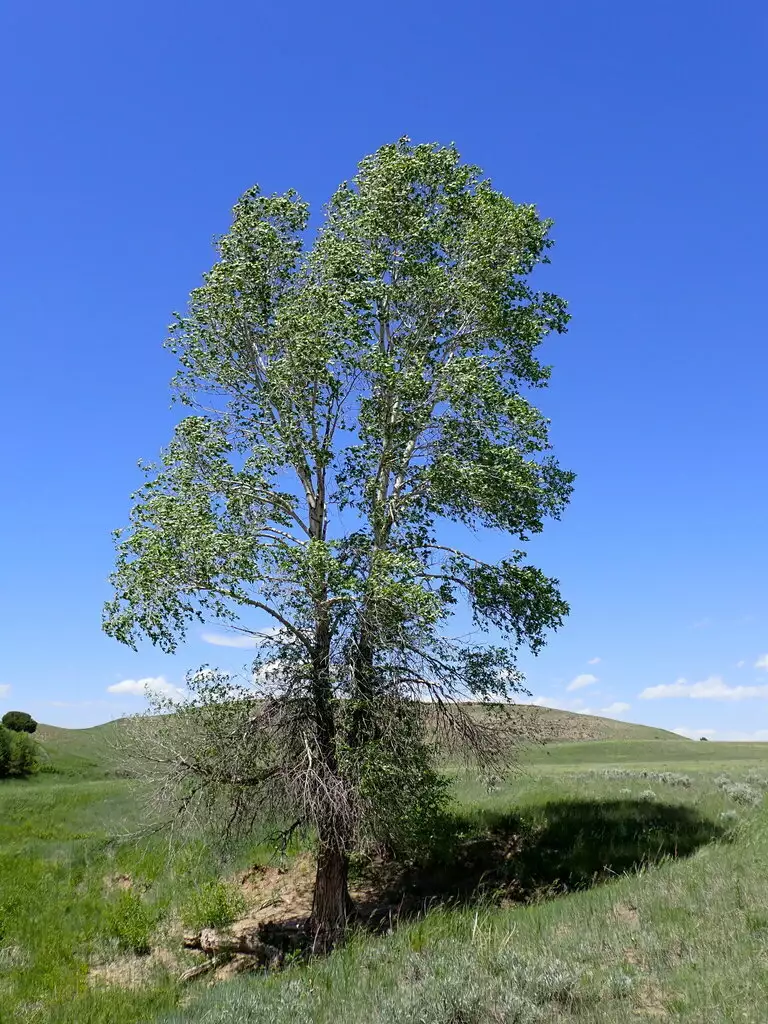
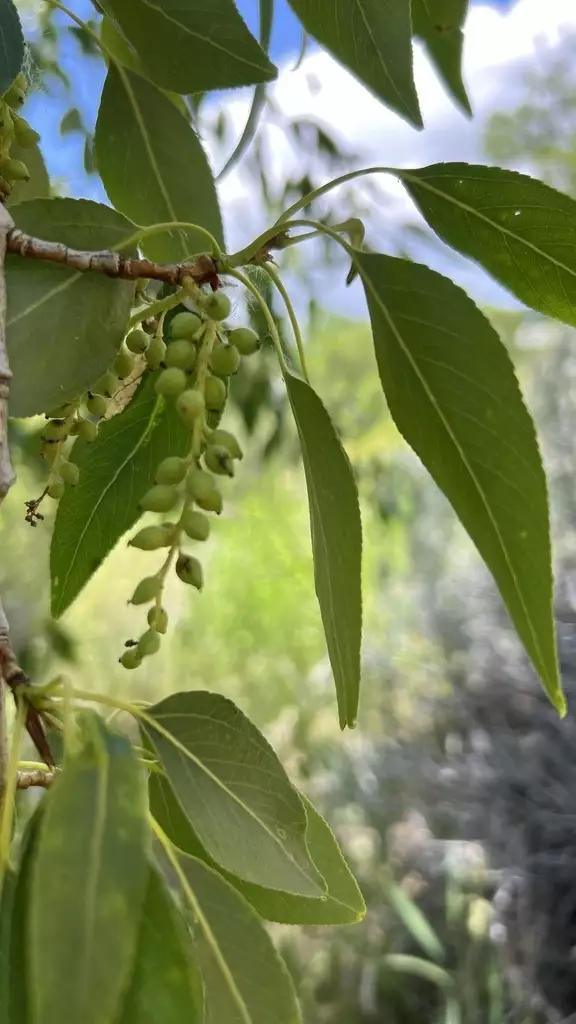
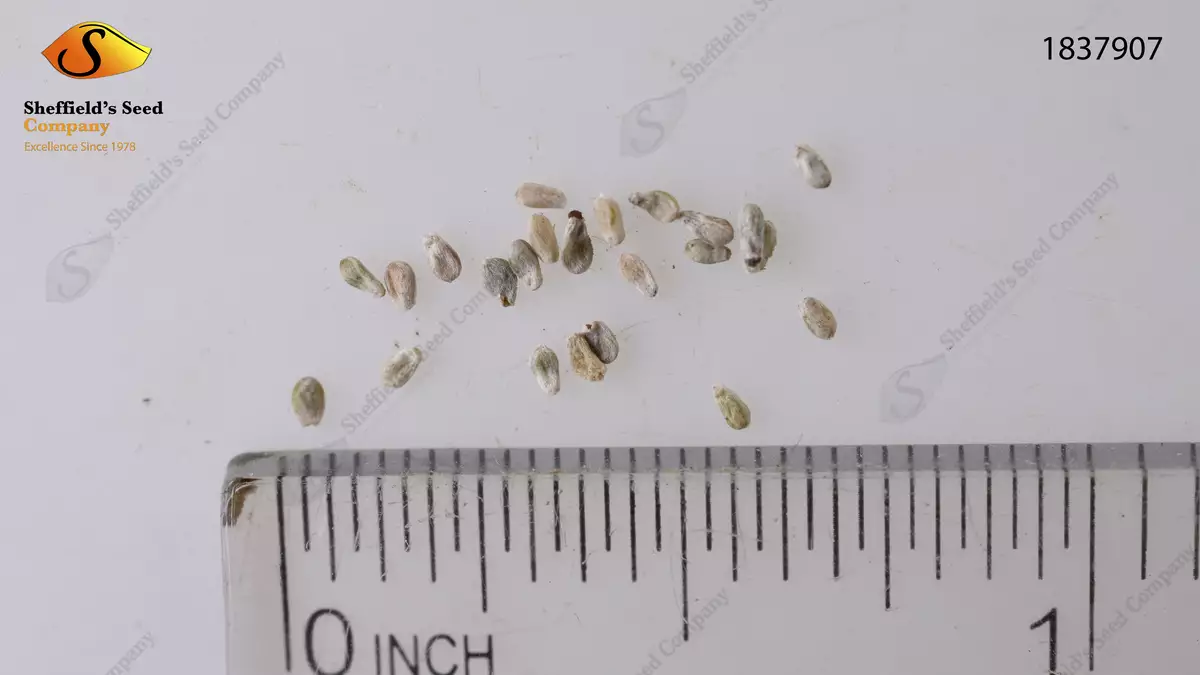
Narrowleaf Cottonwood (Populus angustifolia) is a remarkable tree native to North America's diverse landscapes, stretching from the provinces of Alberta and Saskatchewan in Canada down to the states of Chihuahua and Sonora in Mexico. This medium-sized deciduous tree thrives in moist environments, often found along streams and creeks at elevations between 3,900 to 7,900 feet. Known for its slender profile and willow-like features, it boasts lance-shaped, yellow-green leaves with finely toothed margins and produces fluffy white capsules each spring. With a height reaching 50-65 feet, the tree presents a narrow conical crown and smooth bark that transitions to furrowed on mature trunks, offering a unique texture that adds visual interest to any landscape. Despite its delicate appearance, Narrowleaf Cottonwood provides vital habitat for wildlife, including birds, deer, and beavers, and is an essential part of soil stabilization projects. However, its aggressive root system should be managed cautiously in urban areas to prevent interference with drainage infrastructure. This species also holds historical significance; its young shoots were crafted into baskets by Native Americans, while former President George W. Bush appreciated its sticky buds as a natural chewing gum. Perfect for gardens seeking a fast-growing, resilient feature, Narrowleaf Cottonwood is both a practical and aesthetic choice for enhancing the natural beauty and ecological balance of any outdoor space.