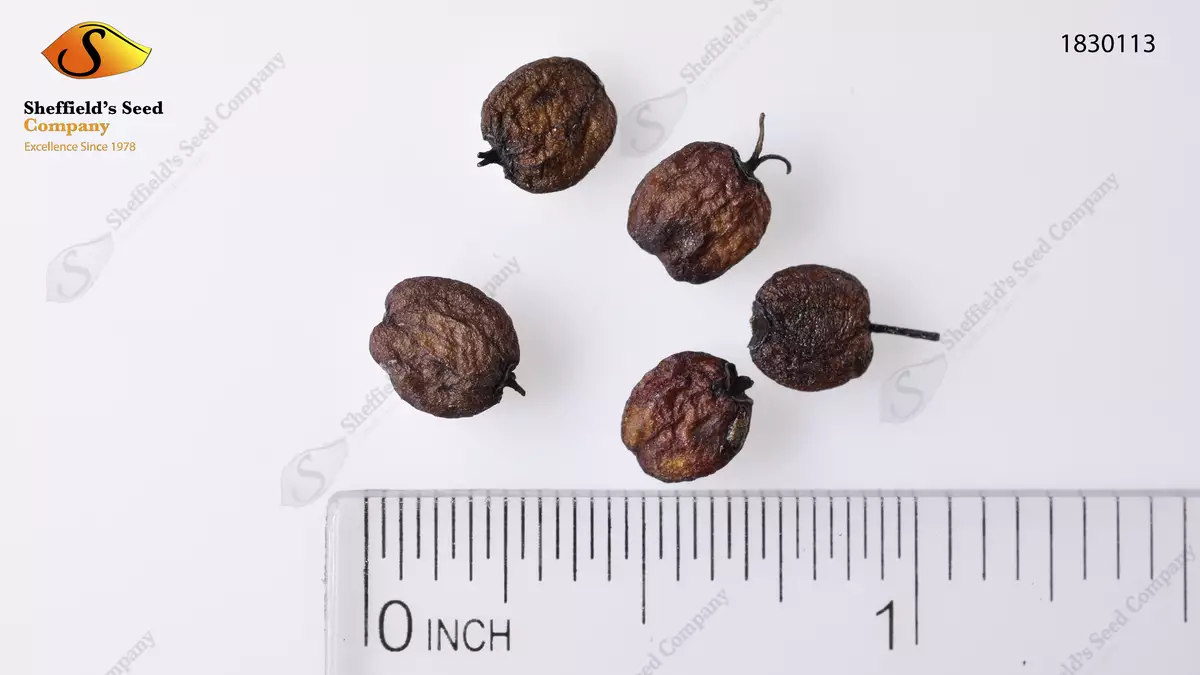
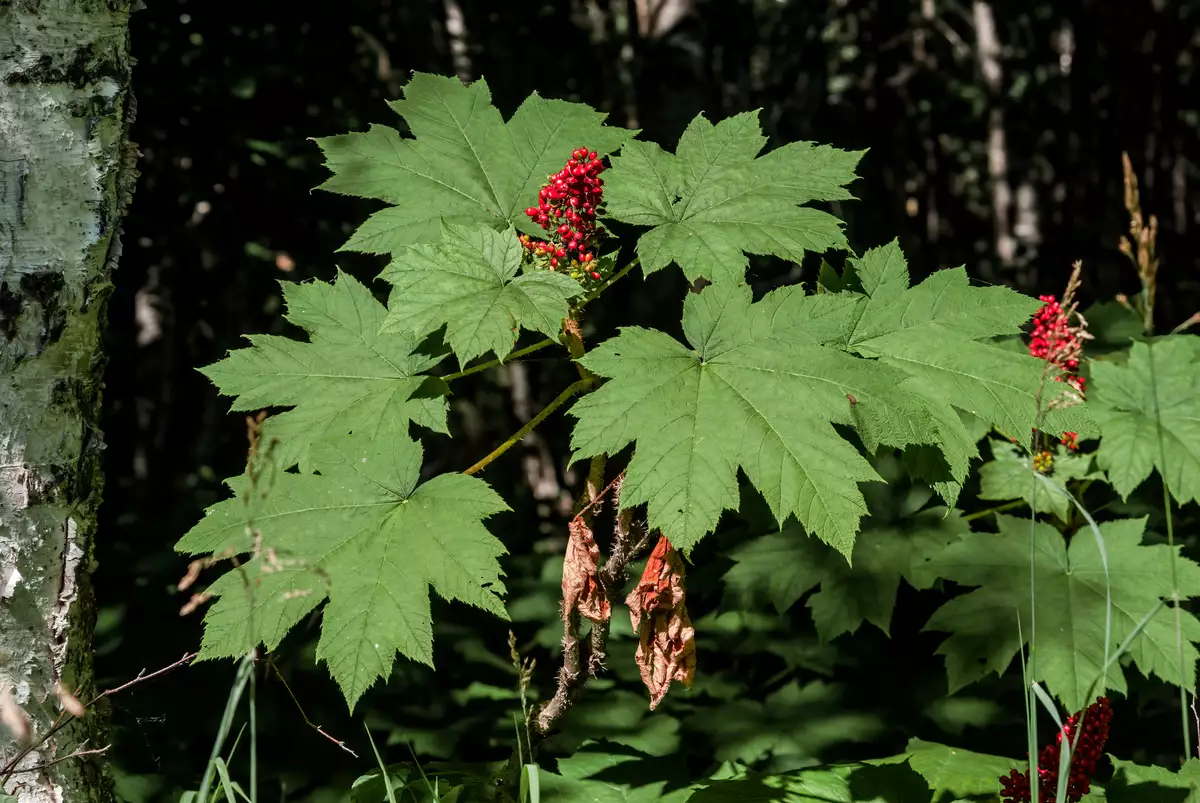
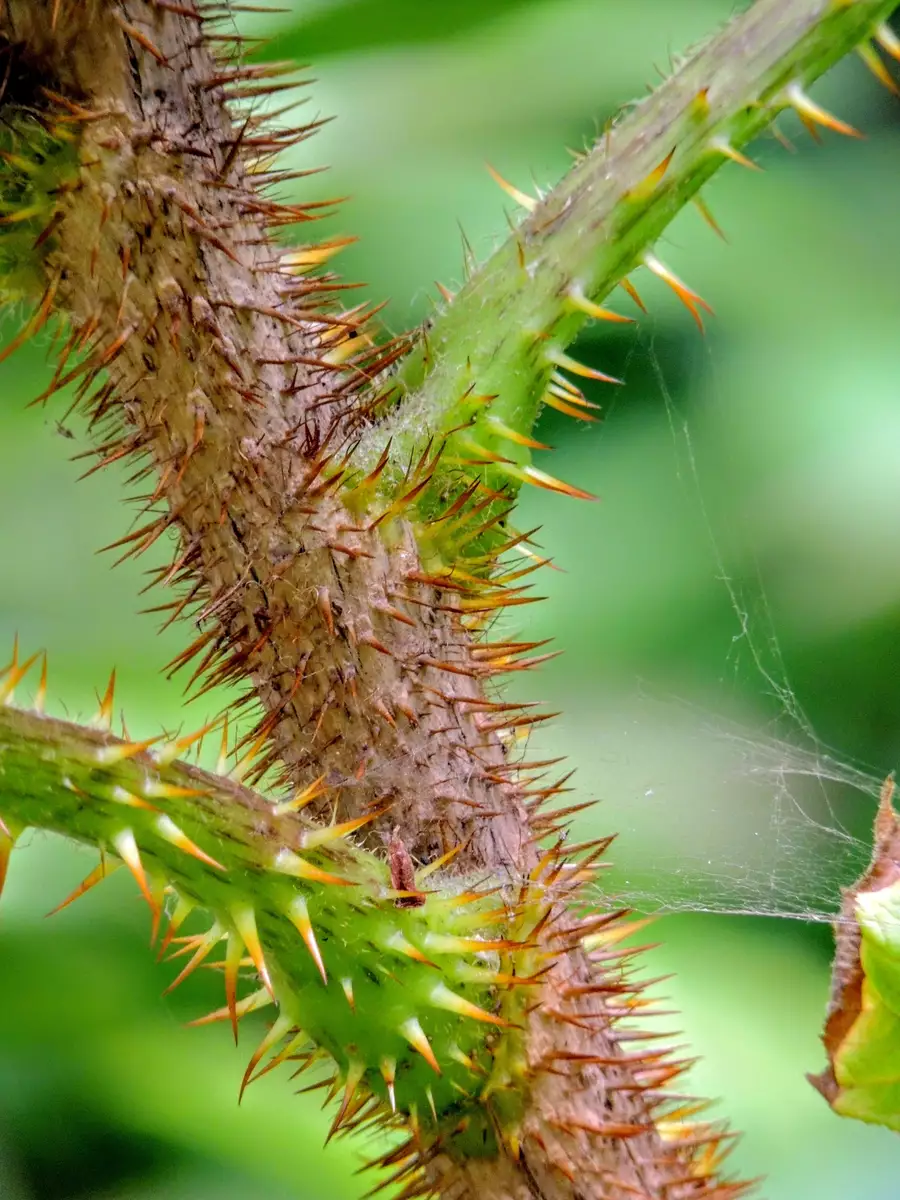
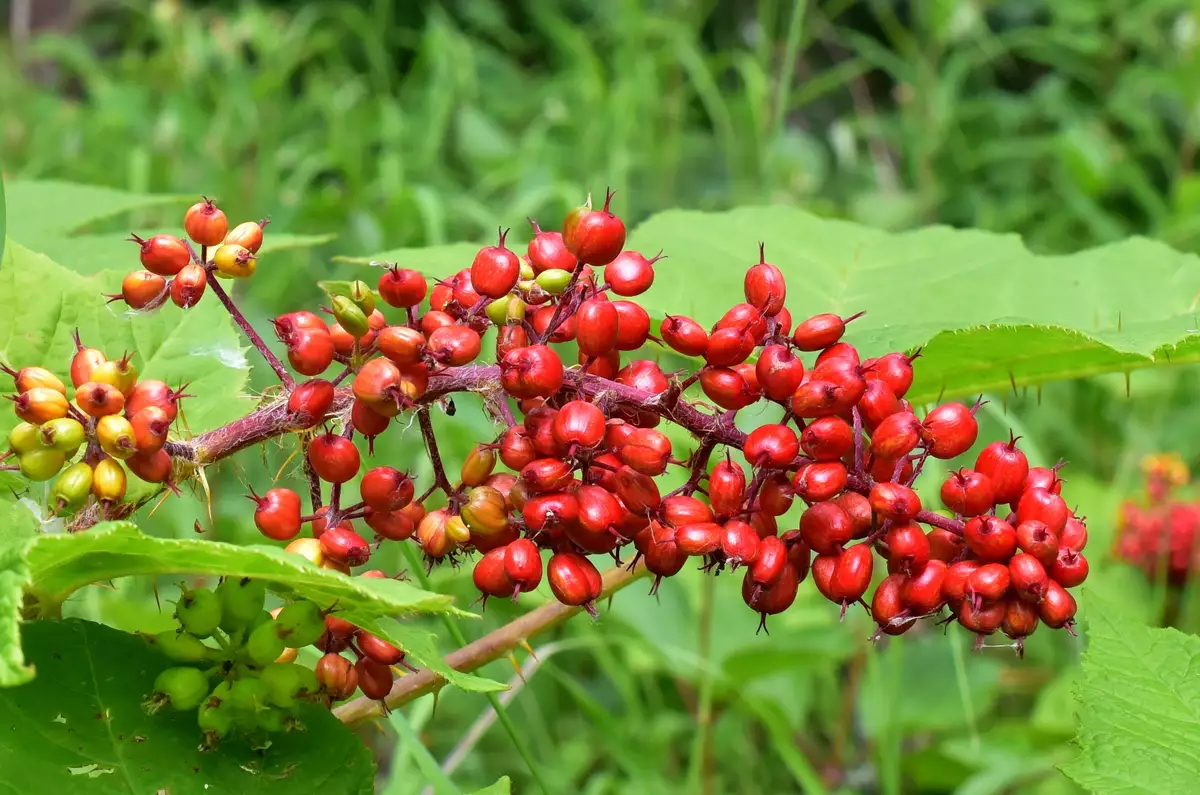
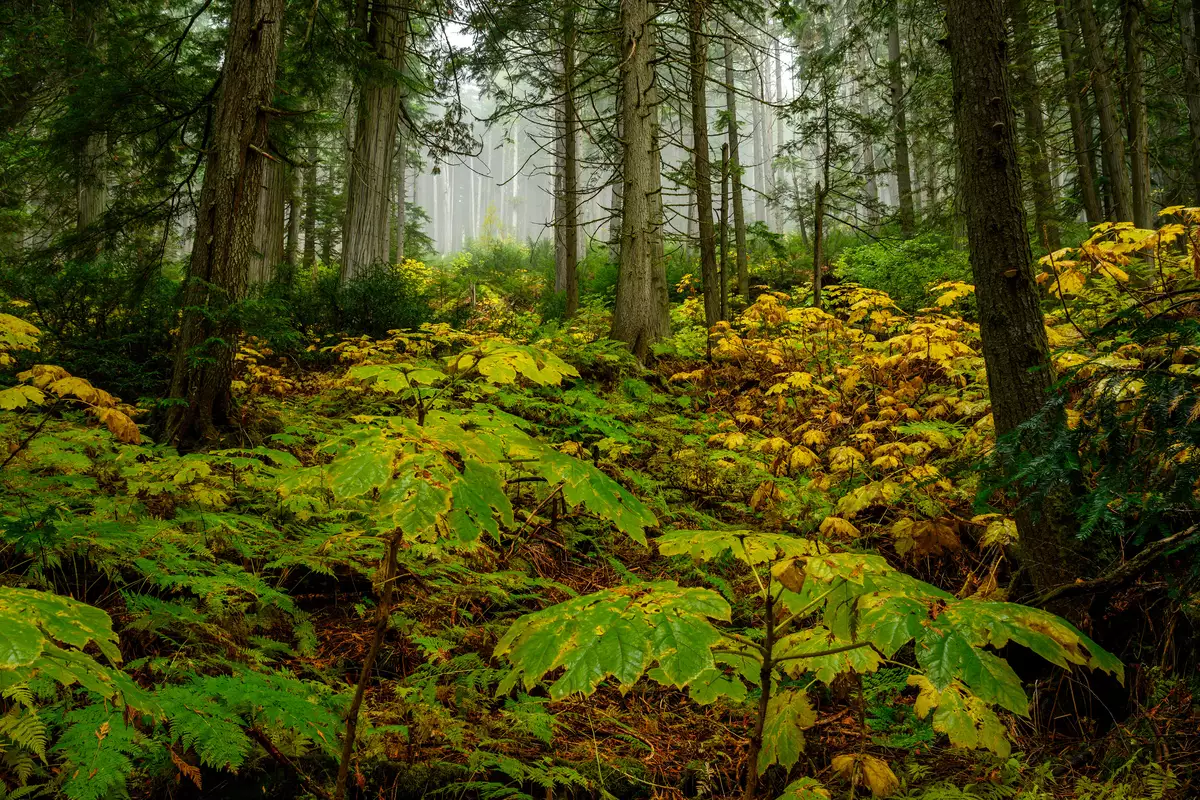
Devil's Club (Oplopanax horridus) is a striking understory marvel of the Pacific Northwest and beyond. Known for its unique and formidable appearance, this deciduous shrub stands out with its giant, maple-like leaves and long, cane-like stems armed with stiff, yellow thorns—characteristics that embody its ominous nickname. Reaching up to 12 feet tall, Devil's Club is a staple in the boggy terrains of coastal forests, creating dense thickets that are challenging to navigate, serving as a natural barricade in the wilderness.
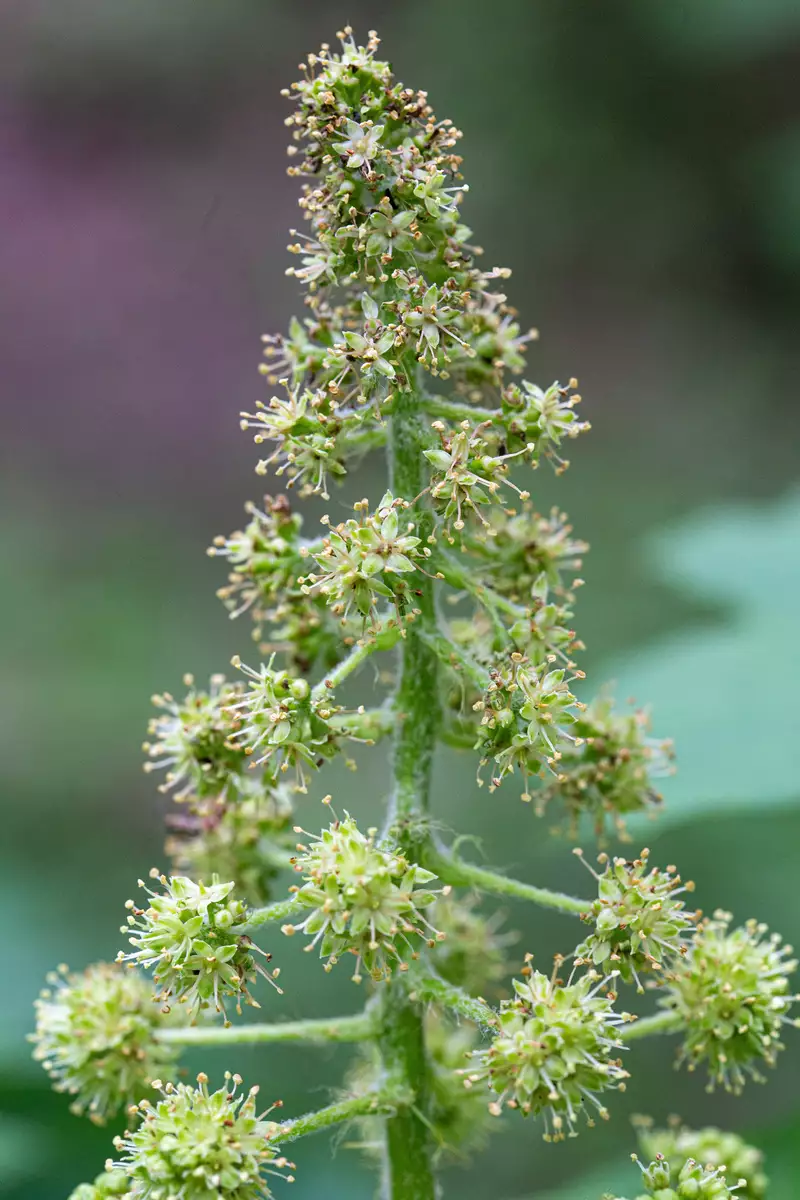
Despite its reputation, Devil's Club is a spectacle to behold. Its oversized, palmate leaves are a testament to adaptation, thriving in the dim light of its native habitats from Alaska down the Pacific coast to Oregon, and even as far east as Montana and disjunctly in Michigan and Ontario. Here, clusters of greenish-white flowers bloom into vibrant red drupes, acting as a critical food source for wildlife, notably bears.
Historically cherished by Indigenous tribes for its medicinal properties, Devil's Club is revered as an "all-healing shield." Used for treating diabetes, arthritis, and more, its cultural and practical significance is profound. The plant is also integrated into mythic narratives, believed to bring luck and ward off evil. Whether you're a botanical enthusiast, cultural historian, or nature lover, exploring the multifaceted allure of Devil's Club offers a fascinating glimpse into the resilient tapestry of forest life. Discover its beauty and mystery as it tells a story as ancient as the land it thrives upon.