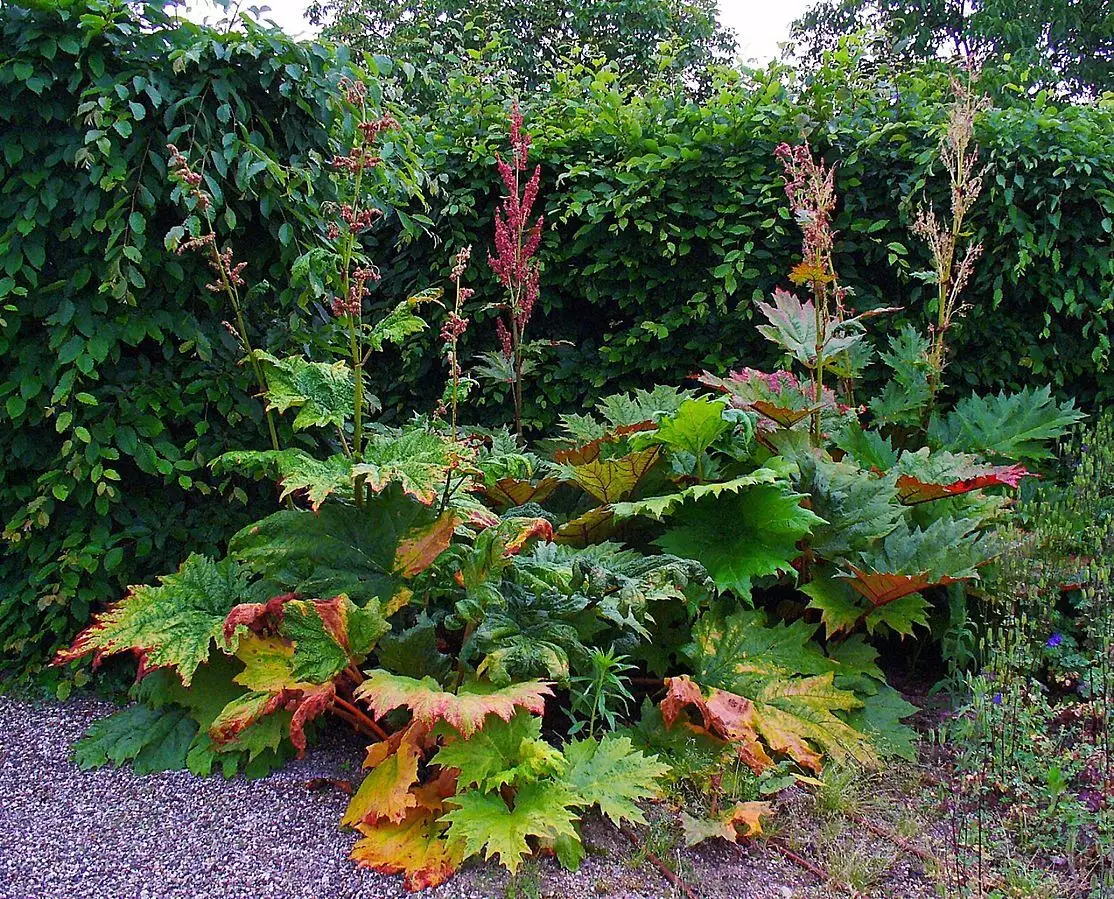
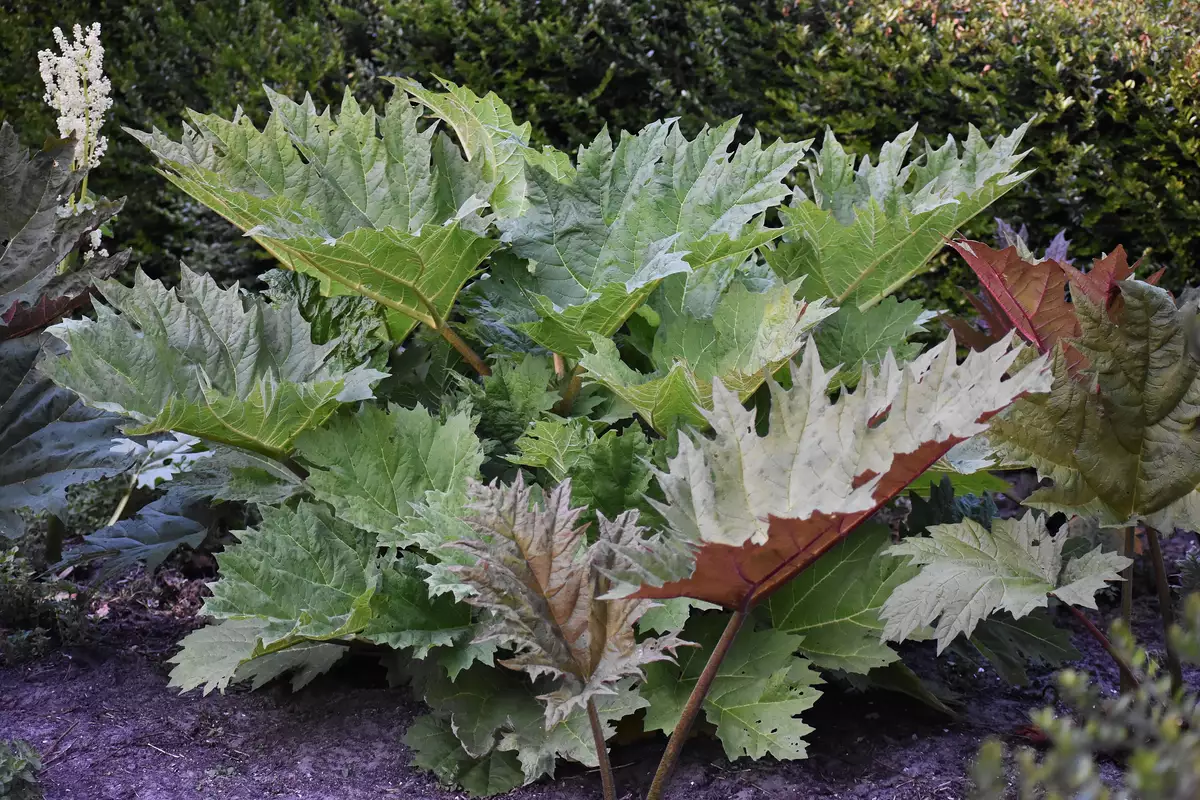
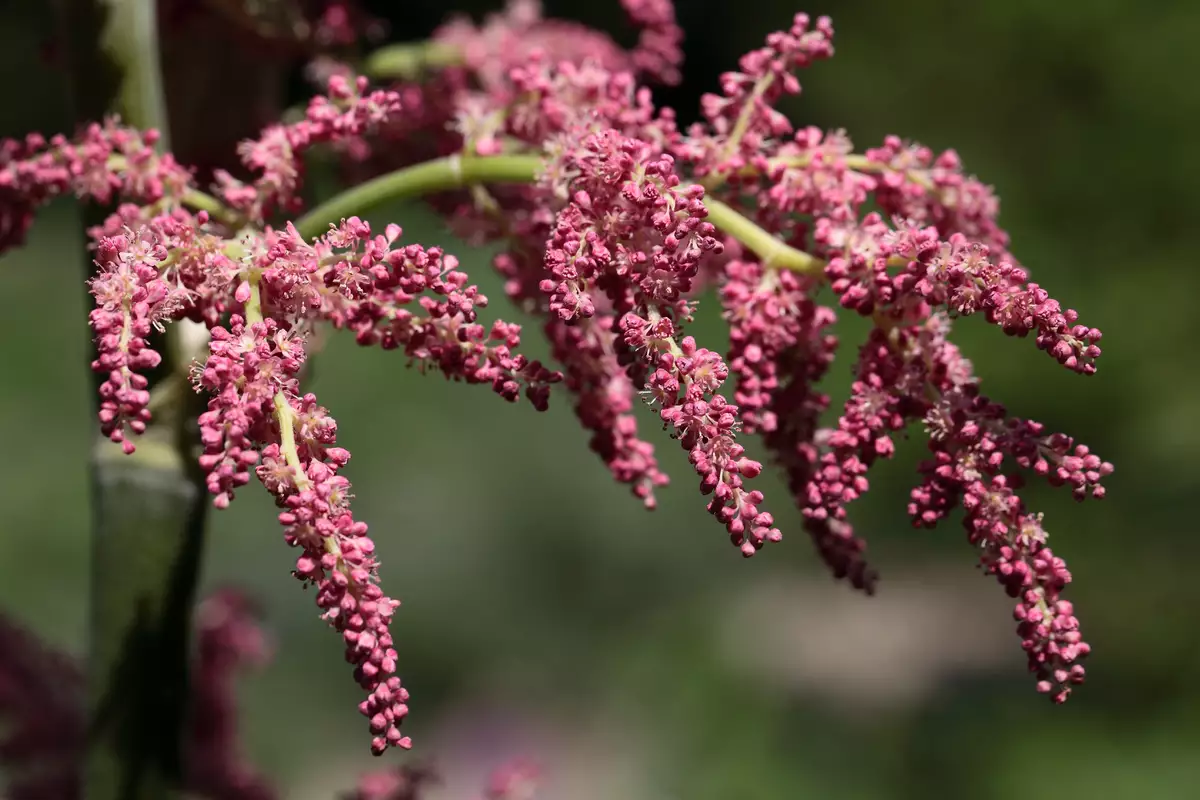
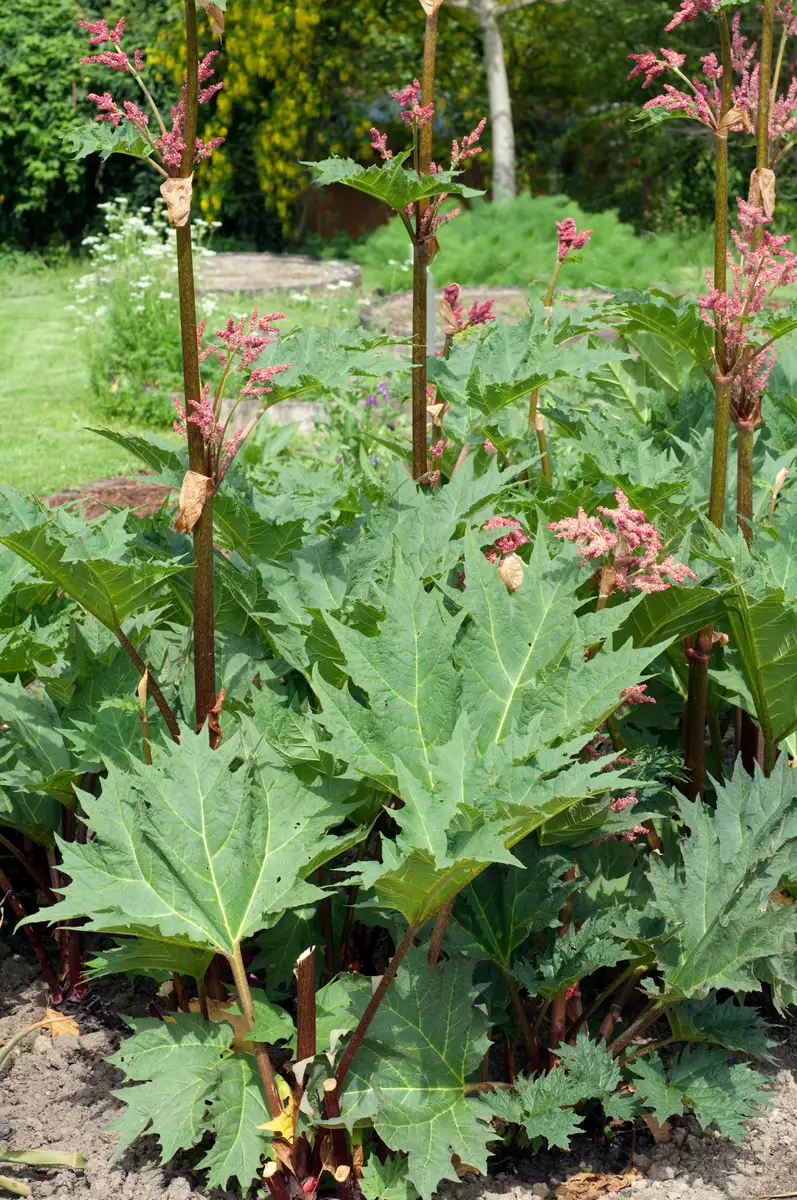
Rheum palmatum, commonly known as Chinese Rhubarb or Turkey Rhubarb, is a stunning herbaceous perennial native to China and Tibet. Growing up to 10 feet in height, this plant is a true garden spectacle with its large, palmately-lobed dark green leaves and vibrant, feathery plumes of pink to red flowers blooming from May to July. Ideal for USDA Zones 5-7, Chinese Rhubarb thrives in organically rich, well-drained soils and can adapt to full sun or part shade conditions, appreciating some shade during hot summer days.
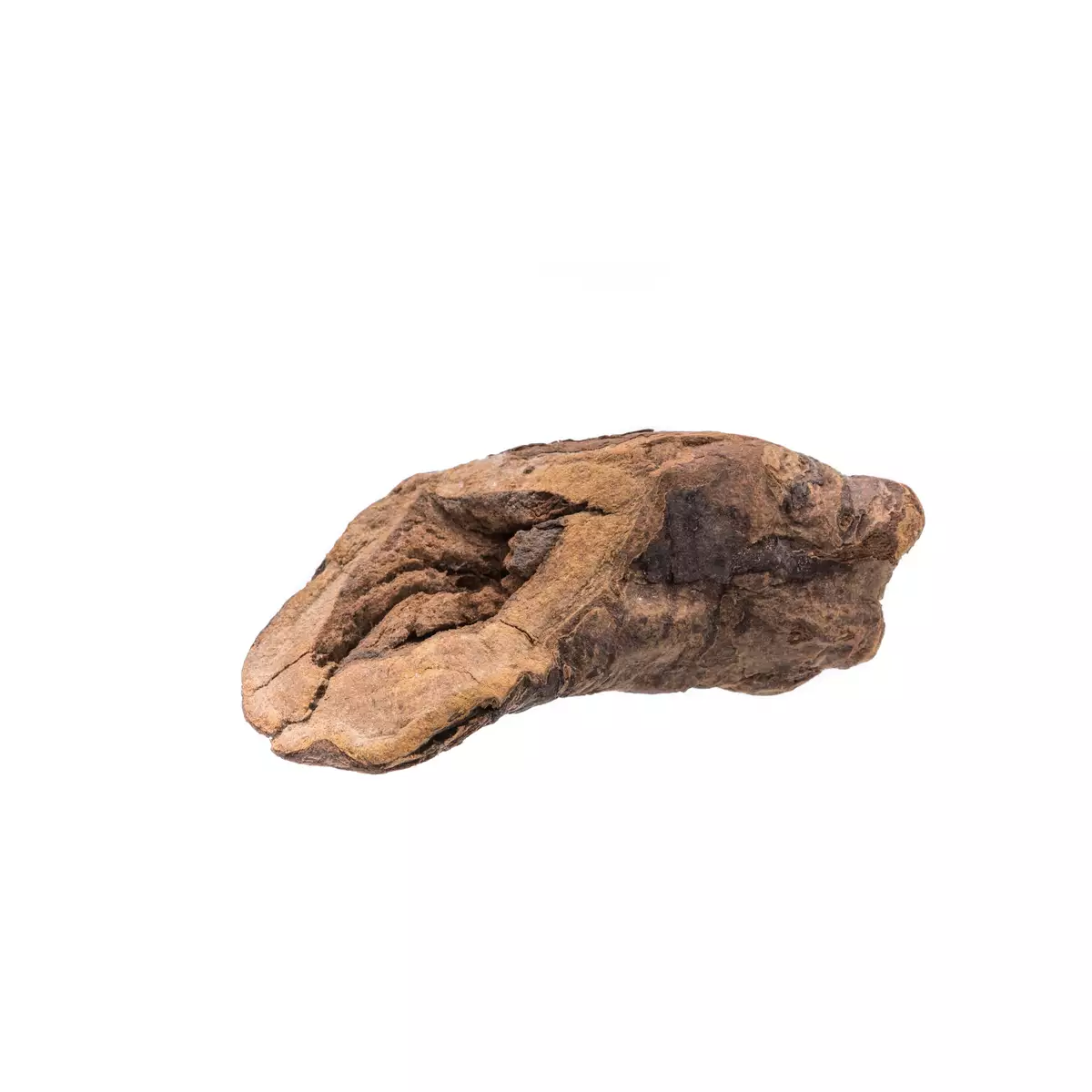
Beyond its ornamental appeal, Chinese Rhubarb is notable for its historical and medicinal significance. Its robust roots have been a staple in traditional Chinese medicine for centuries, known for treating various ailments such as constipation, digestive issues, and providing a source of anthraquinones. While the roots offer extensive herbal benefits, care should be taken as the leaves contain oxalic acid and can be toxic if ingested in large amounts.
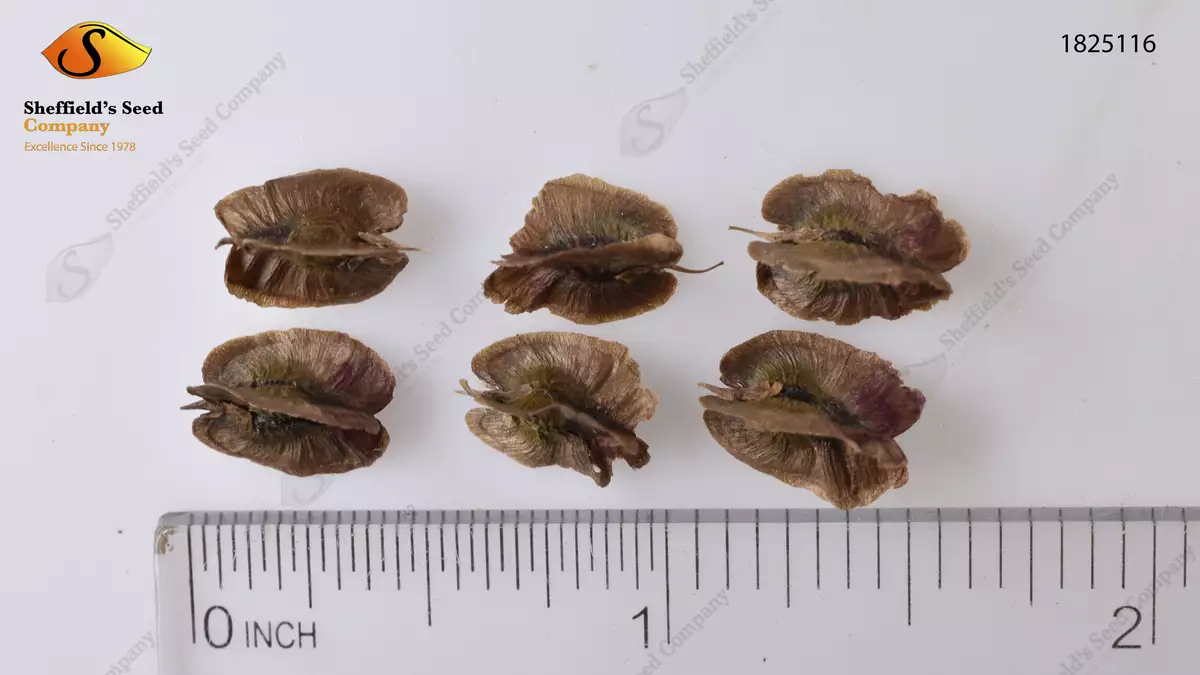
The plant's low maintenance and resistance to serious diseases make it a remarkable choice for gardeners interested in adding a touch of exotic flair to borders or water margins. Moreover, the dried roots—which historically traded along the Silk Road—continue to offer their natural therapeutic qualities today. For optimal results, propagate by dividing rhizomes in early spring or plant seeds in the fall. With its expansive growth and vibrant displays, Chinese Rhubarb is a captivating addition to any garden. Whether embraced for its bold ornamentation or its rich medicinal history, Rheum palmatum stands as a testament to botanical allure and utility.