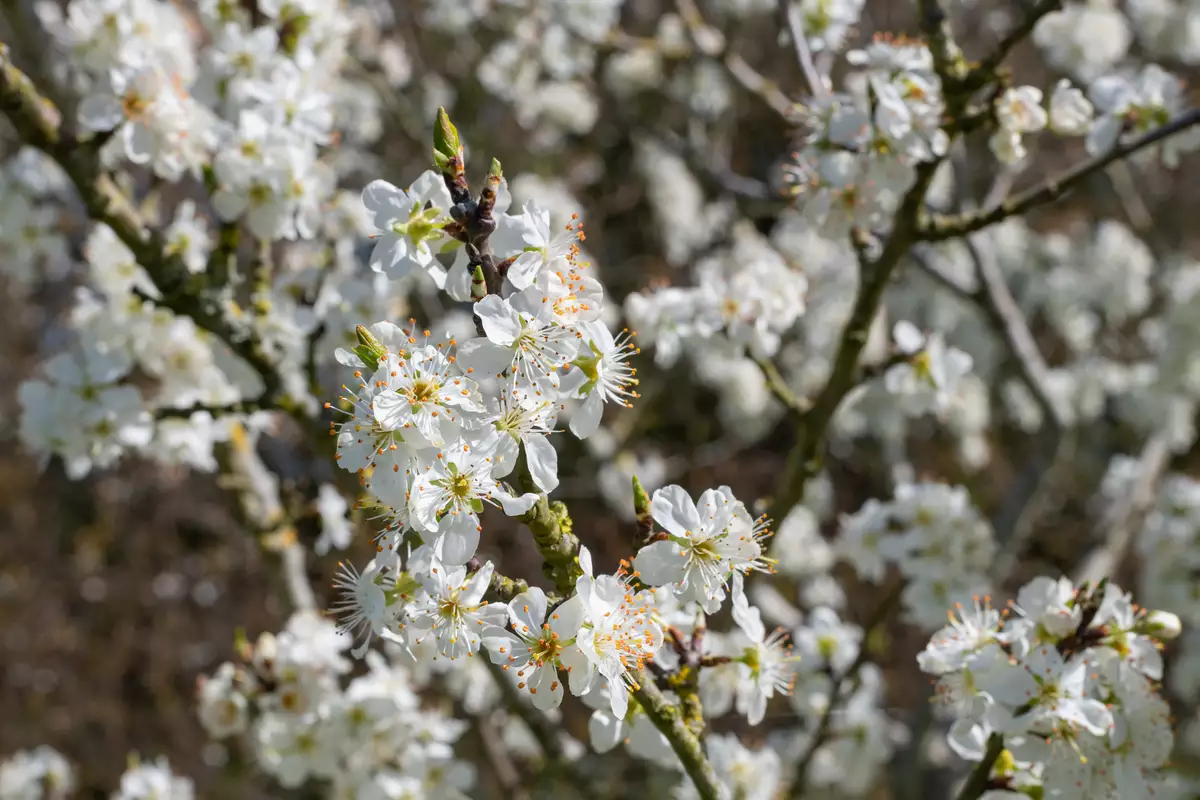
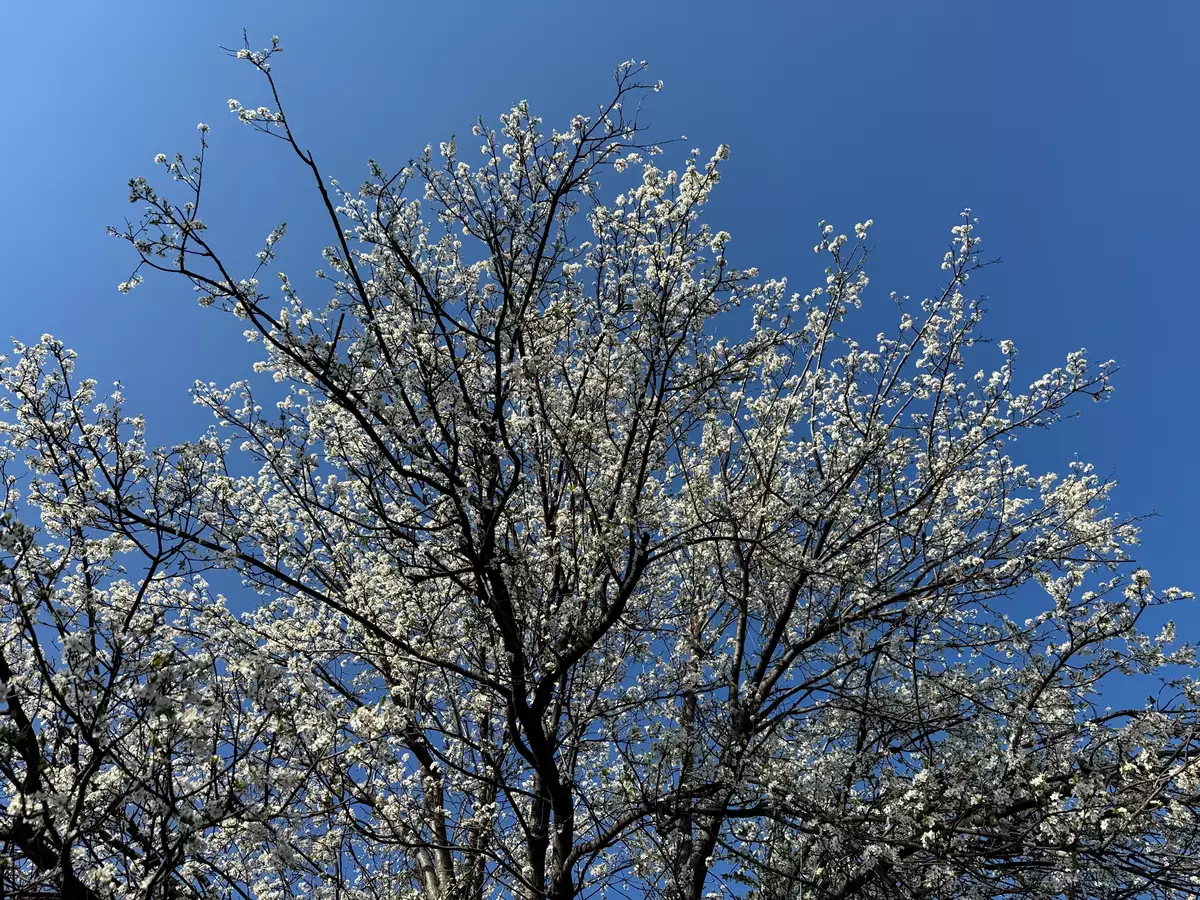
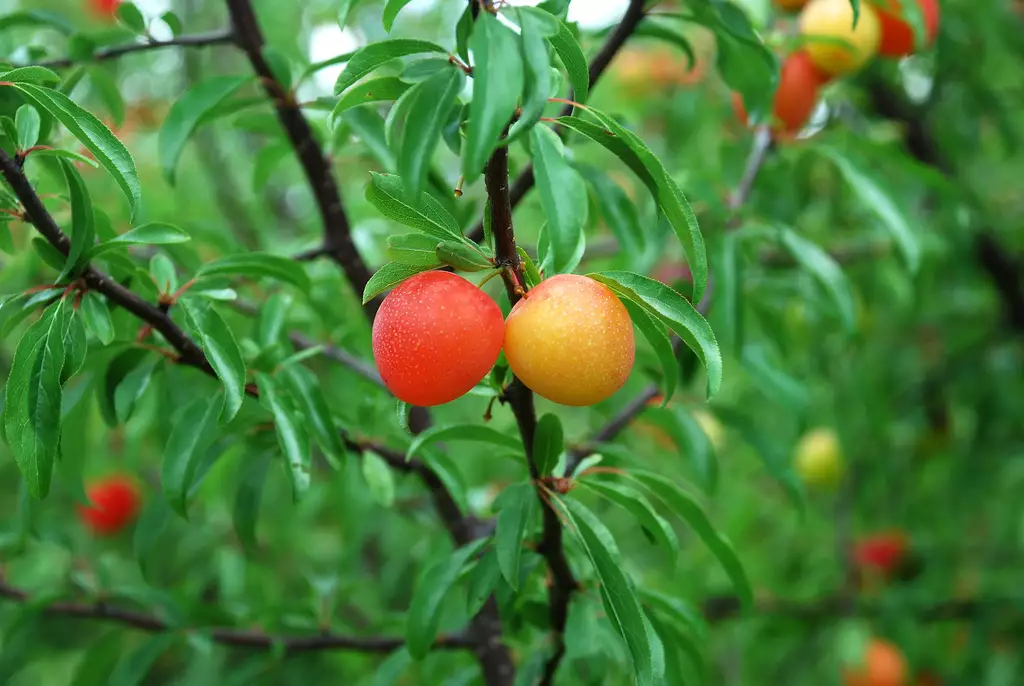
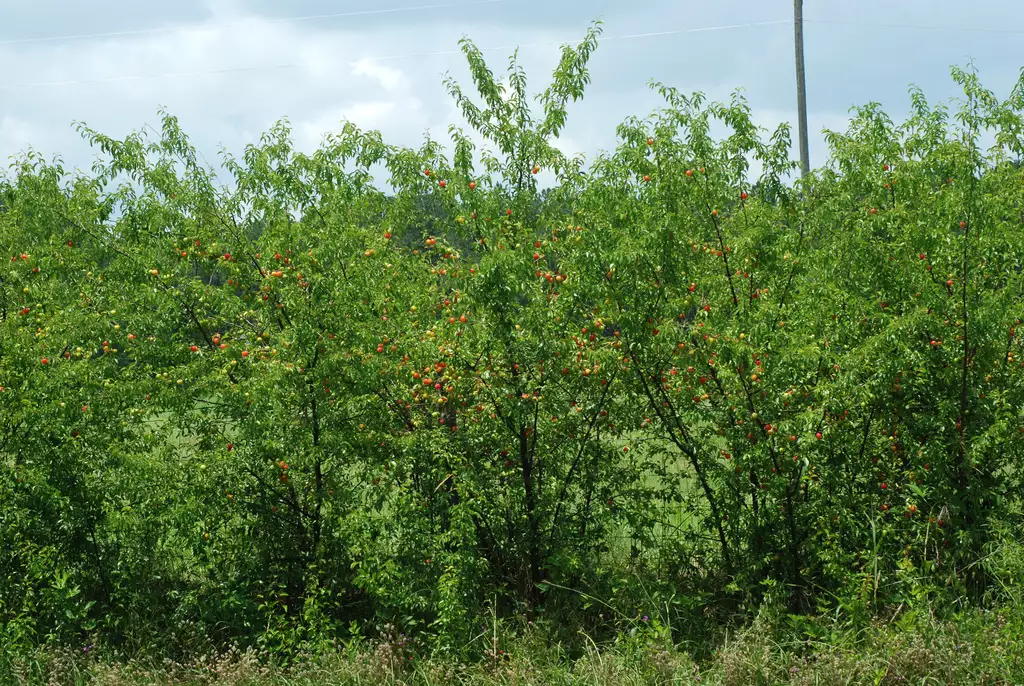
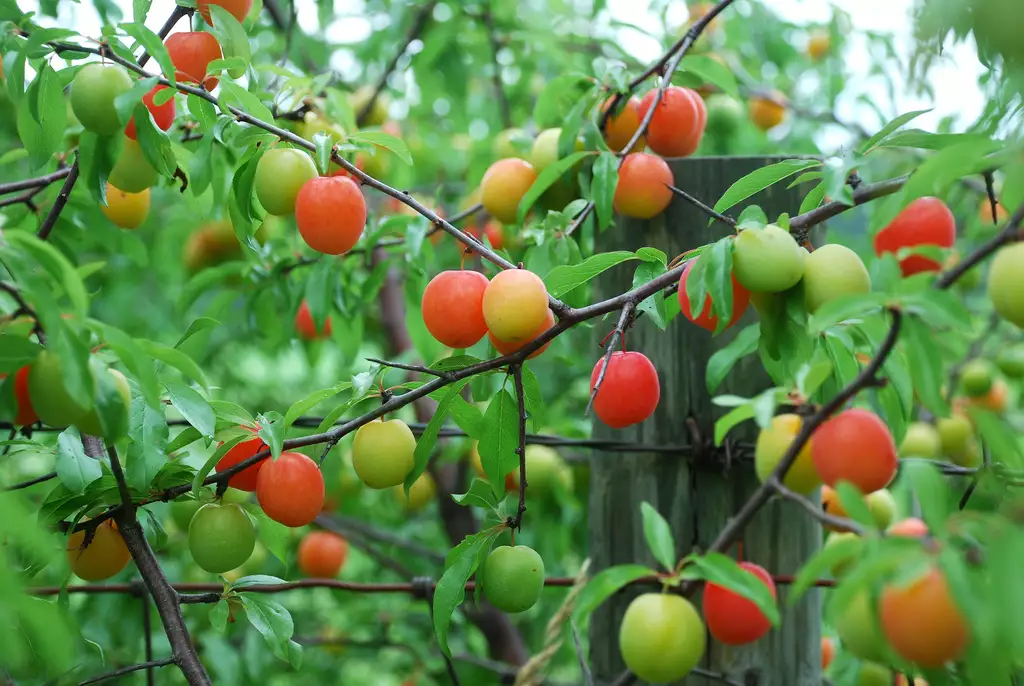
Discover the unique charm and versatility of Prunus angustifolia, commonly known as Chickasaw Plum, Sand Plum, or Sandhill Plum. This deciduous shrub or small tree stands as a testament to resilience and beauty, thriving in the southern United States. Typically growing 4 to 20 feet tall and spreading just as wide, its irregular, twiggy form and scaly, black bark add an intriguing texture to landscapes. Chickasaw Plum dazzles in early spring with clusters of small, fragrant white flowers, each adorned with five petals and reddish-orange anthers. By late summer, these blossoms give way to tart, cherry-like red to yellow plums, ideal for preserves and jellies.
Adaptable to a variety of growing conditions, this low-maintenance plant flourishes in well-drained soils under full sun to partial shade. Not only does it offer showy, edible fruit, but it also supports diverse wildlife, serving as a host for butterfly larvae and moths. Its ability to tolerate erosion makes it an excellent choice for naturalizing and erosion control in sunny woodland areas and stream banks. Embrace the Chickasaw Plum for its ecological contributions and striking seasonal appeal.