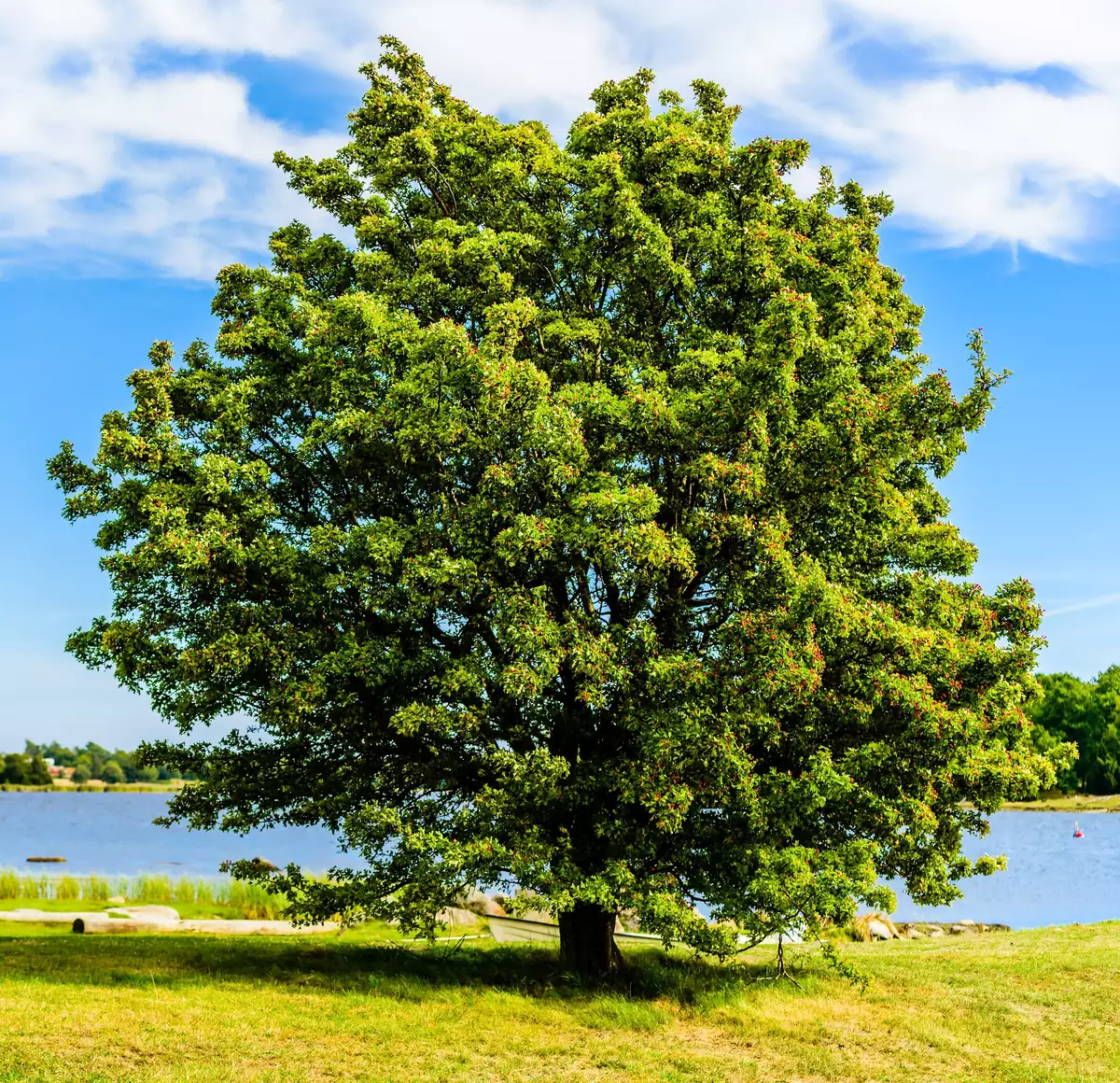
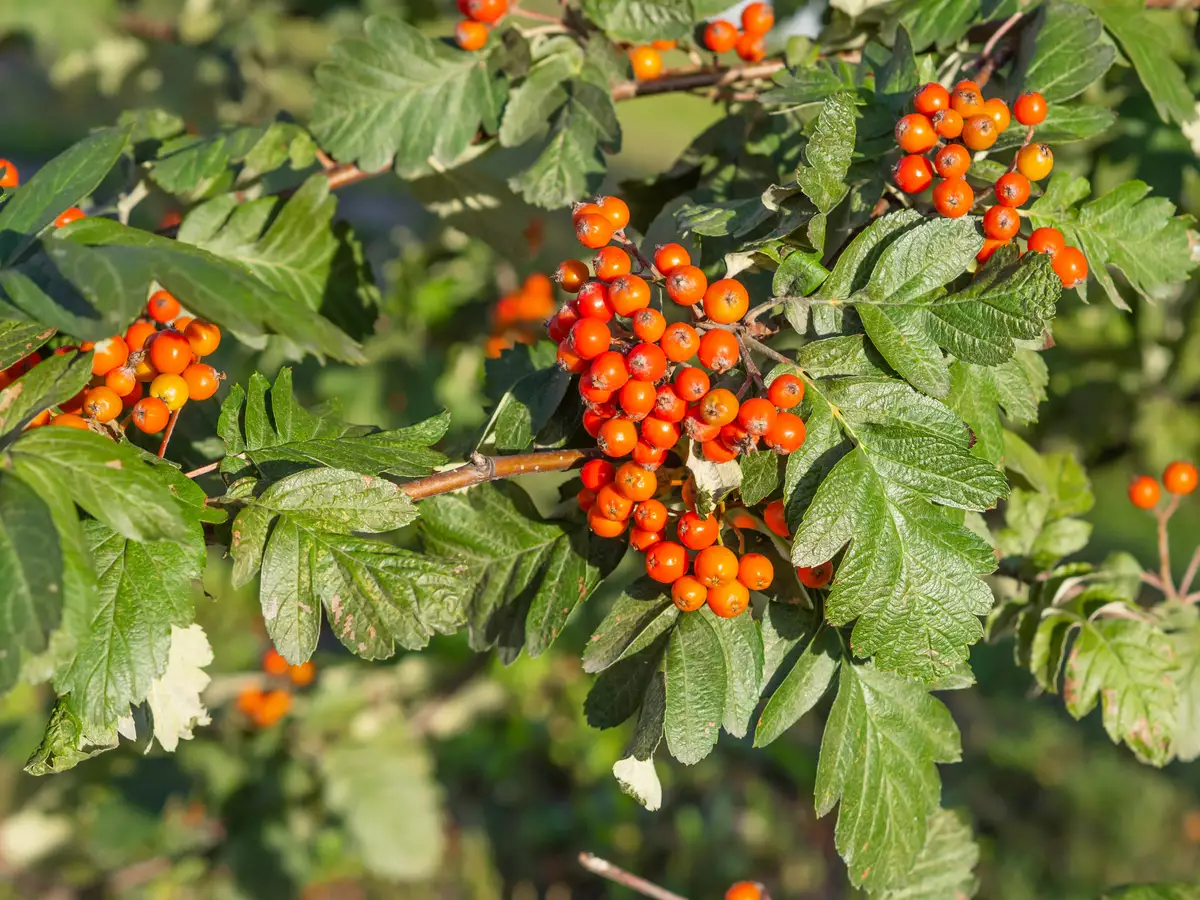
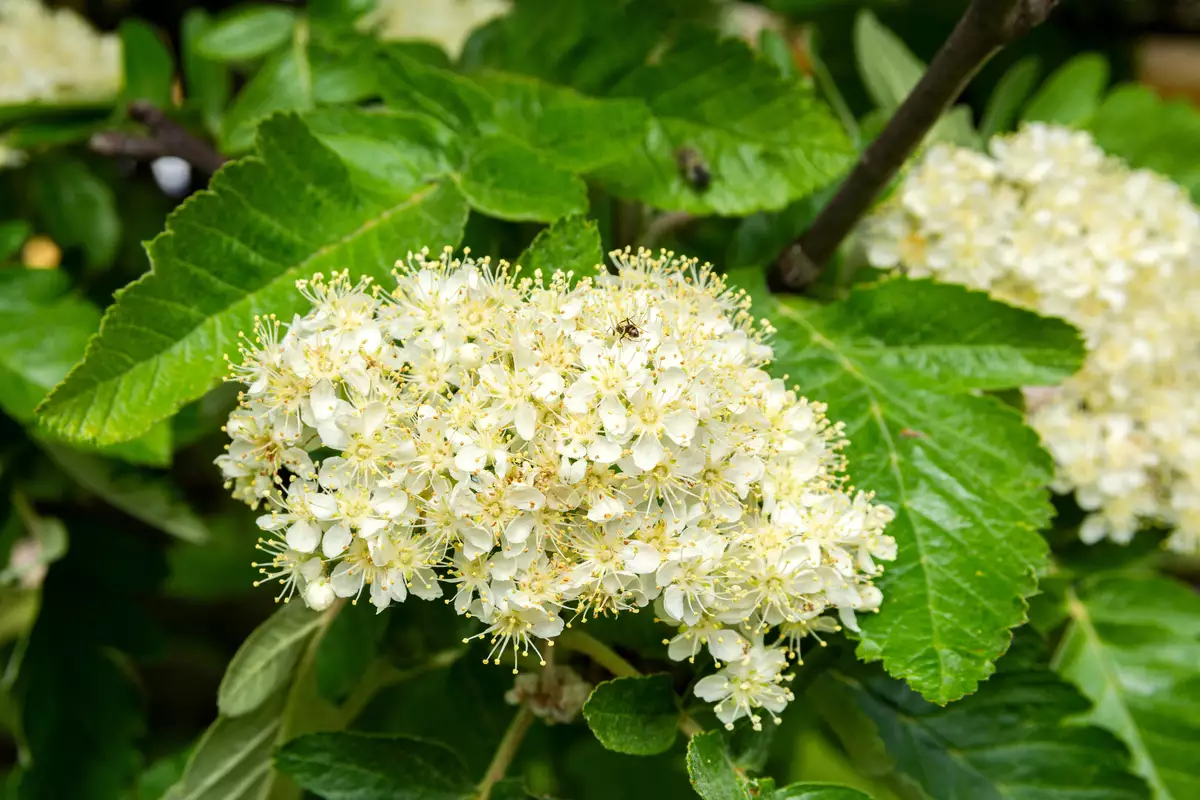
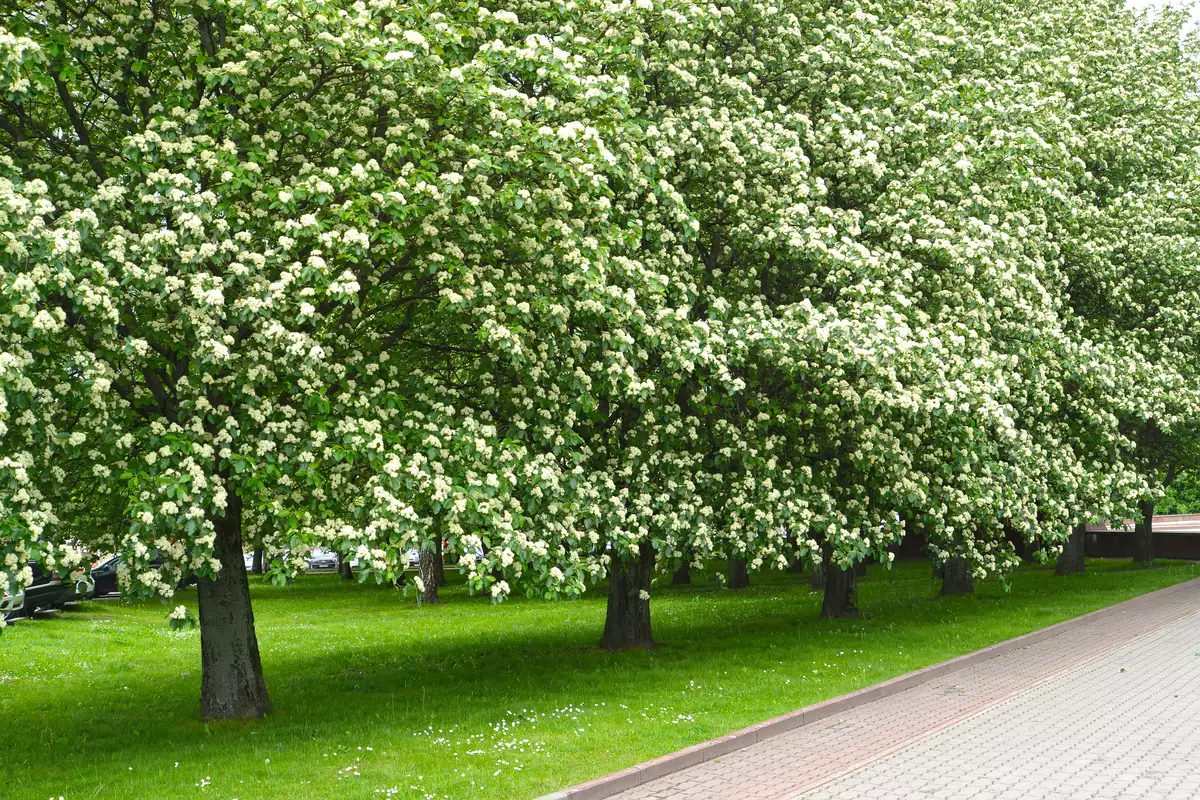
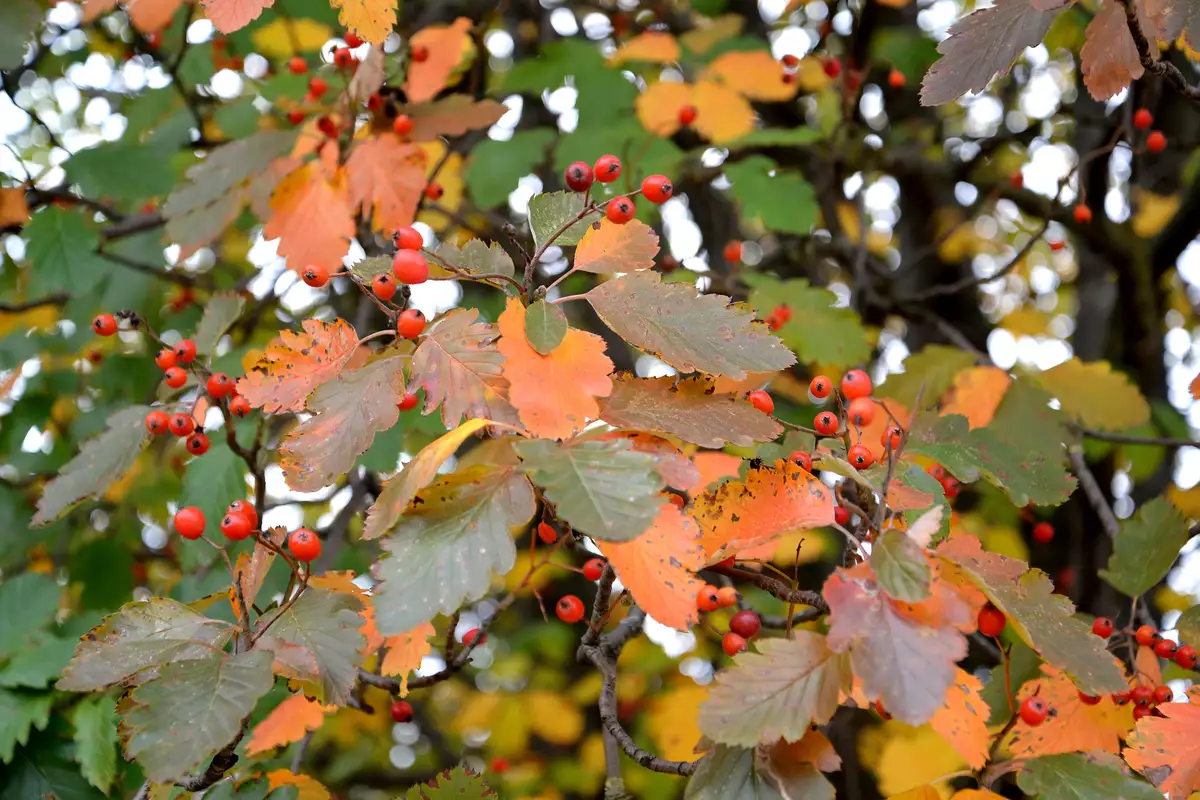
Sorbus intermedia, commonly known as Swedish Whitebeam or Swedish Mountain Ash, is an exquisite medium-sized deciduous tree native to northwestern Europe, including southern Sweden and scattered regions in Estonia, Latvia, Denmark, Finland, Poland, and England. This versatile ornamental tree stands out with its broad, densely packed canopy of deeply lobed, dark green leaves that are adorned underneath with gray hairs, giving the tree a distinctive silvery sheen. In the late spring, the tree bursts into bloom with corymbs of creamy white flowers, providing a stunning display that is later transformed into lush clusters of bright orange to red berries. These vibrant berries not only add a splash of color in mid-autumn but also serve as a valuable food source for birds like thrushes and waxwings.
Growing to heights of 20–35 feet with a spread of 20–30 feet, Swedish Whitebeam is a resilient option for urban environments thanks to its tolerance of air pollution and ability to withstand exposed and coastal sites. It thrives in full sun to part shade and requires moderately fertile, humus-rich, well-drained soil, although it is adaptable to alkaline conditions. With a smooth, glossy, sienna-brown bark on older stems and oak-like leaves that transition to russet-orange in the fall, this tree provides year-round visual interest. Notably, it requires minimal pruning and is generally low-maintenance, though attention should be paid to potential issues such as aphids and apple canker.
Ideal for urban plantations, parks, or naturalizing in various landscapes, Sorbus intermedia is a robust and appealing choice that promises elegance in every season.