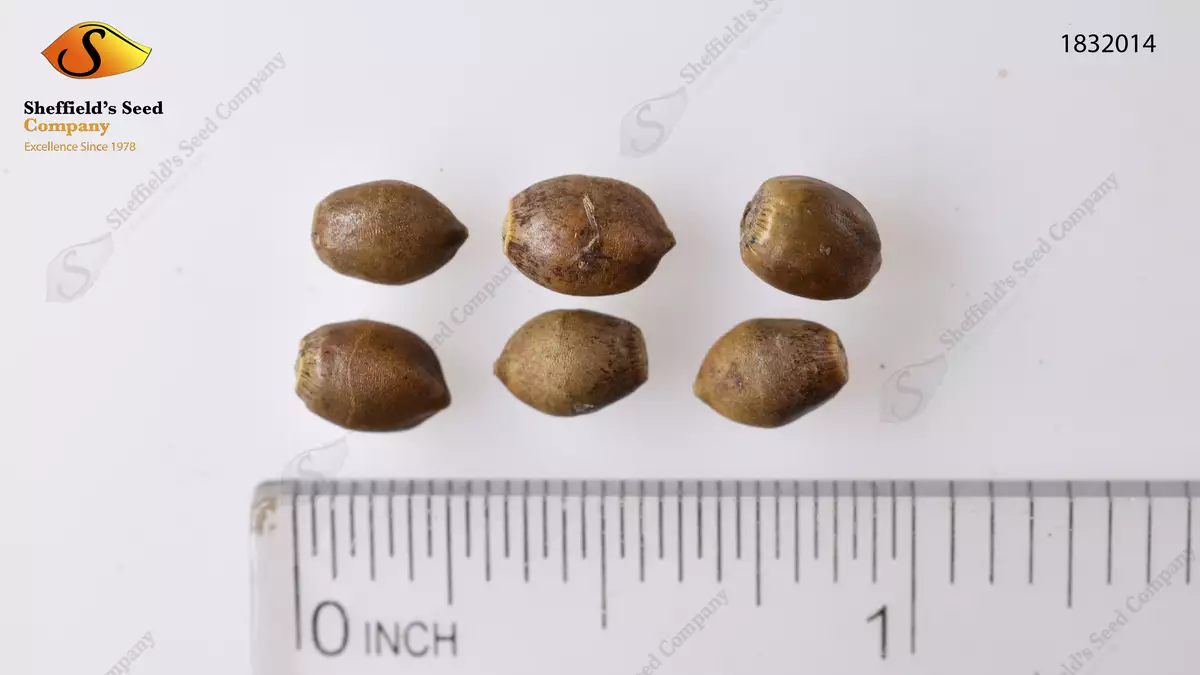
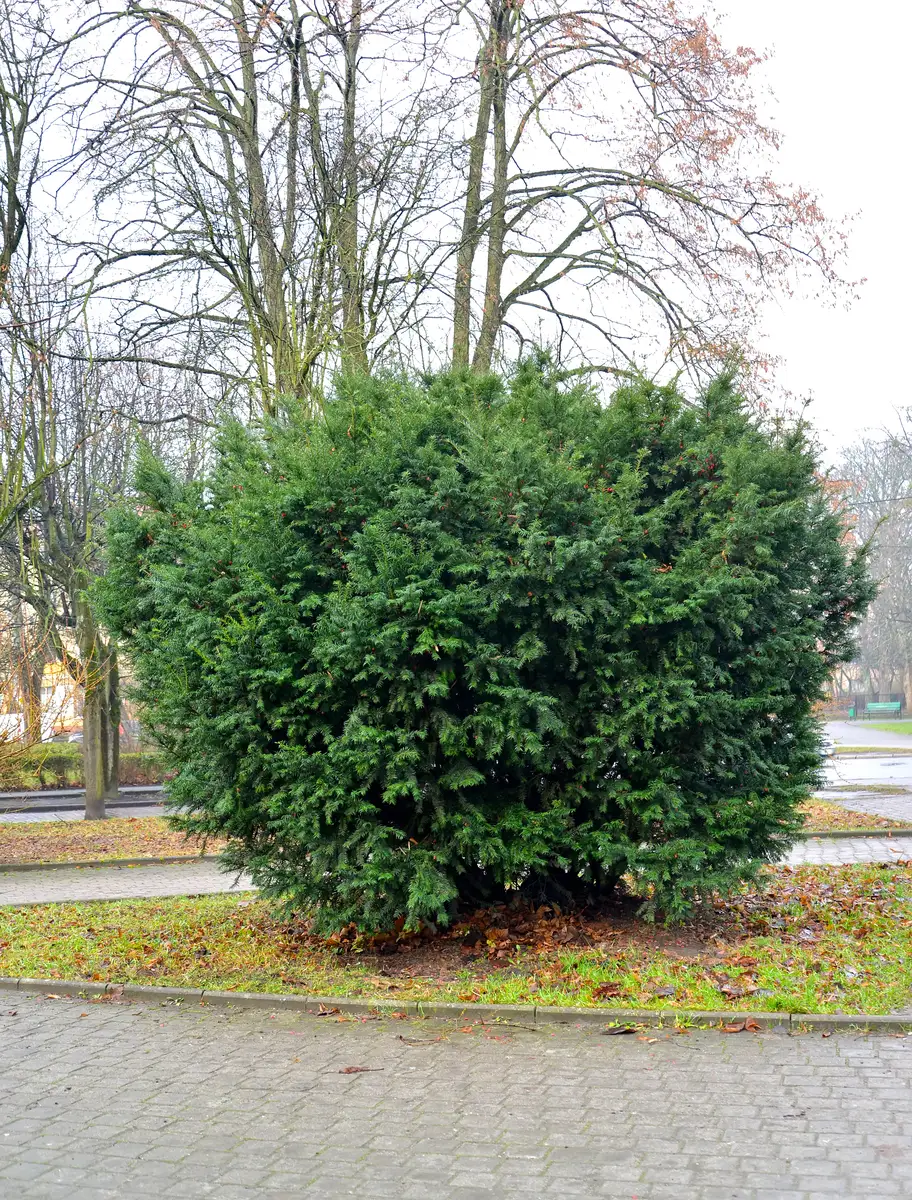
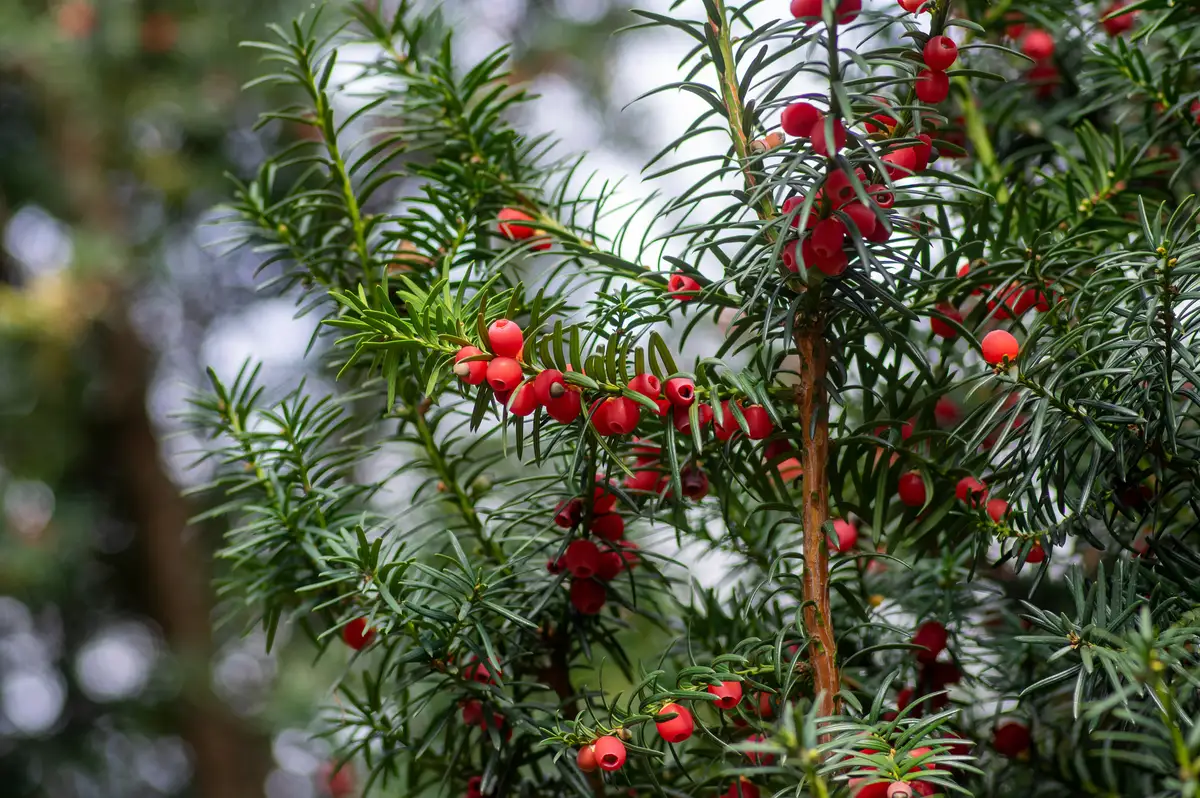
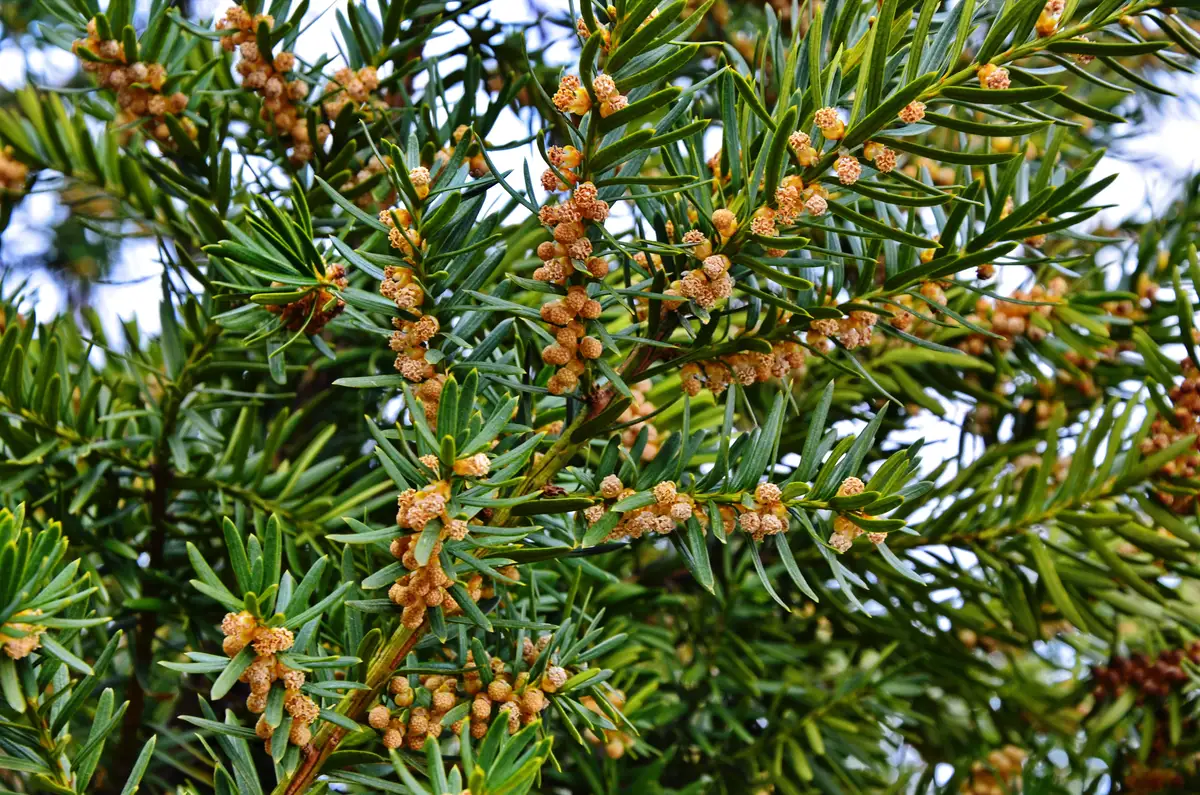
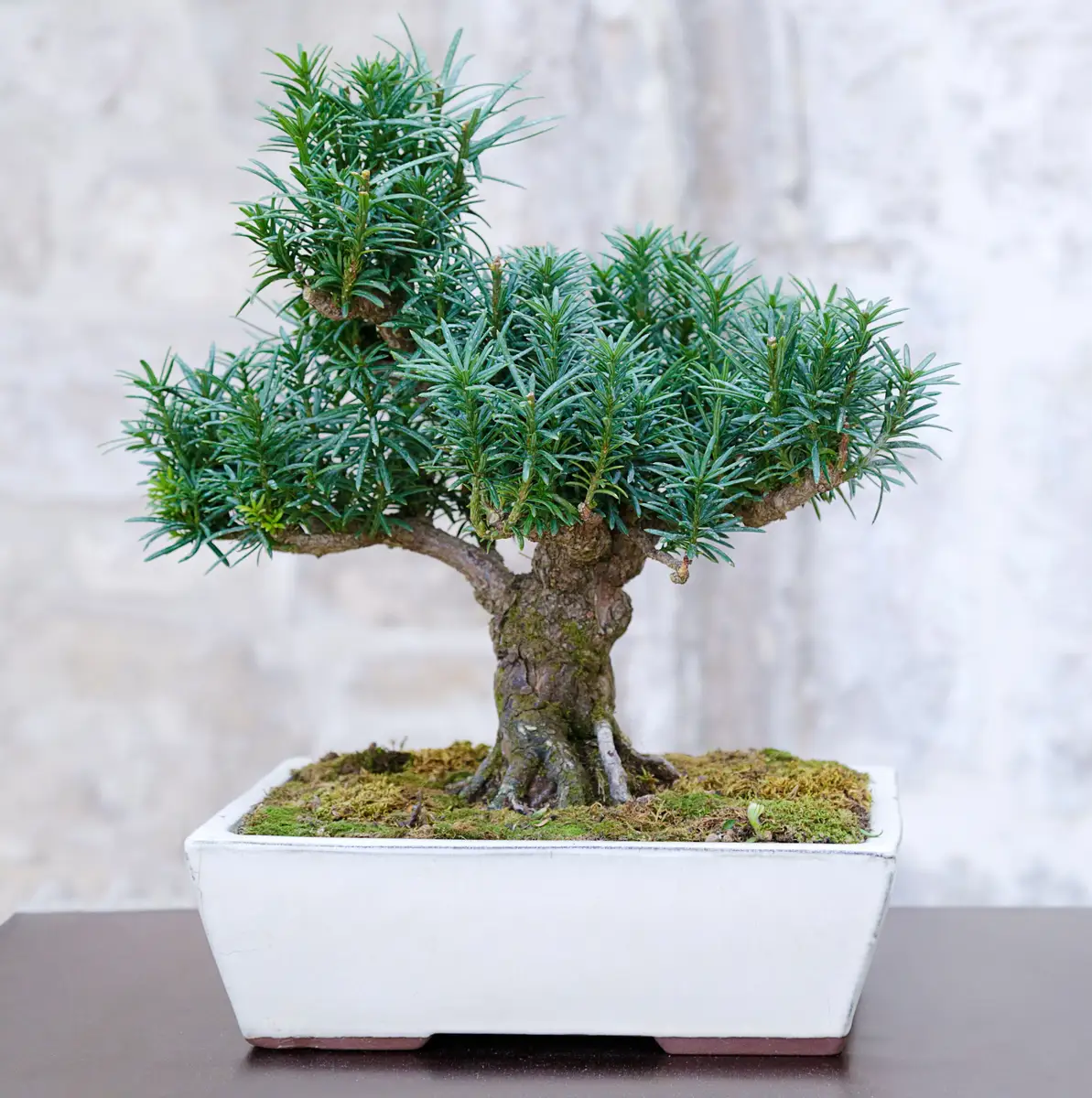
English Yew (Taxus baccata) is a majestic, long-lived evergreen conifer renowned for its lush, dark green needle-like foliage and striking red arils. Originally native to Europe, Asia Minor, and North Africa, this iconic tree can reach a height of 30 to 60 feet with a spread of 15 to 25 feet. Its adaptability to various soils, except poorly-drained ones, and its tolerance for heavy shade make it a versatile choice for many landscapes, particularly in zones 6 to 7.
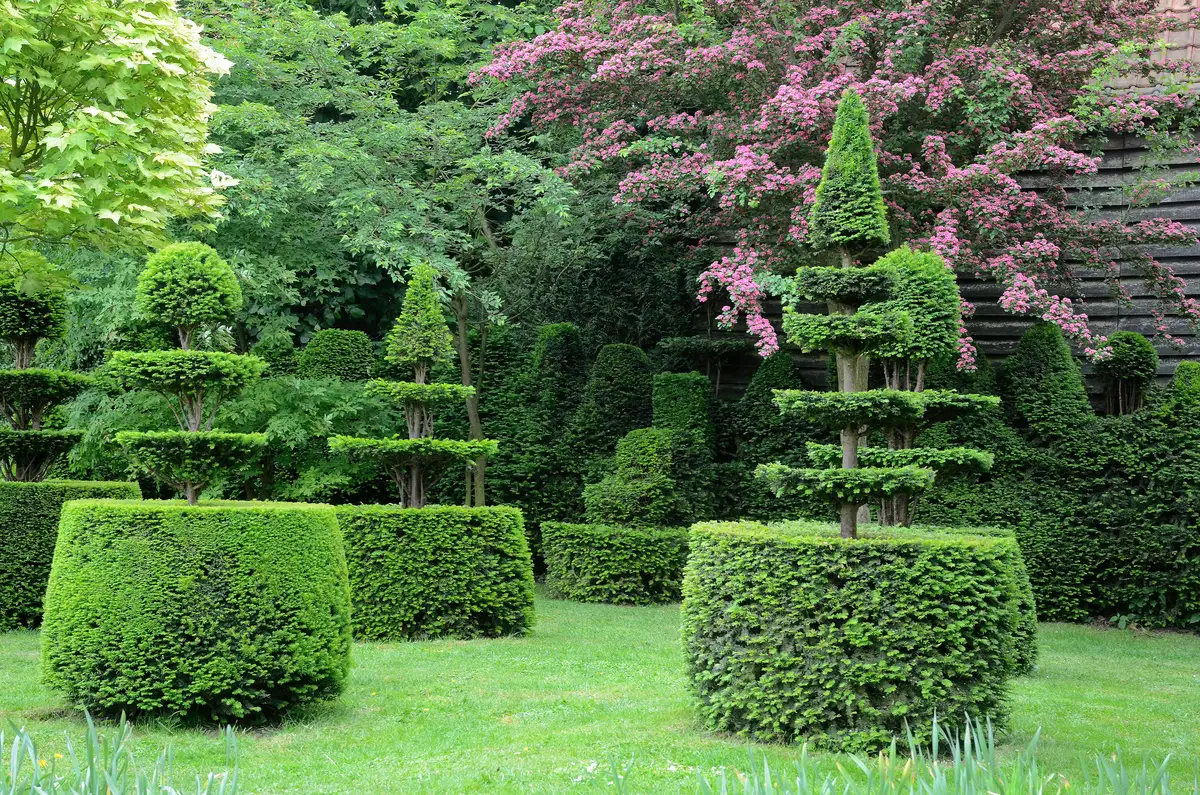
English Yew thrives in moist, sandy loams with excellent drainage and grows best in full sun to partial shade. Though it's not fond of temperature extremes, it's a resilient choice for hedges, topiaries, and privacy screens, bringing a year-round visual appeal with its conical or pyramidal shape. While dioecious, with separate male and female plants, only female yews bear the ornamental red arils that contrast beautifully with its evergreen leaves.
Culturally significant and historically used for crafting longbows, English Yew stands as a symbol of immortality and resilience. It is vital to note that all parts of the tree, except the aril, are toxic. This makes them less susceptible to pests and diseases, though they are vulnerable to some, like needle blights and root rot. Despite these challenges, English Yews remain a beloved choice for their enduring beauty and low maintenance, offering winter interest and architectural elegance to gardens and landscapes.