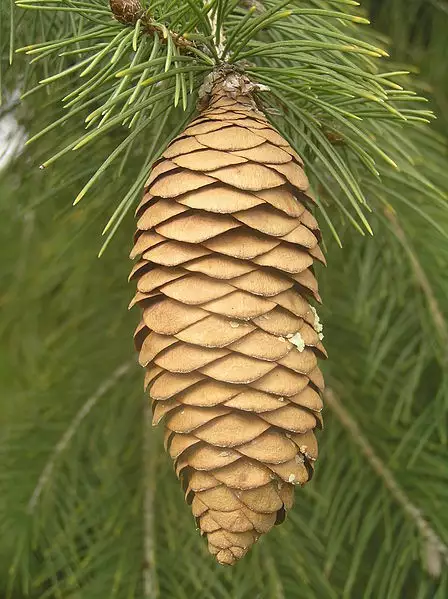
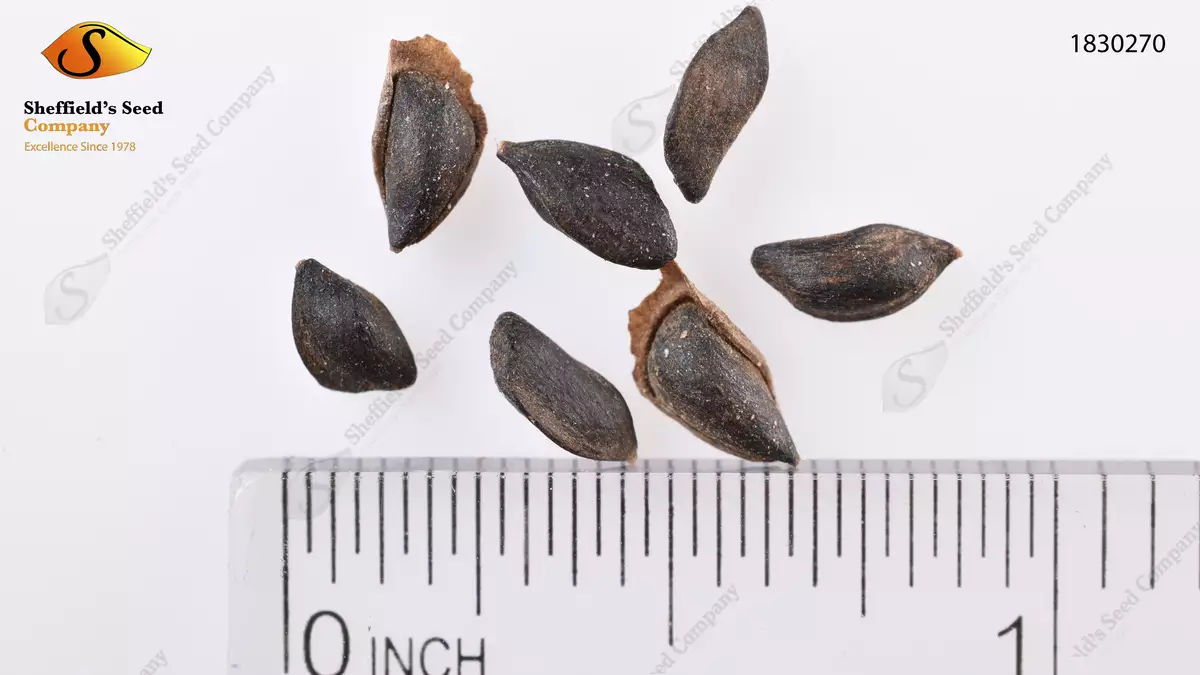
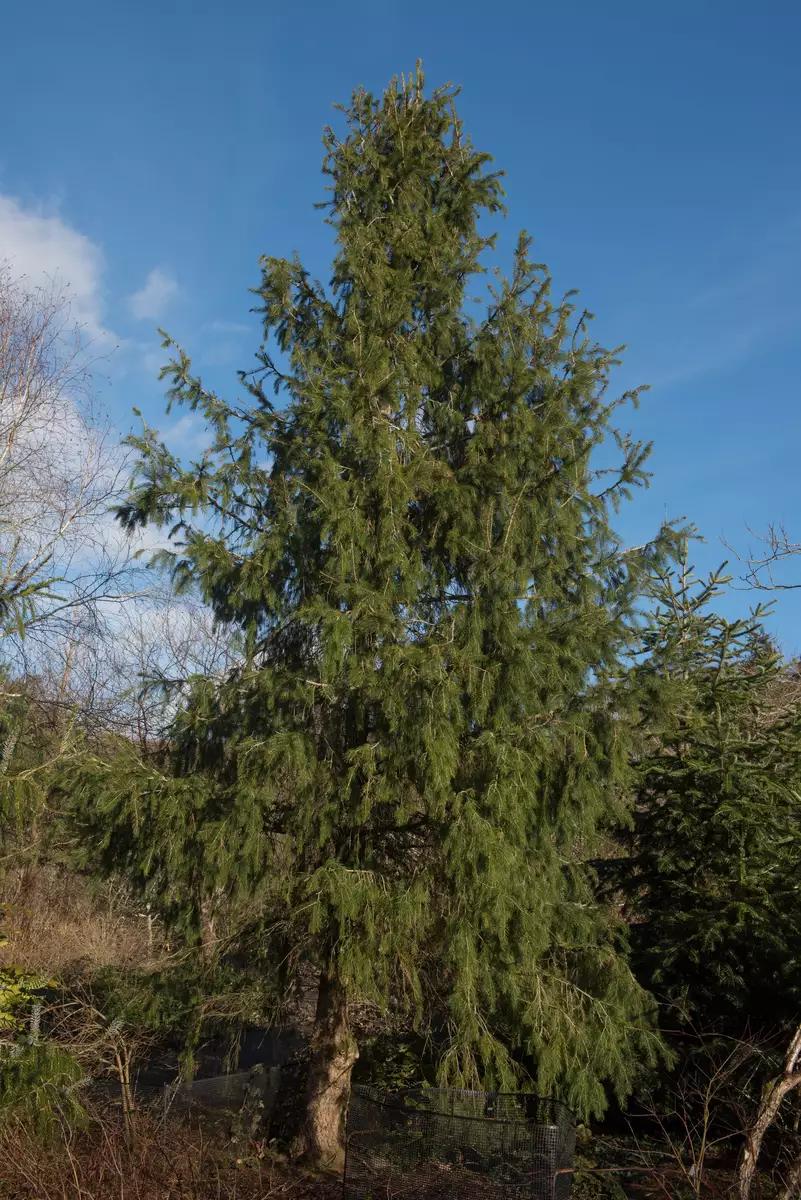
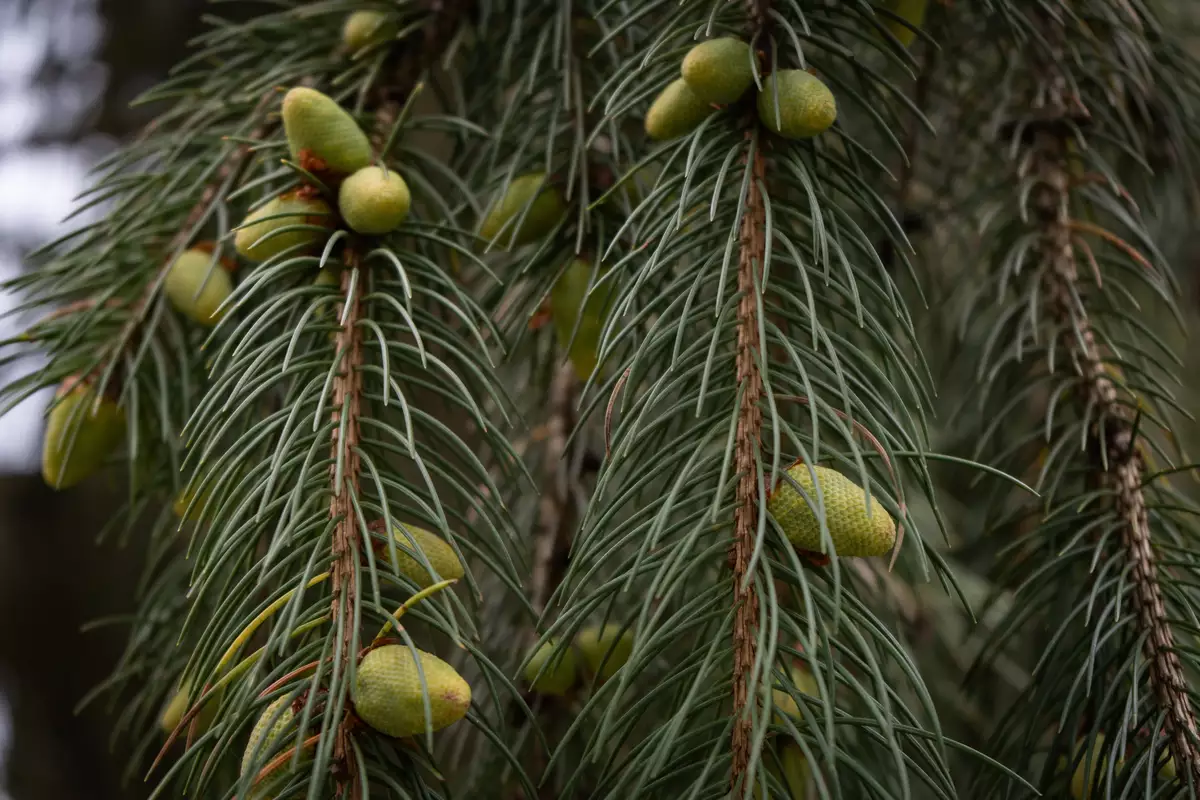
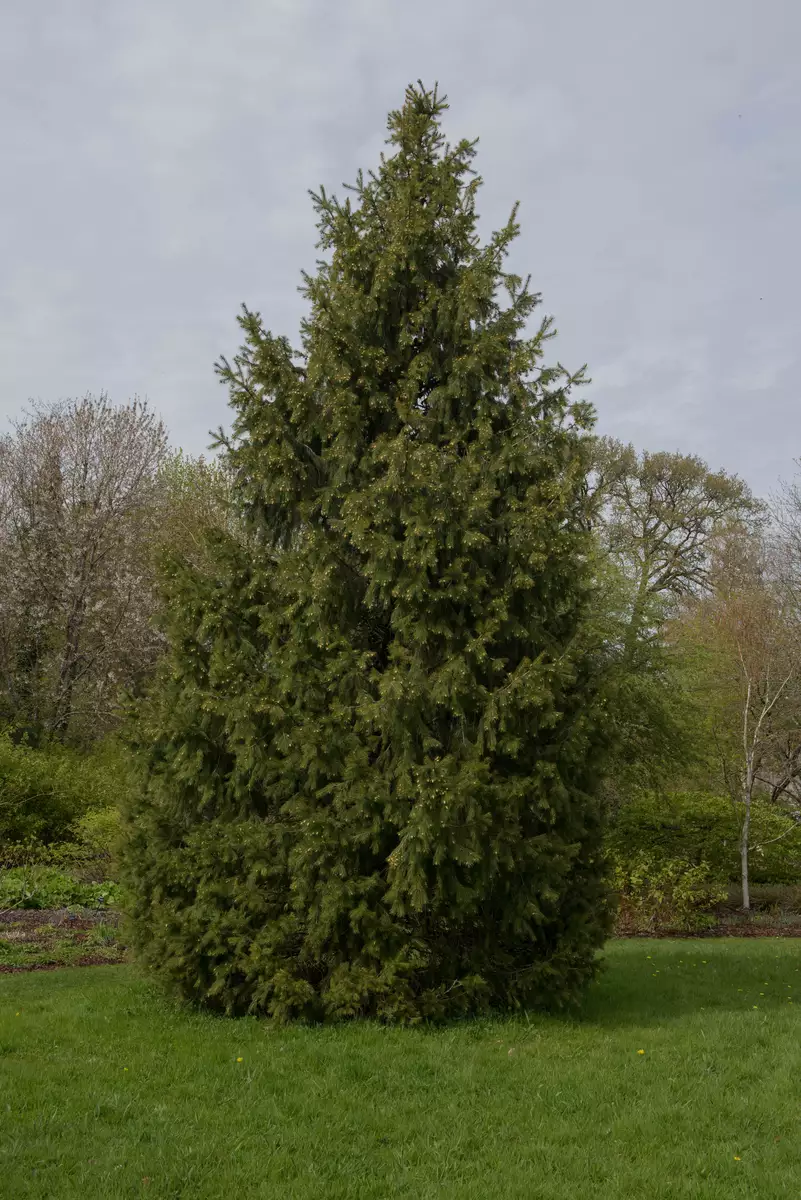
Experience the majestic beauty of Picea smithiana, commonly known as Himalayan Spruce or Morinda Spruce. Native to the western Himalayas, this needled evergreen from the Pinaceae family boasts an impressive height of 70-100 feet with a spread of 20-30 feet. Its pyramidal shape is characterized by horizontal branches and distinctive drooping branchlets, showcasing its unique charm. The tree's needle-like leaves, four-angled in cross-section, envelop its branches in lush greenery, while its scaly gray bark adds to its visual appeal. The shiny, brownish-purple female cones, pendulously hanging, create an alluring winter interest.
Ideal for USDA Zones 7 to 8, Himalayan Spruce thrives in full sun with medium moisture, well-drained soils, displaying the best performance in cooler summer climates. Its tolerance to deer, coupled with minimal maintenance needs, makes it an admirable addition to any landscape. While it can handle the cold with ease, it may face challenges in high heat and humidity. This high mountain species, spanning elevations of 7,500 to 12,300 ft, is a conservation asset, thriving alongside Abies spectabilis, Pinus wallichiana, and Tsuga dumosa.
Beyond its ornamental value, Himalayan Spruce is an essential timber tree, renowned for yielding excellent construction material, and historically valued in rail and aircraft industries. Now, it finds its place in paper production as well. Although not common in cultivation, its striking aesthetics and robust nature make it a must-have for enthusiasts in cool temperate regions. Protecting these remarkable trees through sustainable logging practices and cultivation ensures the enduring splendor of Picea smithiana for generations to come.