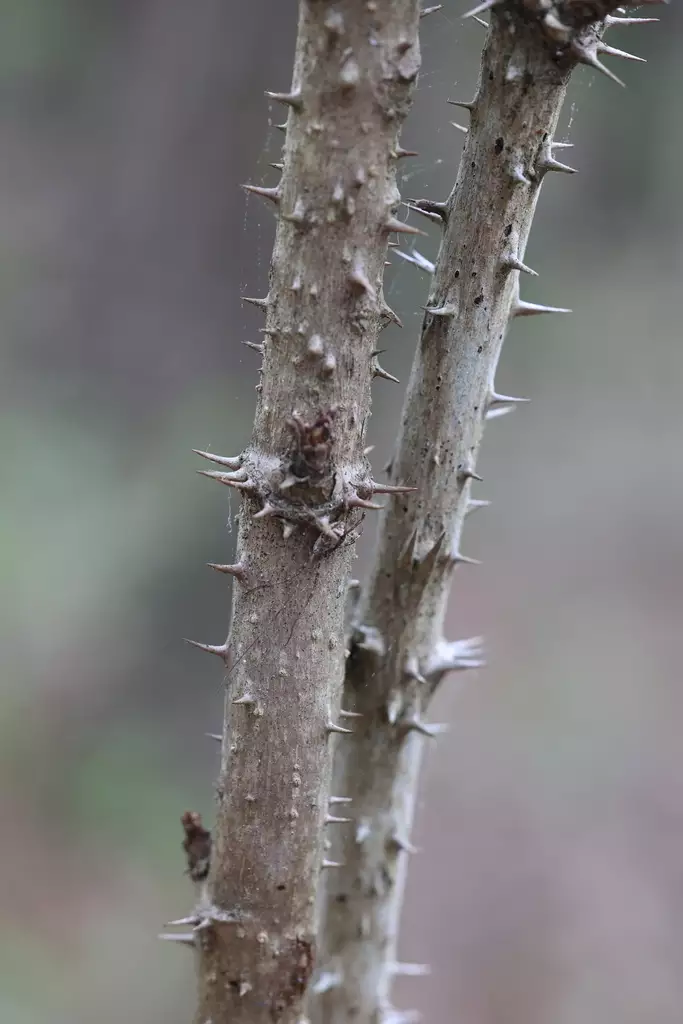
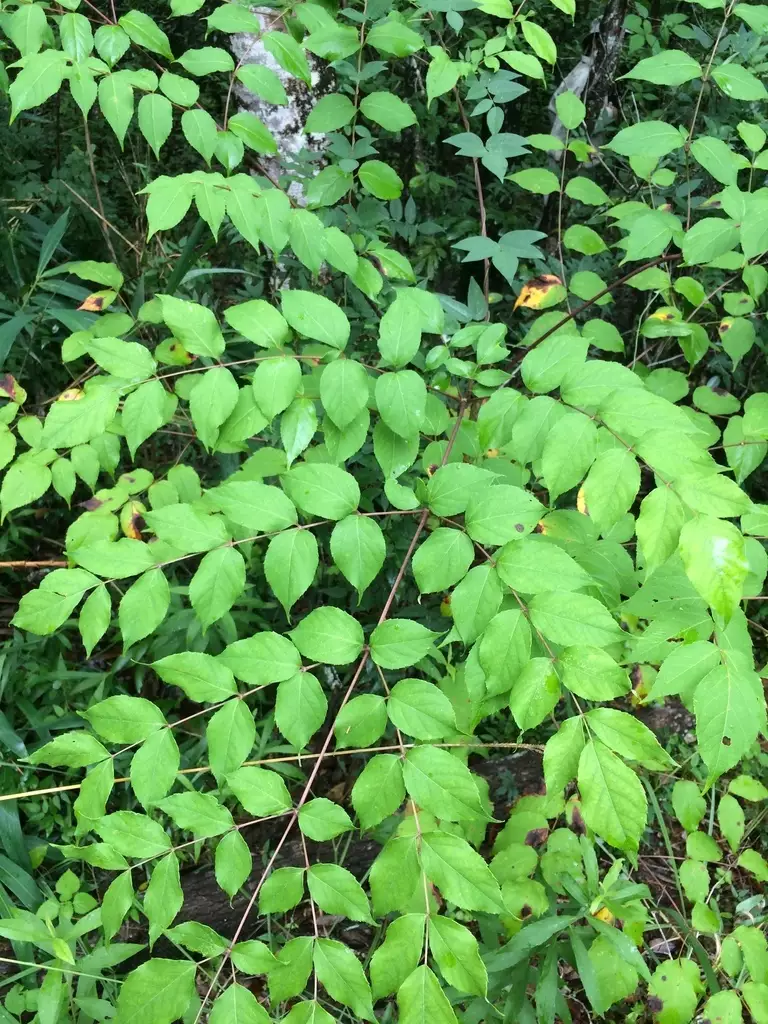
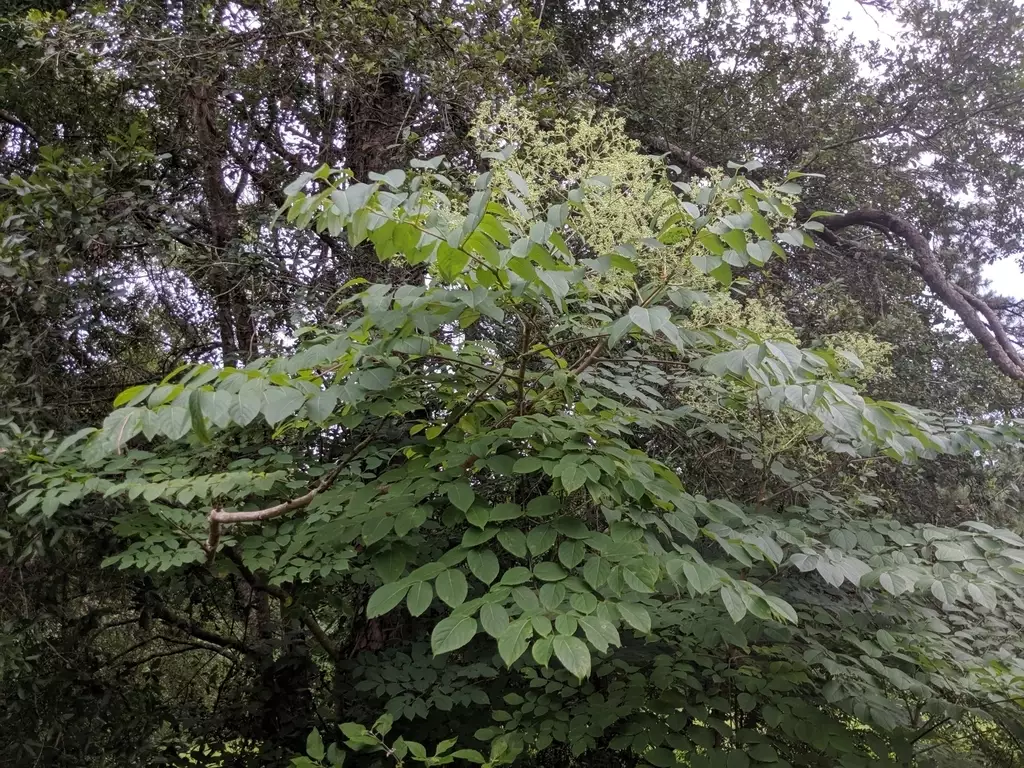
Aralia spinosa, often known as Devil's Walking Stick or Hercules' Club, captivates with its unique spiny architecture and towering presence. Native to the eastern United States, this deciduous shrub can grow between 10 to 15 feet tall, occasionally stretching into a small tree at 35 feet. Revered for its ornamental allure, Devil's Walking Stick boasts expansive compound leaves, the largest in North America, offering an umbrella-like canopy crowned atop its sparse, upright branches. Adorned with sharp thorns on its leaf stalks and stems, the plant stands as a striking addition to any landscape, ideally suited for less-trafficked areas where its prickly nature can be celebrated from a distance.
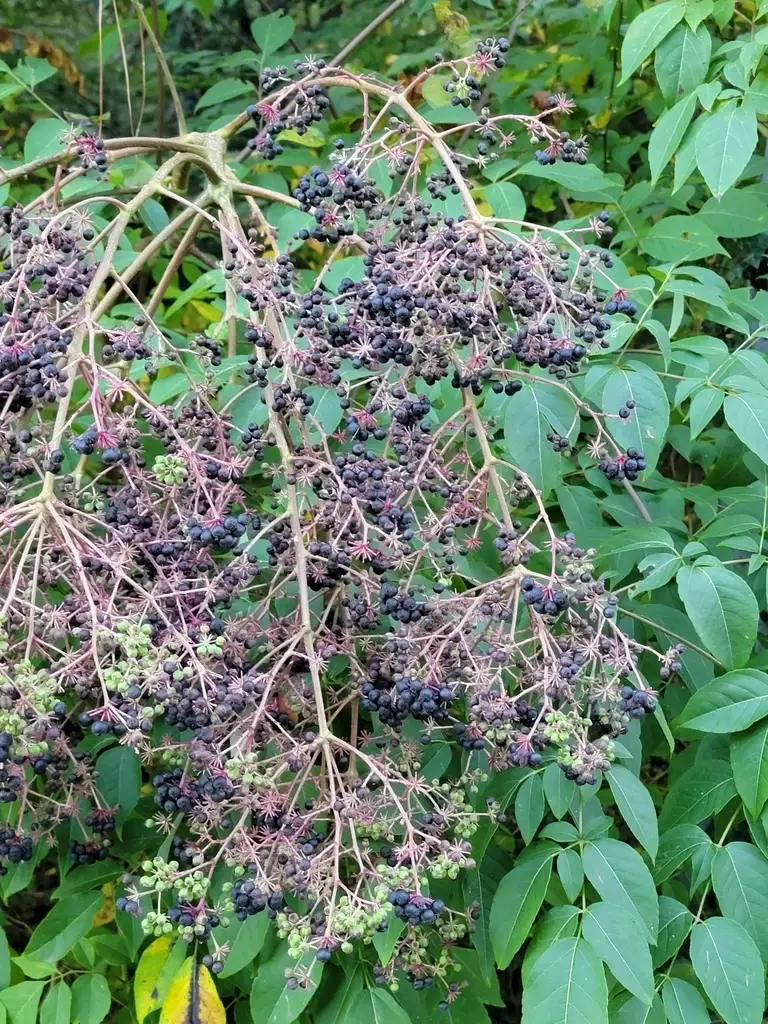
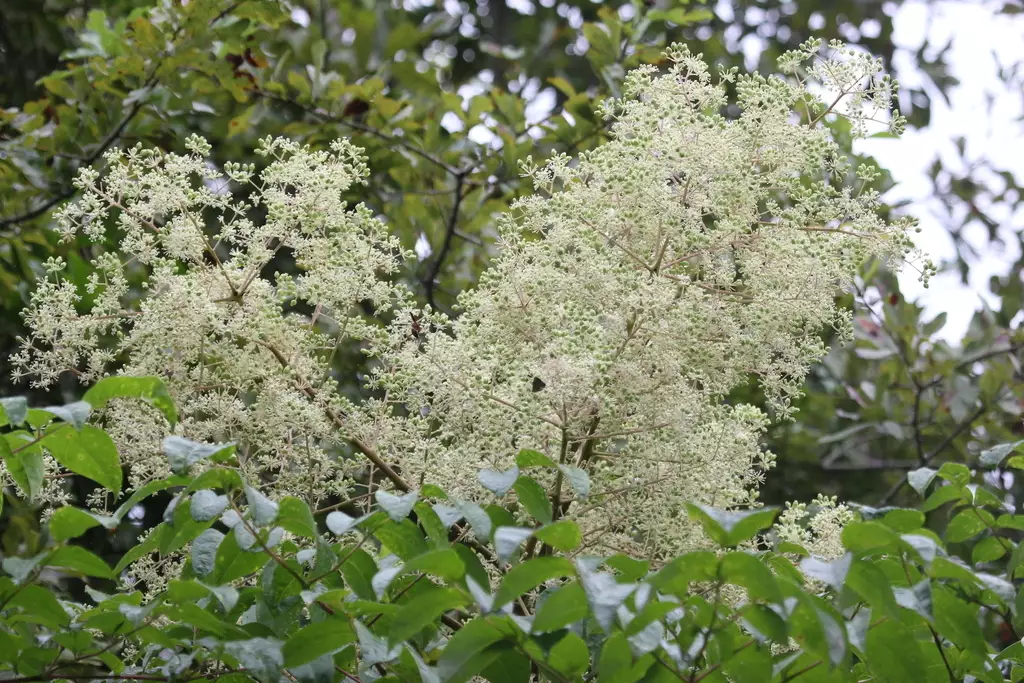
In late summer, the shrub bursts into showy white flowers that attract a plethora of pollinators, including bees and butterflies. Post-bloom, clusters of juicy black drupes entice songbirds and small mammals, ensuring a dynamic ecosystem around this exceptional plant. Versatile and resilient, Aralia spinosa thrives in a range of soil types from clay to rocky terrains and boasts considerable drought tolerance. It propagates through self-seeding and suckering, forming natural, dense thickets that are resistant to deer damage. Historically, its medicinal properties were recognized during the American Civil War, and today, its potent presence continues to intrigue gardeners and nature enthusiasts alike. Perfect for gardens seeking a bold, native statement piece, Devil's Walking Stick commands attention, preferring sheltered, sunny to partially shaded locales where its dramatic design can be fully appreciated.