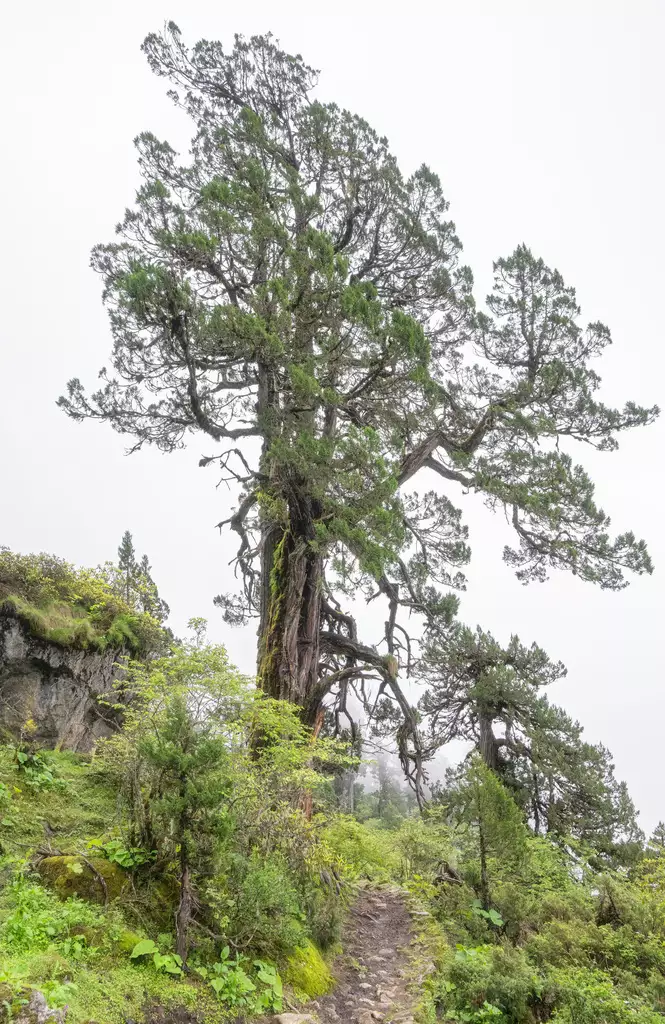
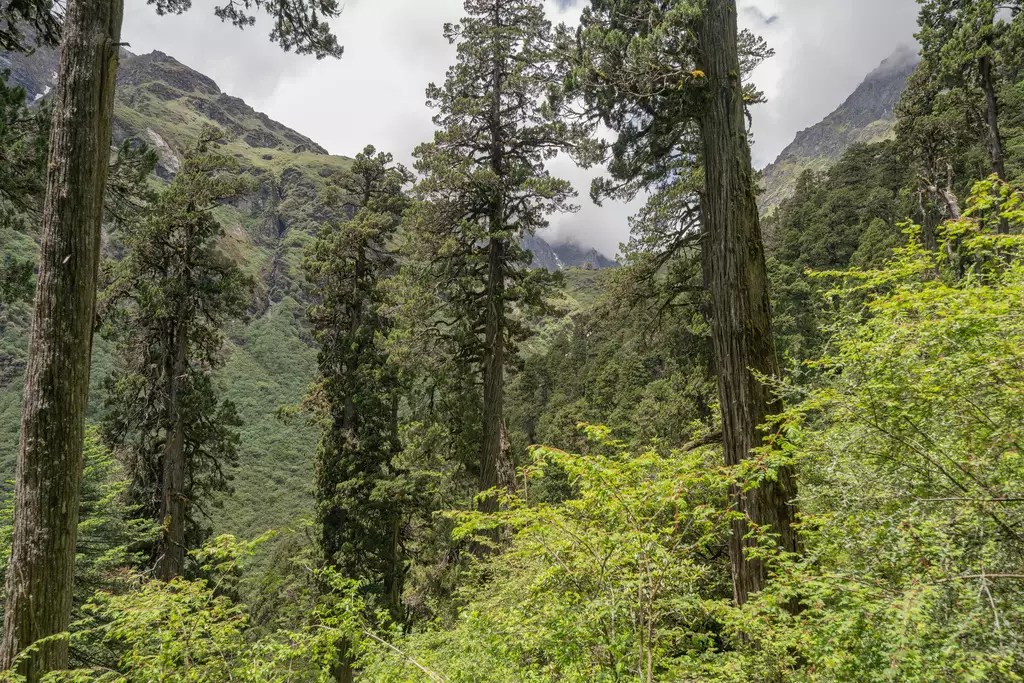
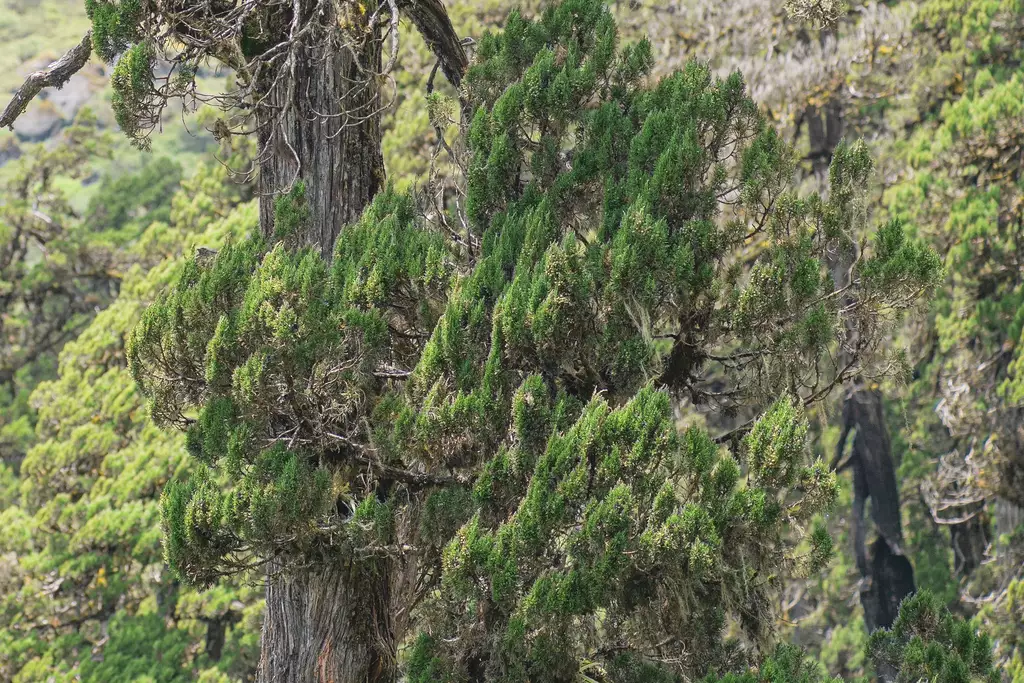
A remarkable evergreen conifer of the high Tibetan plateau, the Tibetan Juniper holds the distinction of forming the highest known treeline in the Northern Hemisphere, with stands recorded at elevations approaching 16,000 ft. It grows as a shrub or small to medium tree, typically 15-50 ft tall, occasionally reaching 100 ft, with a stout trunk and brown bark exfoliating in longitudinal strips.
The foliage is dimorphic: needle-like juvenile leaves give way to small, scale-like adult leaves arranged in opposite pairs or whorls of three, lending mature plants a fine, dense texture. Berry-like ovoid cones, 9–16 mm long, ripen to a deep blue-black over roughly eighteen months, each enclosing a single seed. Usually monoecious, it sheds pollen in spring.
Exceptionally cold-hardy and remarkably long-lived — some specimens exceed a thousand years — it is an arrestingly resilient, slow-growing conifer well suited to rocky, well-drained sites in full sun.