0


Growing Info

Scarification
Scarification: Soak in water, let stand in water for 24 hours
Stratification
Stratification: warm stratify for 6 months, cold stratify for 30 days
Germination
Germination: sow seed 1/4" deep, tamp the soil, mulch the seed bed

Other: germination may be delayed 

Native to: Amur, Assam, China North-Central, China South-Central, China Southeast, East Himalaya, Inner Mongolia, Japan, Khabarovsk, Korea, Manchuria, Myanmar, Nepal, Philippines, Primorye, Qinghai, Sakhalin, Taiwan, Thailand, Tibet, Vietnam, West Himalaya
Introduced to: Connecticut, Illinois, Kentucky, Maryland, Massachusetts, New Hampshire, New York, Pennsylvania, Utah, West Virginia
Native
Introduced

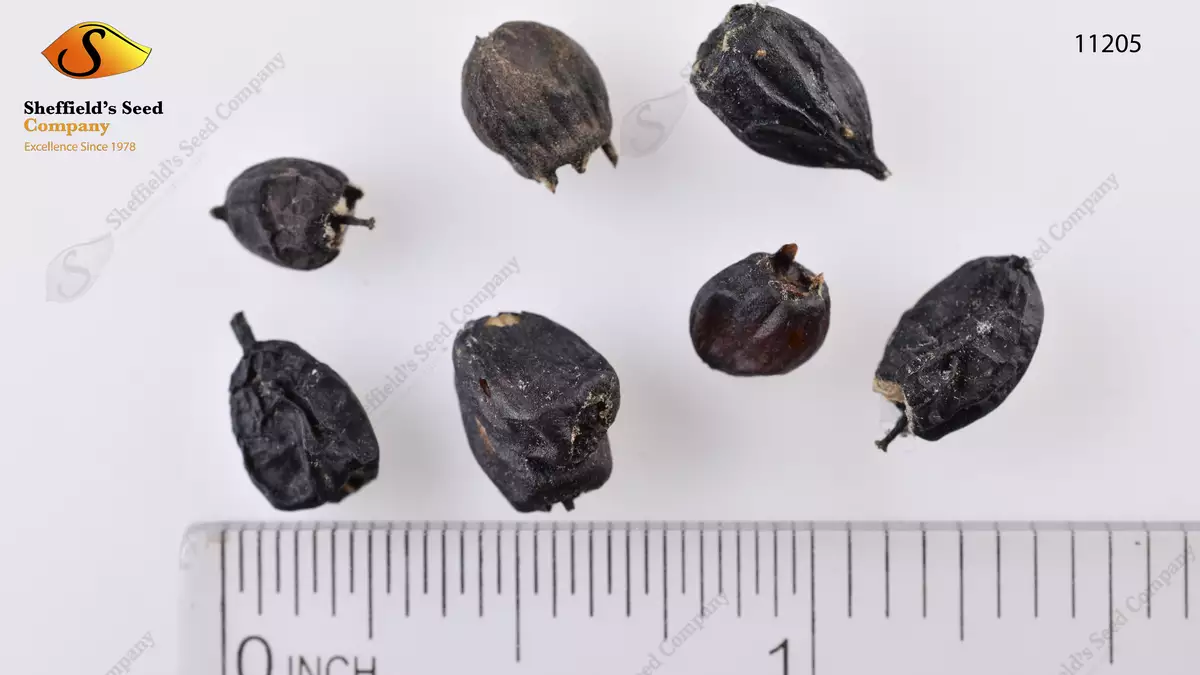
Eleutherococcus henryi

Henry-aralia

  • Eleutherococcus henryi

Please select the quantity desired, and we will advise availability and price as soon as possible.

Details

Min. hardiness zone:
5

No Export to These Countries

Canada

Growing Info

Scarification
Scarification: Soak in water, let stand in water for 24 hours
Stratification
Stratification: warm stratify for 6 months, cold stratify for 30 days
Germination
Germination: sow seed 1/4" deep, tamp the soil, mulch the seed bed

Other: germination may be delayed 

Native to: Amur, Assam, China North-Central, China South-Central, China Southeast, East Himalaya, Inner Mongolia, Japan, Khabarovsk, Korea, Manchuria, Myanmar, Nepal, Philippines, Primorye, Qinghai, Sakhalin, Taiwan, Thailand, Tibet, Vietnam, West Himalaya
Introduced to: Connecticut, Illinois, Kentucky, Maryland, Massachusetts, New Hampshire, New York, Pennsylvania, Utah, West Virginia
Native
Introduced
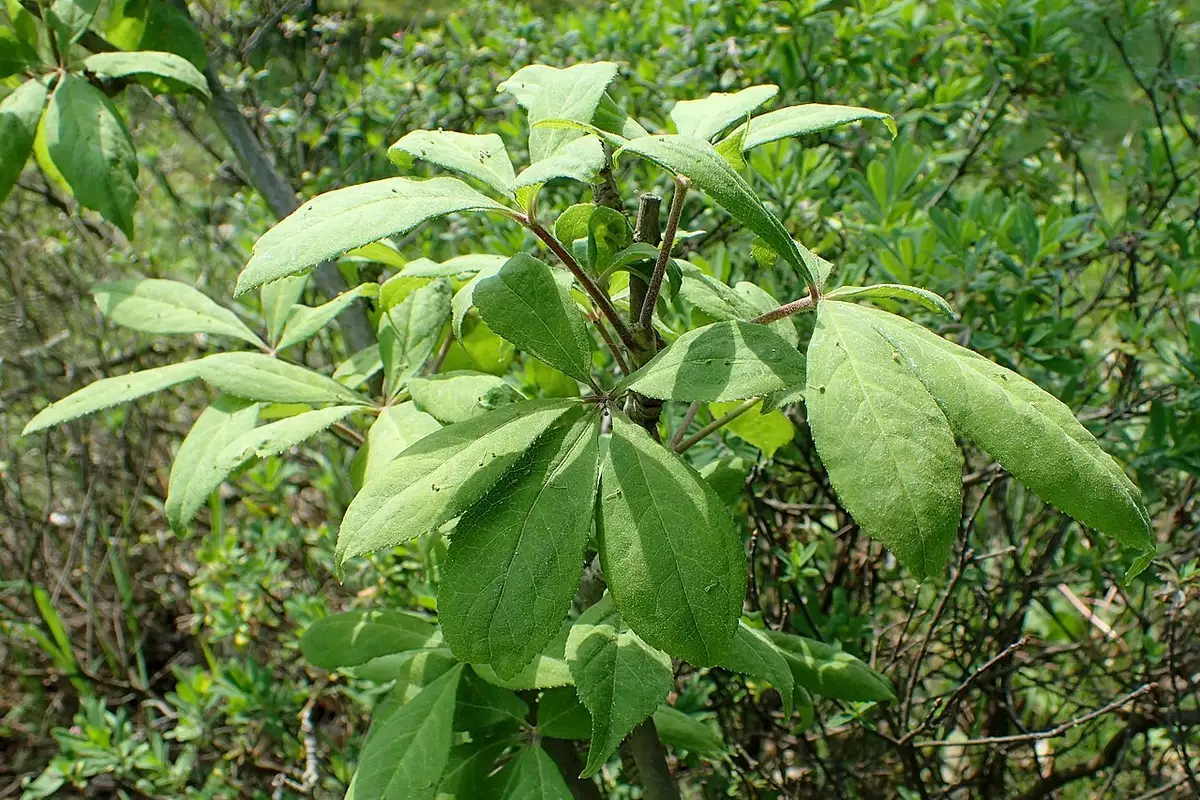
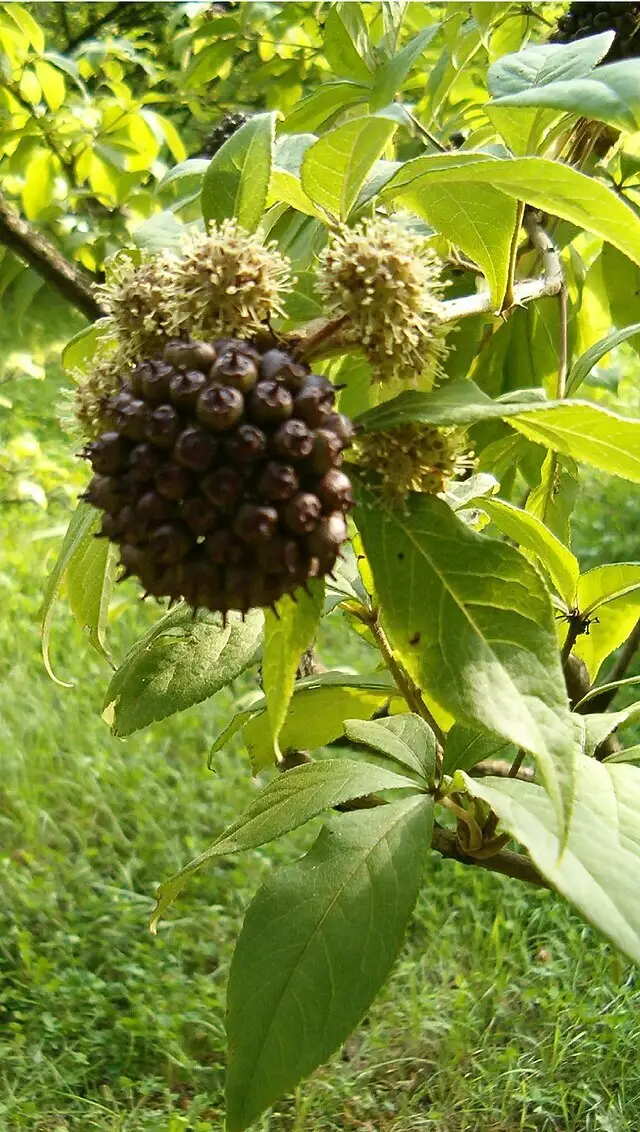
Eleutherococcus henryi, commonly known as Henry-aralia, is a distinctive, hardy deciduous shrub native to China. With its robust growth habit, this shrub reaches heights of up to 12 feet, showcasing sprawling, coarse branches adorned with down-curved spines. Its unique appearance, characterized by rough-textured, compound leaves comprising five oval leaflets, adds a charismatic touch to any landscape. As an ornamental plant, it blooms with small, white flowers grouped in terminal clusters of umbels from July to September, followed by striking, ink-black berries that persist into the fall. Suited for USDA Zones 5-8, Eleutherococcus henryi is adaptable to various soil types, thriving in conditions ranging from full sun to partial shade, and demonstrates notable pollution tolerance.

Beyond its ornamental value, Eleutherococcus henryi holds significance in traditional Chinese medicine, where it is known as Caoyewujia. Valued for its purported medicinal properties, it is traditionally used to promote joint health, expel wind and dampness, relax muscles, and enhance blood circulation. Additionally, it exhibits potential anti-inflammatory, antibacterial, and neuroprotective effects, making it a fascinating subject for ongoing research. The shrub's introduction to Western horticulture dates back to 1901, thanks to the efforts of plant explorer Wilson for Messrs Veitch, and it first flowered in 1905 at Coombe Wood. Whether appreciated for its medicinal benefits or eye-catching aesthetic, Eleutherococcus henryi is a versatile and intriguing addition to gardens and landscapes alike.

You might also like

Papaver somniferum

Papaver somniferum

Opium Poppy

Sequoia sempervirens

Sequoia sempervirens

California Redwood, Coast Redwood, Redwood

Sequoiadendron giganteum

Sequoiadendron giganteum

Bigtree, Giant Sequoia, Sierra Redwood, Sierran Redwood, Wellingtonia

Vaccinium corymbosum

Vaccinium corymbosum

Highbush Blueberry

(315) 497-1058
269 NY-34 Locke NY 13092
seed@sheffields.com

HOME - logo

Find us on: