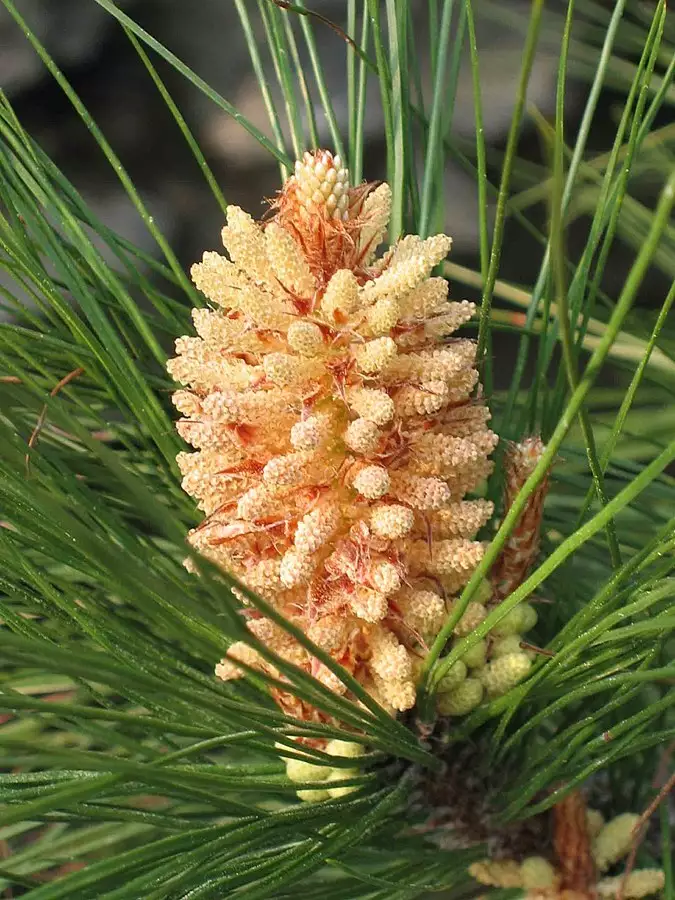
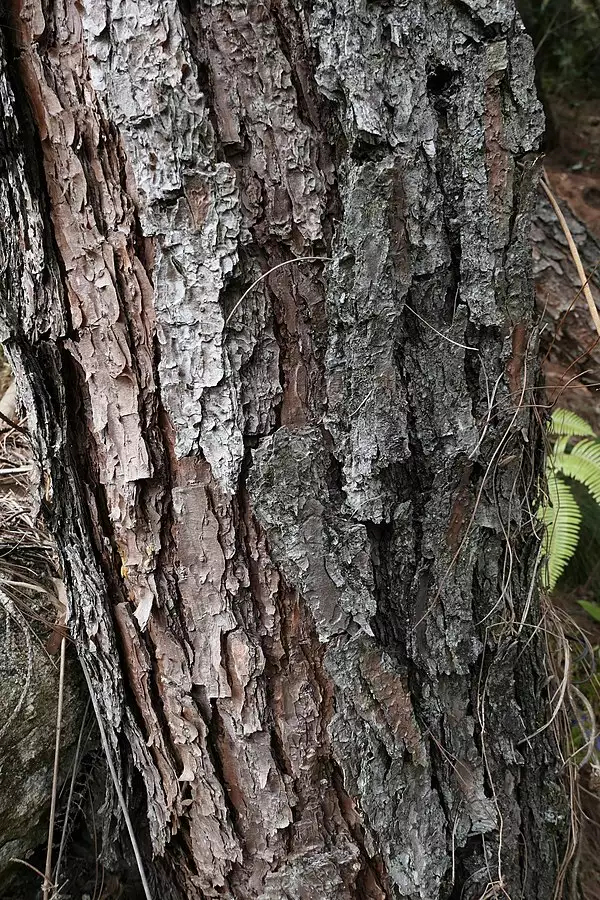
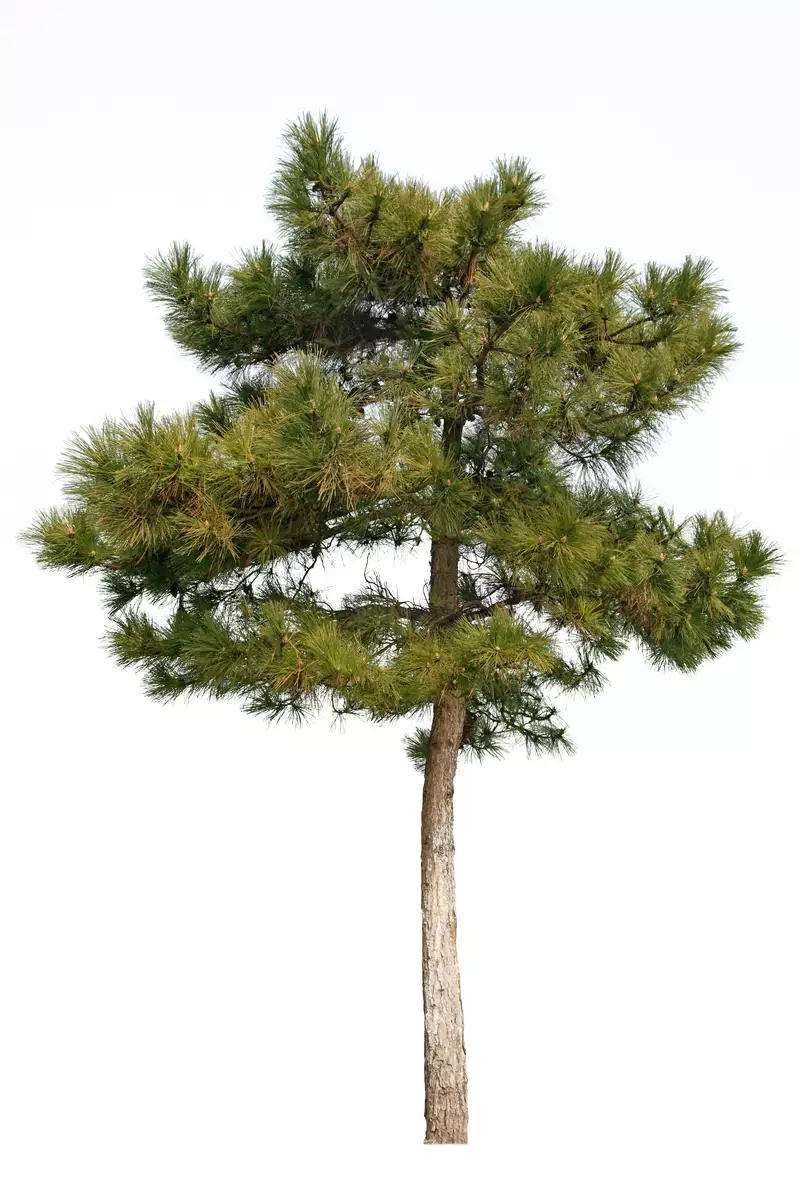
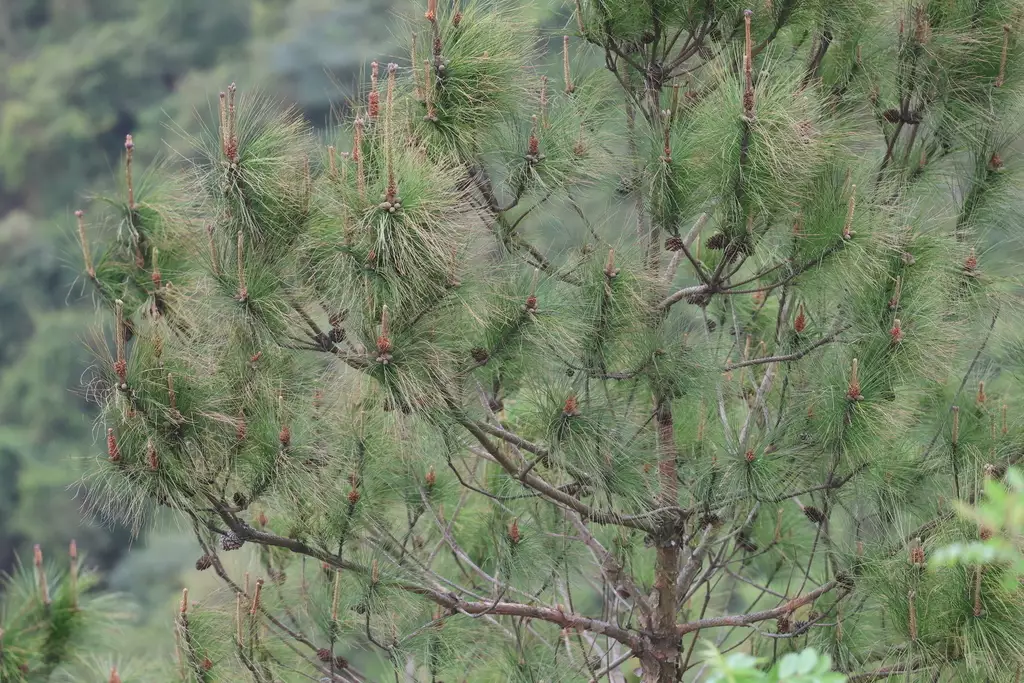
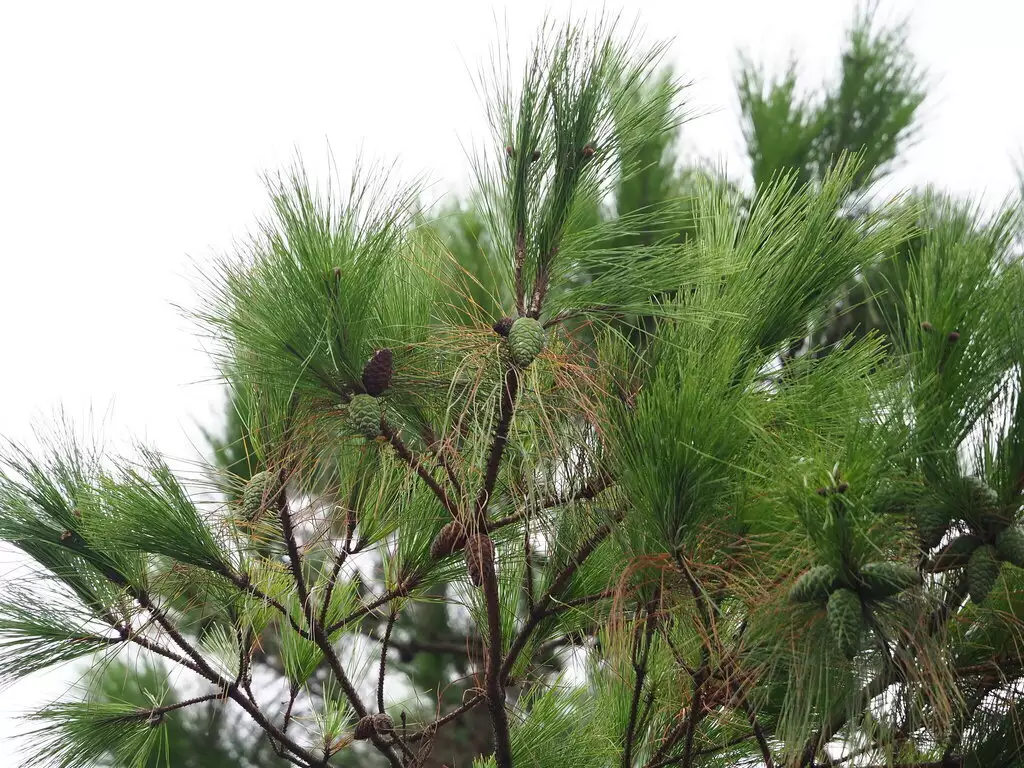
Pinus massoniana, also known as Masson's Pine or Horsetail Pine, is a remarkable species of pine native to vast regions of central and southern China, Hong Kong, Taiwan, and northern Vietnam. This evergreen tree can reach an impressive height of 82–148 feet, with a robust trunk and a broad, rounded crown that presents striking, scaly bark ranging from grayish-brown at its base to orange-red higher up. The foliage comprises dark green, needle-like leaves, typically arranged in pairs, which evoke the picturesque imagery of a horse's tail, a characteristic mirrored in its Chinese common name 'horse-tail pine'. Equipped with a resilient genome that houses over 80,000 protein-coding genes, Masson's Pine is a species of ecological and evolutionary significance. Known for its hardiness and adaptability to poor soils and drought, it is favored in plantation forestry in southern China. Its rapid growth and the quality of its timber are highly valued for construction, furniture, and paper production. Additionally, Masson's Pine is a vital resource for rosin, a product of economic importance in China. Historical challenges such as pest infestations and logging have shaped its distribution and prominence, but through ongoing conservation efforts, this species continues to be an integral part of the region's forestry and biodiversity.








_Pinus_massoniana_-%E9%A6%99%E6%B8%AF%E8%8D%94%E6%9E%9D%E8%A7%92%E5%85%AC%E5%9C%92_Lai_Chi_Kok_Park,_Hong_Kong-_(9216129534).jpg)
