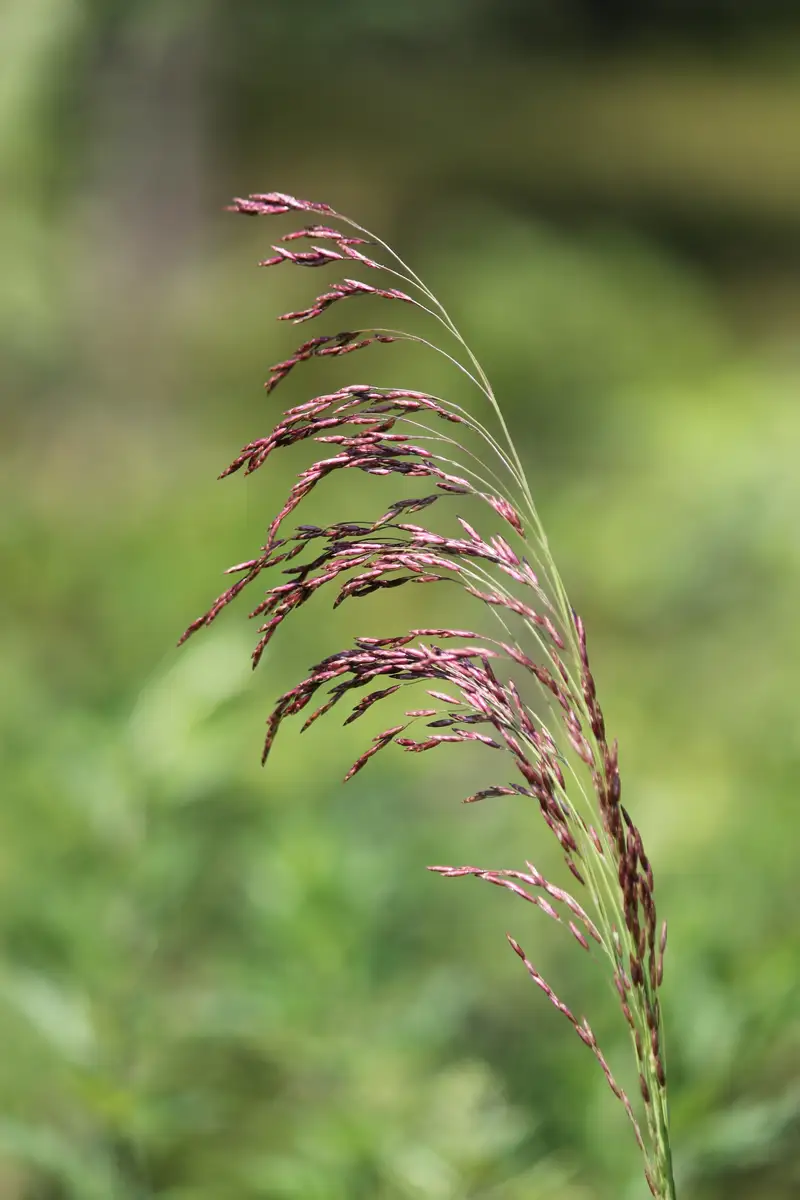
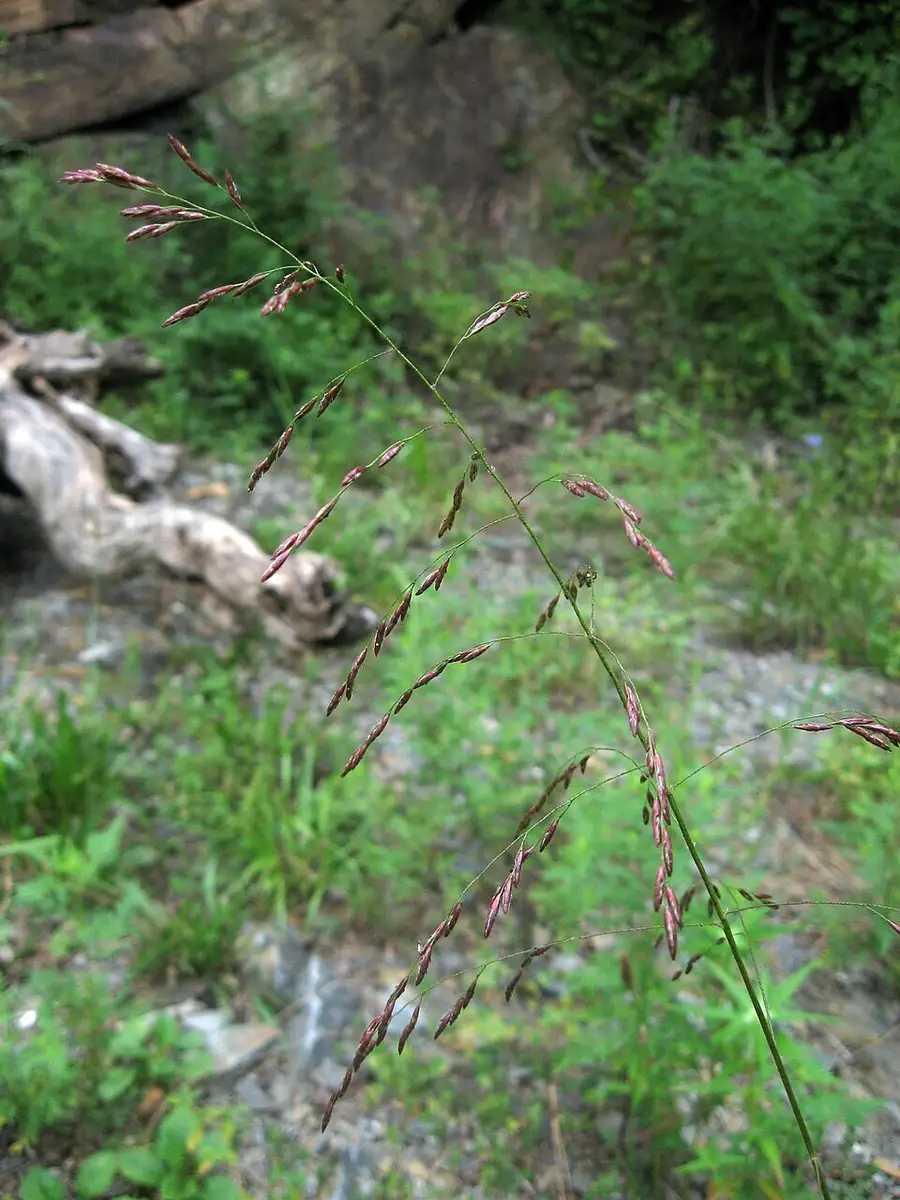
Tridens flavus, known as Purpletop Tridens or Greasegrass, is a captivating perennial grass that graces landscapes across the Eastern United States and Southern Plains. Revered for its striking reddish-purple spikelets, it transforms fields and open woodlands into a sea of color from mid-summer through early autumn. Reaching heights of 3-7 feet, this bunchgrass thrives in dry to medium-dry soils, making it ideal for roadsides, pastures, and woodland edges. Requiring low water use and showing resilience to partial shade, it's an excellent choice for those seeking a low-maintenance yet ornamental landscape feature.
Beyond its visual appeal, Purpletop Tridens serves as a critical ecological component, attracting butterflies and moths, including the Common Wood Nymph and several skipper species, by acting as a larval host. Its oily seed heads, which give rise to the name "Greasegrass," provide an important food source for birds, especially turkeys and quails, as well as wildlife materials useful for nesting. The grass holds immense potential for soil stabilization in areas with a history of disturbance, proving its role as both a practical and aesthetic addition to any landscape setting.