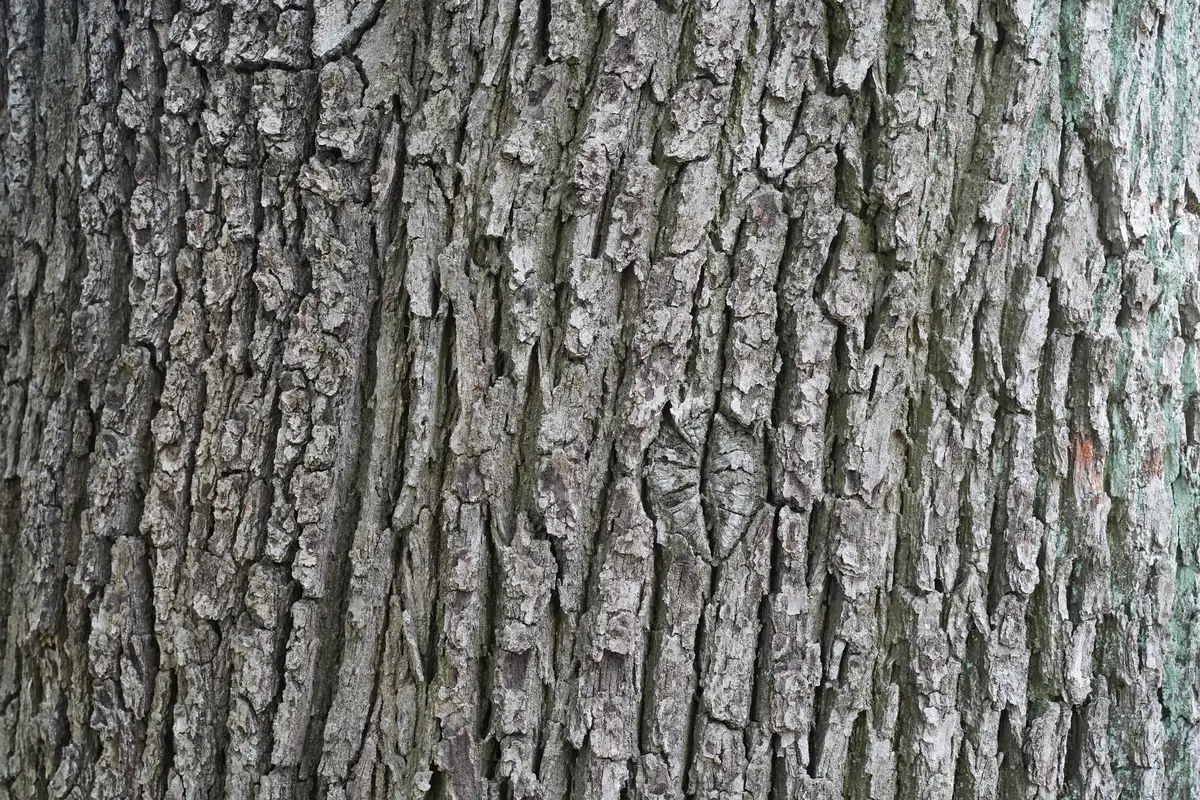
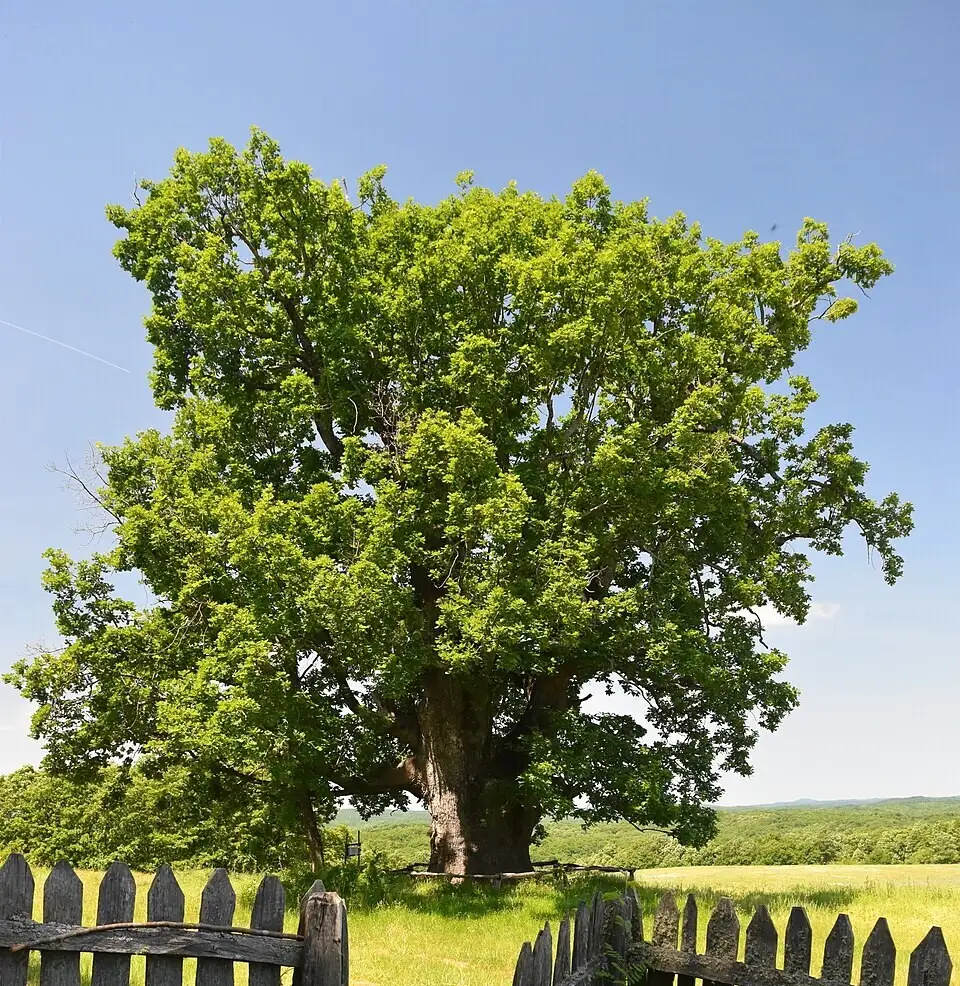
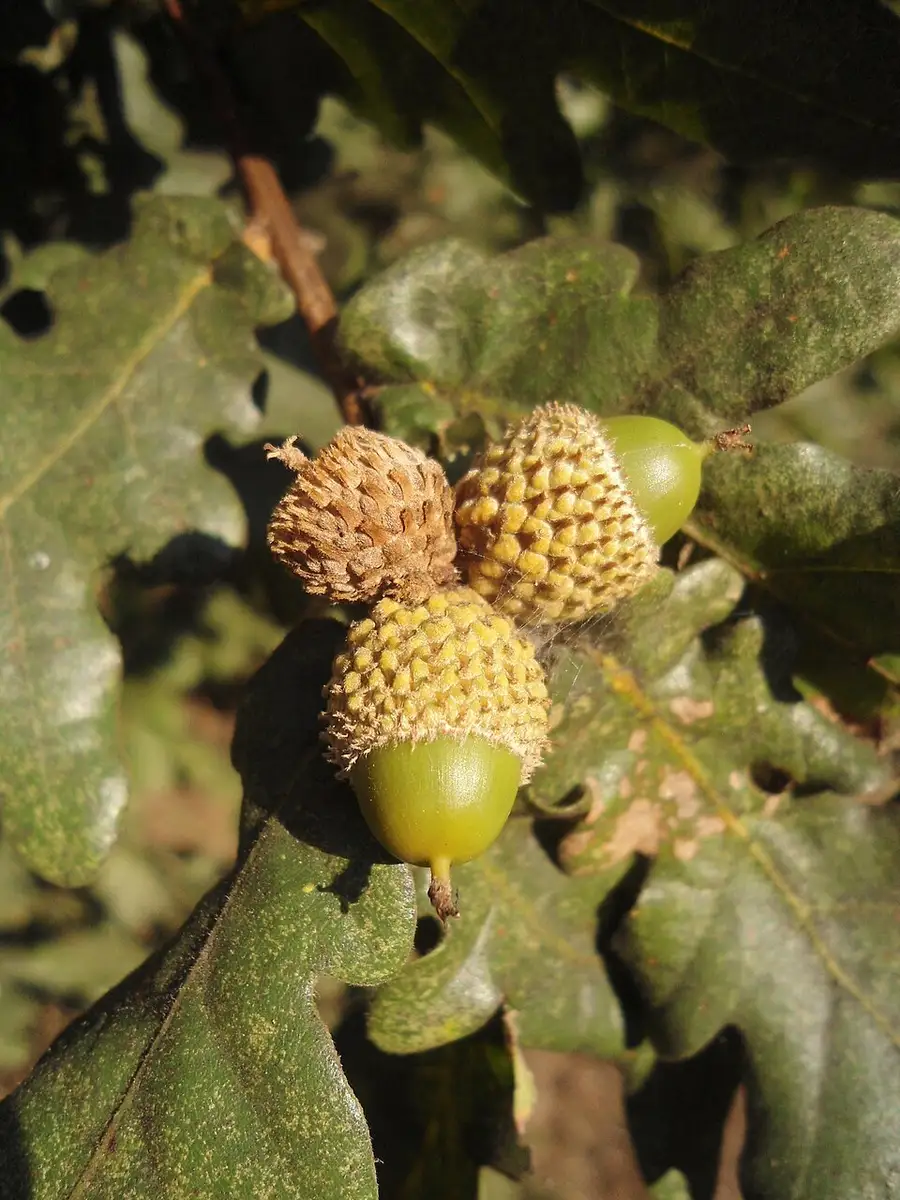
Quercus frainetto, commonly known as Italian Oak or Hungarian Oak, is a majestic and adaptable broadleaf deciduous tree. Originating from southeastern Europe, including regions such as Italy, the Balkans, Hungary, and Turkey, this tree stands out in both beauty and resilience. Typically reaching heights of 60-80 feet in cultivation, and up to an astonishing 125 feet in its native habitat, Italian Oak features a striking crown that transforms from ovate to rounded as it matures. Its bark showcases a distinctive light gray hue with small, square cracking plates.
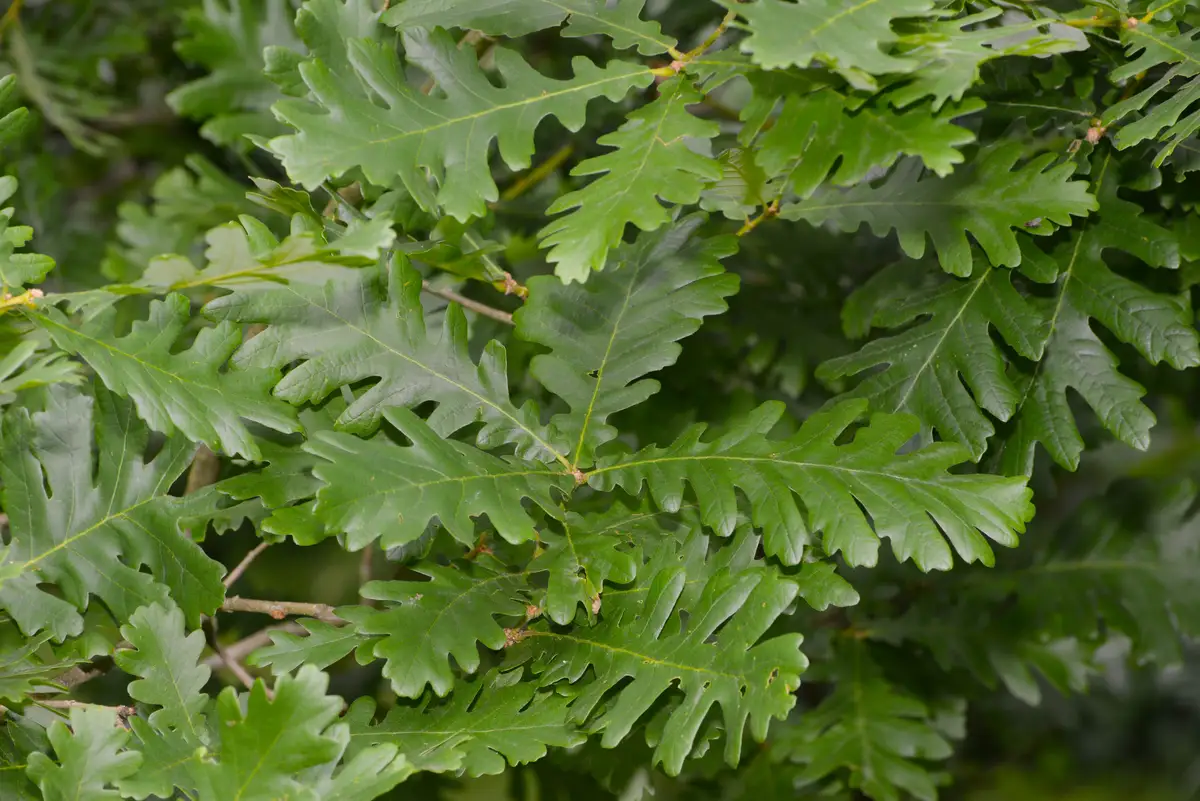
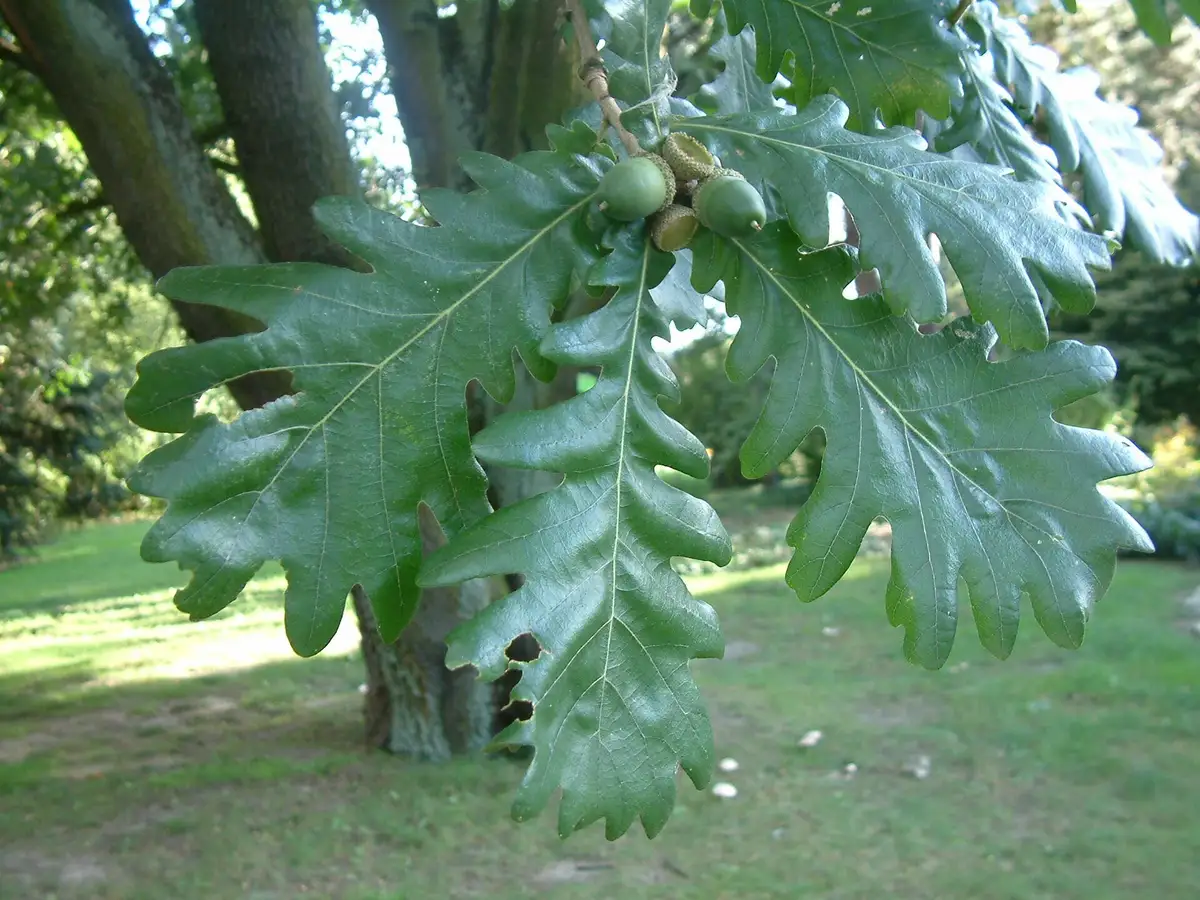
The tree's large, deeply lobed leaves are a hallmark, transitioning from light yellow-green in the spring to a rich dark green by summer, and adopting warm russet hues in the fall. These leaves, typically 6-10 inches long, exhibit fine russet hairs and turn gold-brown before winter, often lingering into the new spring. Clusters of acorns, 1 inch long with scaly caps, add to the tree's ornamental appeal and mature over six months.
Thriving in heavy acidic soils, Quercus frainetto is ideally suited for well-drained environments and can withstand arid conditions once established. It is hardy to USDA Zone 5b, making it a perfect choice for parks and expansive gardens in Europe, although it remains a rare find in the USA.