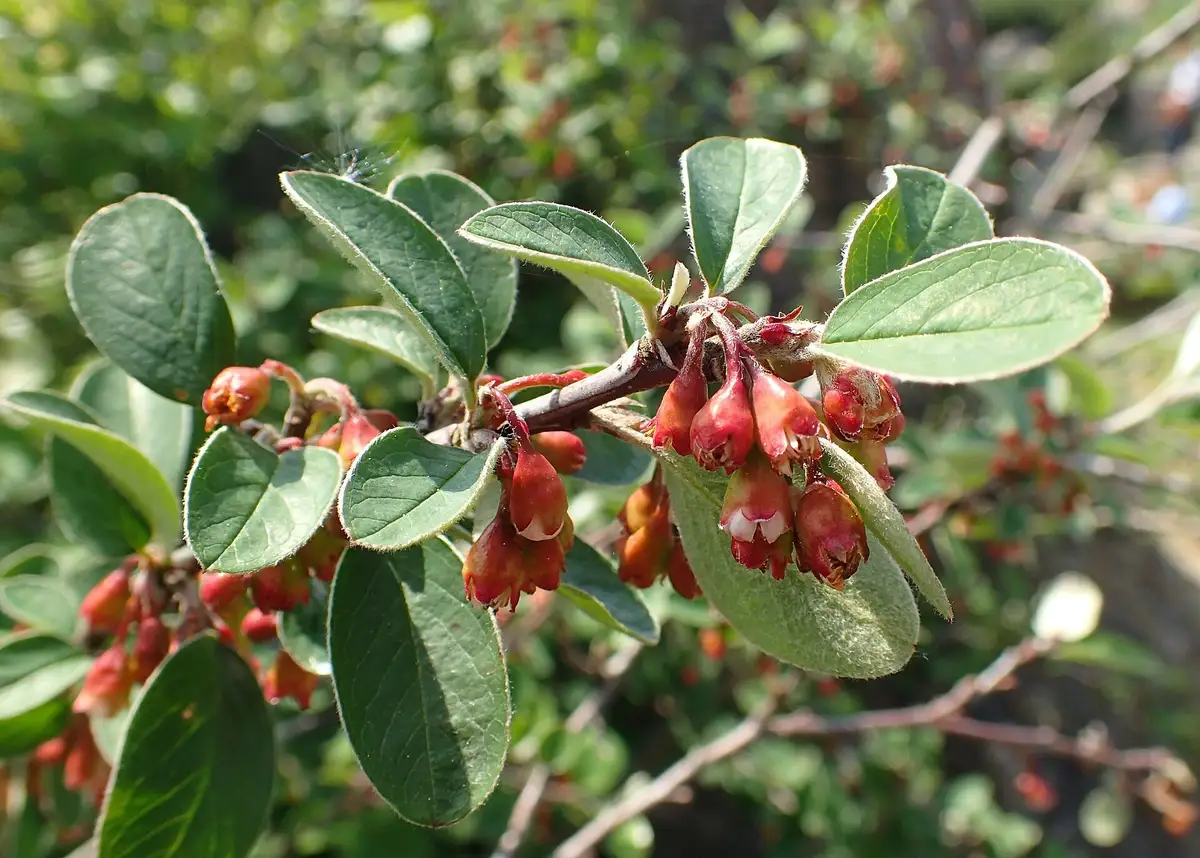
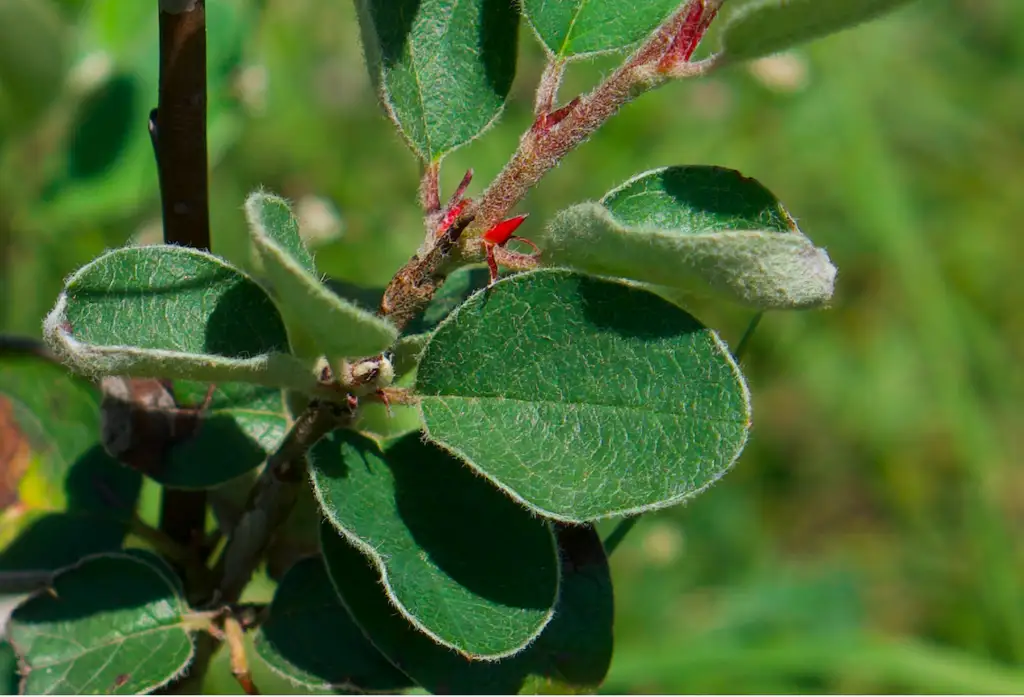
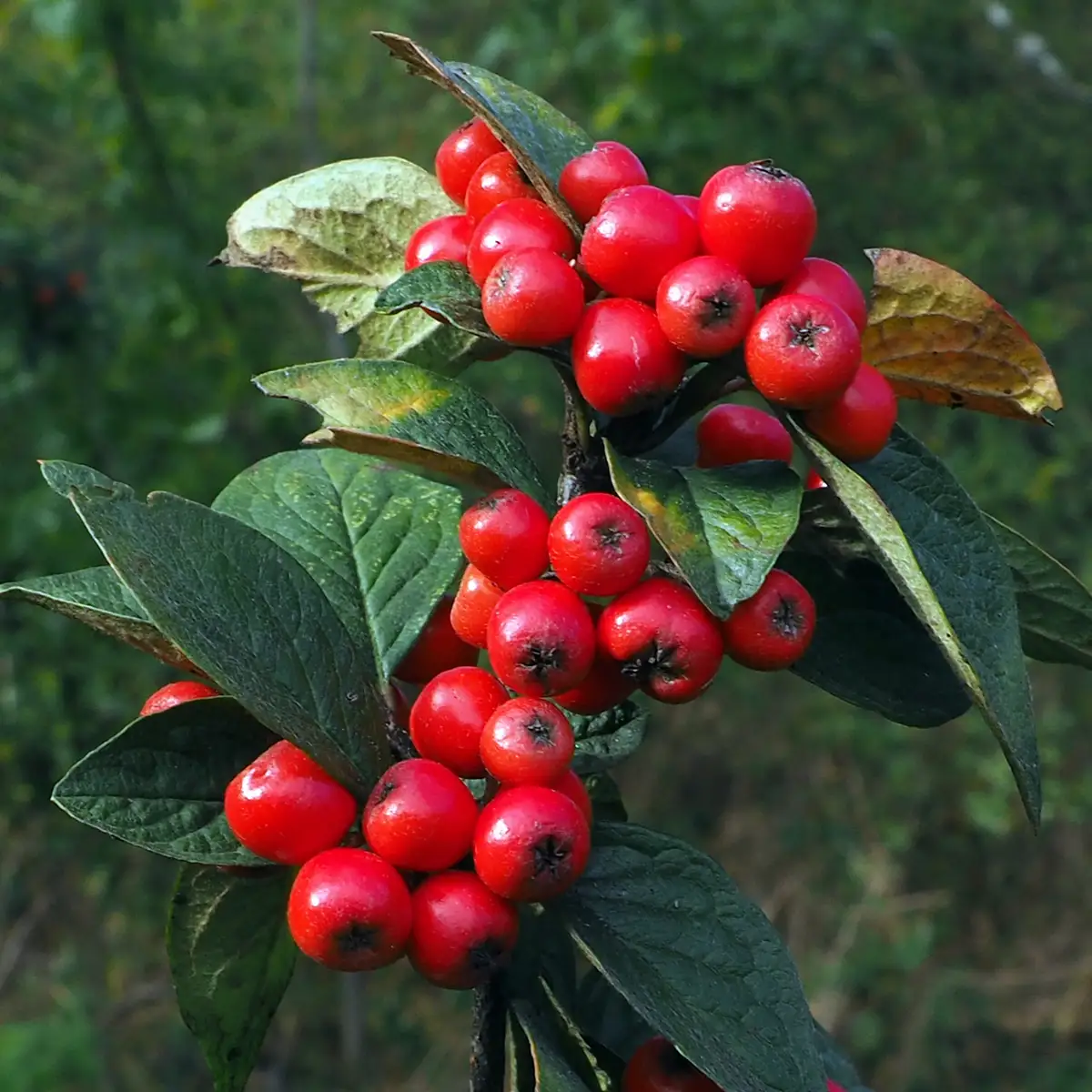
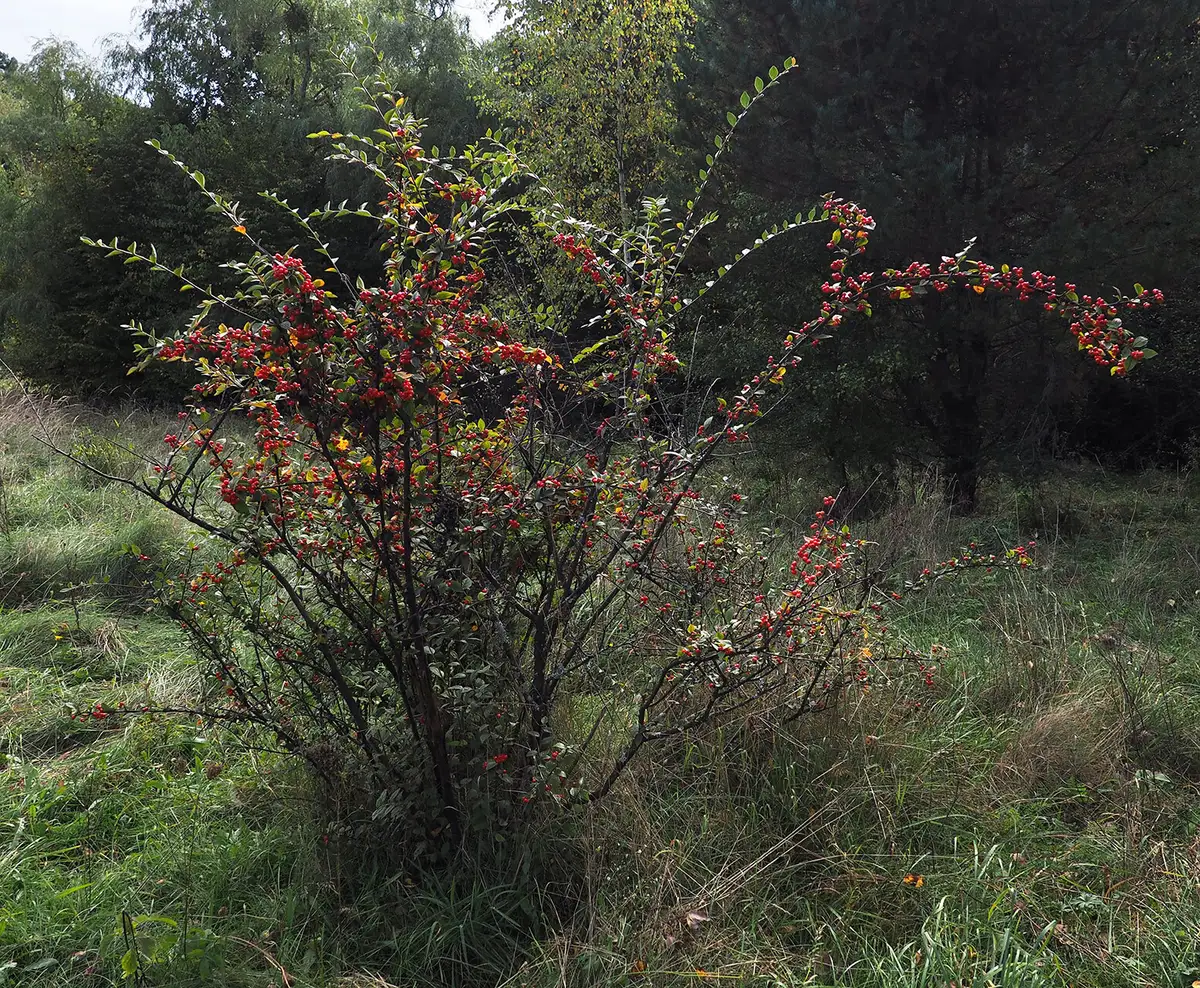
Cotoneaster integerrimus, commonly known as European Cotoneaster, is a versatile and highly-adaptable deciduous shrub within the Rosaceae family. Native to rocky slopes and woodlands across Europe and Asia, this hardy plant flourishes in USDA Zones 3 to 5. Standing 8 to 12 feet tall and spreading 12 to 15 feet wide, the shrub features broad, elliptic leaves with a unique gray-green, woolly underside. In late spring, it produces delicate clusters of pink-tinged, five-petaled flowers, followed by showy dark red berries in the fall. The striking fruit is a seasonal highlight, attracting various bird species, though it is not safe for human consumption.
Ideal for full sun to part shade environments, Cotoneaster integerrimus thrives in well-drained, moderately fertile soils and can withstand short drought periods, making it a low-maintenance addition to any landscape. Its robust nature makes it an excellent option for hedges, screens, windbreaks, and decorative plantings along transportation corridors. While susceptible to fireblight in warmer climates, its adaptable growth habit ensures resilience under a variety of environmental conditions.